Slow-Roasted Pork Shoulder with Molten Earth Espresso Rub
Eight hours in the oven, a bark that deepens by the hour, and meat that falls apart at a look.
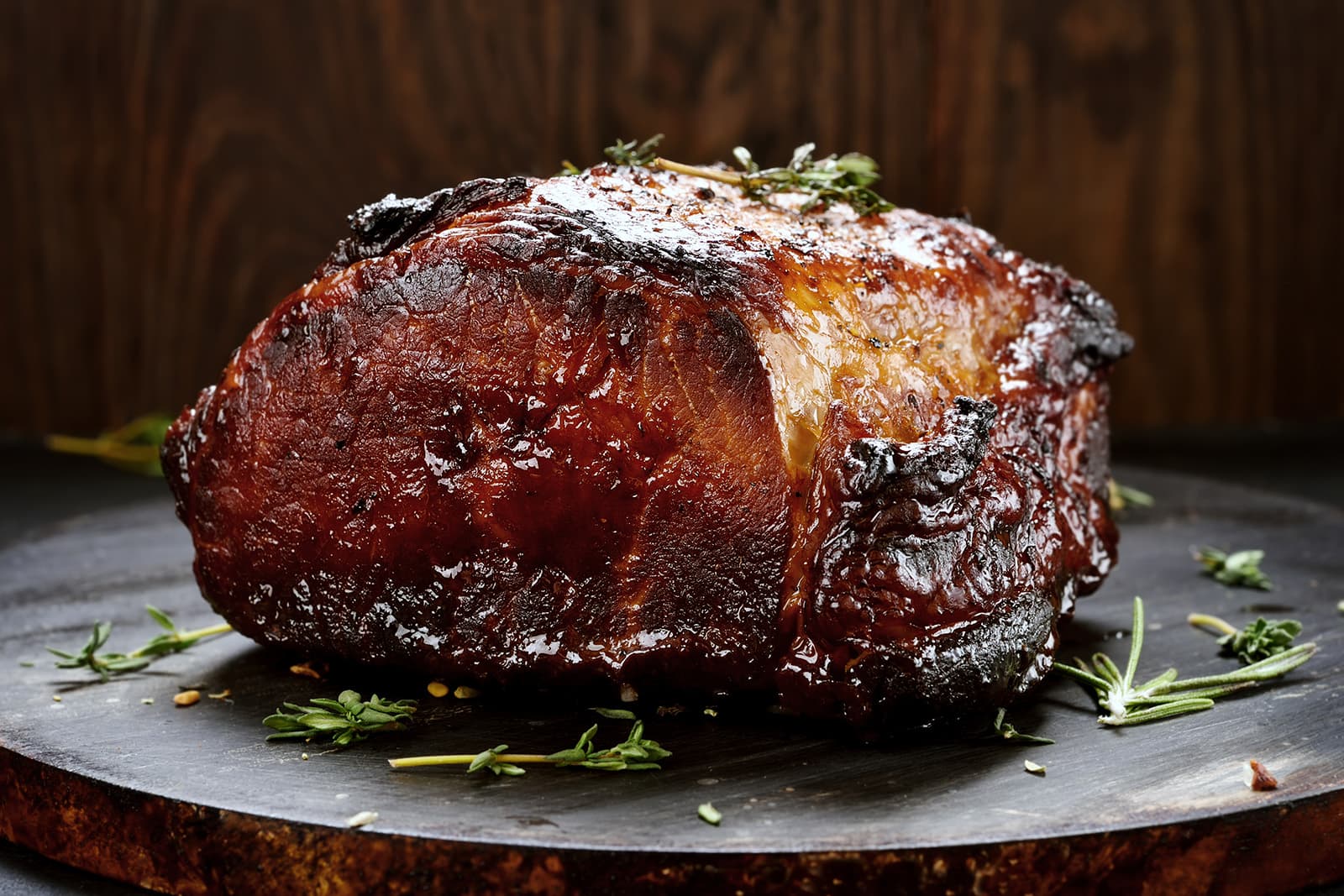
Bone-in pork shoulder rubbed generously with Molten Earth Espresso Rub and roasted low and slow until the exterior forms a dark, savory bark and the interior pulls apart with no resistance. The espresso and cocoa in the rub mellow over hours of sustained heat, trading their initial bitterness for a deep, mineral roast character. The bark tastes fire-kissed and serious. The meat underneath is rich, tender, and carries the savory base of cumin and smoked paprika all the way through.
Ingredients, method, and practical notes
Equipment
Method
Score the fat cap of the pork shoulder in a crosshatch pattern, cutting about a quarter inch deep through the fat without cutting into the meat. Season the entire surface generously with kosher salt and cracked black pepper. Drizzle with olive oil and rub to coat evenly. Apply three tablespoons of Molten Earth Espresso Rub over all surfaces, pressing it firmly into the scored fat cap and into any crevices. The coating should be thick and even with no bare patches.
👁 The shoulder is evenly coated in a dark, almost black layer of rub. The scored fat cap has rub pressed into every groove. No pink or pale meat is visible anywhere on the surface.WhyScoring the fat lets the rub penetrate into the fat cap, which creates bark in the grooves as well as on the surface. Pressing firmly ensures adhesion. The rub looks alarmingly dark at this stage because of the espresso and cocoa. That is correct. It will transform during the cook.What to noticeSmell the rub on the raw meat. It is bitter, sharp, and coffee-forward. Hold that memory. You will compare it to the finished bark 8 hours from now.If something's offThe rub falls off in dry patches when you move the shoulder to the roasting pan.Fix: Not enough oil was used. The oil is the binder. Drizzle another tablespoon and press the rub back into the surface.
Place the pork shoulder fat cap up on a wire rack set inside a roasting pan or on a foil-lined sheet pan with a rack. If applying the rub the night before, refrigerate uncovered for 8 to 12 hours. Otherwise, let it sit at room temperature for 30 minutes while the oven preheats.
👁 If refrigerated overnight, the surface will look drier and slightly tacky. This is ideal for bark formation.WhyAn overnight uncovered rest in the fridge dries the surface, which dramatically improves bark formation in the oven. The salt also has time to penetrate deeper into the meat. This step is optional but produces noticeably better results.Preheat the oven to 275°F. Place the shoulder on the center rack and roast for 4 hours without opening the oven door.
👁 At 4 hours, the surface should be visibly darker and drier than when it went in. The fat cap has begun to render and the rub has fused into a rough, uneven bark. The color has shifted from raw espresso-black to a deep, reddish-brown.Cook-In PhaseWhyThe first 4 hours are where the most dramatic transformation happens. The espresso and cocoa, which tasted aggressively bitter when raw, mellow steadily as the low heat breaks down their sharp compounds. The brown sugar in the rub caramelizes into the surface without burning at this temperature. The smoked paprika and ancho chile deepen into a steady, dark warmth. The collagen in the meat begins to convert to gelatin. Do not open the door. Heat loss extends the cook and disrupts bark formation.What to noticeAt about 2 hours, your kitchen will start to smell like a dark, savory roast with a hint of something almost like chocolate. That is the cocoa and espresso beginning their transition from bitter to roasted. By 4 hours, the bitterness in the aroma should be gone, replaced by something deeper and more mineral.If something's offAt 4 hours, the surface is still wet-looking and the fat cap has not visibly rendered.Fix: The oven may be running cool. Increase temperature to 285°F for the second half. If the surface is actively pooling liquid, the shoulder was too wet going in. Blot the surface and continue.
Open the oven and spray or brush the surface lightly with apple cider vinegar. Close the oven and continue roasting for 2 more hours.
👁 The vinegar sizzles on contact with the hot surface and evaporates quickly. The bark should look more defined now, with a rough texture forming across the fat cap.Cook-In PhaseWhyThe vinegar serves two purposes. First, it adds surface moisture that supports bark development by creating a sticky layer that the rub adheres to as it dries again. Second, the acid cuts through the developing richness. Without it, a bark made from espresso, cocoa, and rendered fat risks tasting one-dimensionally dark. The vinegar brightens it.What to noticeWhen you open the door at 4 hours, take a moment to smell the roast. Compare it to what you remember from applying the rub. The coffee bitterness should be absent. The aroma should be deep, roasted, and savory with a faint sweetness from the caramelizing surface.Spray or brush with vinegar one more time. Continue roasting for another 2 hours, or until the internal temperature reads 200 to 205°F in the thickest part of the shoulder and a fork or probe slides in with no resistance.
👁 The bark is dark, rough, and dry to the touch. The fat cap has rendered significantly. A fork slid into the thickest section meets no resistance at all. The bone, if visible, may be starting to pull away from the meat.Cook-In PhaseWhy200 to 205°F is the zone where collagen has fully converted to gelatin and the meat is ready to pull apart. The probe test is more reliable than temperature alone because different muscles reach this point at slightly different temperatures. When the probe slides in and out like butter, the shoulder is done regardless of what the thermometer says.What to noticeAt this point, the bark should smell deeply roasted and mineral, with no trace of the raw coffee bitterness from the start. Taste a small piece of bark. It should taste savory, dark, and slightly smoky with a long finish. No sweetness, no coffee flavor. That is 8 hours of transformation.If something's offThe internal temperature stalls around 160 to 170°F and does not climb for an hour or more.Fix: This is the stall, a normal phenomenon where evaporating moisture cools the meat surface. Do not increase the temperature. The stall will break on its own, usually within 1 to 2 hours. If you need to speed things up, wrap the shoulder tightly in foil and return to the oven. The bark will soften but the meat will push through the stall faster.
Remove the shoulder from the oven and rest, uncovered, on the rack for 30 minutes. Do not wrap in foil. After resting, pull the meat apart with two forks or by hand, discarding any large pieces of pure fat. The bark should break into rough, dark pieces that distribute through the pulled meat.
👁 After 30 minutes, the shoulder holds its shape but the meat yields easily to pressure. When you pull it, the meat separates into long, moist strands with pieces of dark bark mixed throughout. The bone, if present, slides out cleanly.Rest PhaseWhyResting redistributes the juices so the pulled meat stays moist rather than releasing all its liquid onto the cutting board. Resting uncovered preserves the bark. Foil traps steam and softens the crust you spent 8 hours building. Breaking the bark into the pulled meat distributes the Molten Earth Espresso Rub's deep, mineral flavor through every bite.What to noticeTaste a piece of bark by itself, then taste a piece of the interior meat by itself. The bark is dark, roasted, and mineral. The interior is rich, savory, and carries the cumin and smoked paprika through the meat. Together they create a more complete bite than either alone. That layering is what 8 hours of cook-in phase produces.If something's offThe meat does not pull apart easily and requires cutting with a knife.Fix: The shoulder was pulled too early. It needs more time. Return to the oven at 275°F for another hour and check again. The internal temperature needs to reach 200°F and the probe must slide in without resistance.
What This Recipe Teaches
How 8 hours of sustained low heat transforms the same spice rub from aggressively bitter to deeply roasted and mineral, and how the cook-in phase is not just about softening meat but about fundamentally changing the flavor of the seasoning.
How the Blend Behaves Here
Molten Earth Espresso Rub starts aggressive. The espresso and cocoa are unmistakably bitter on the raw surface. Over the first 2 hours, that bitterness begins to mellow as the compounds break down under sustained heat. By 4 hours, the transition is well underway: the aroma has shifted from sharp and coffee-like to dark and roasted. By 8 hours, the transformation is complete. The bark tastes mineral and fire-kissed with a long savory finish. No coffee flavor, no sweetness. The cumin and smoked paprika, which were overshadowed by the bitter components at the start, have done steady work throughout the cook, building a savory backbone that anchors the entire dish. The brown sugar has caramelized into the bark without producing sweetness.
What to Notice
Aromatic entry: Dark, roasted aroma with a faint smokiness. The bark smells savory and serious, like something that has been over a fire for a long time. No coffee. No sweetness.
Mid-palate: Rich, tender pork with steady cumin and smoked paprika warmth throughout the meat. The bark pieces add a concentrated mineral depth that contrasts with the soft, fatty interior. The ancho chile provides a quiet, background warmth that arrives late.
Lingering finish: Long and mineral. The espresso and cocoa, fully transformed by time, produce a finish that lingers without bitterness or sweetness. The cumin provides a savory anchor that keeps the finish grounded.
The Time Check Test
How the blend's character changes at different points during the long cook, and why the full 8 hours matters.
How: When you open the oven at 4 hours and again at 6 hours to spray vinegar, slice a thin piece of bark from an edge of the shoulder and taste it. Compare the flavor at 4 hours, 6 hours, and after the final rest at 8 hours.
Compare: At 4 hours, the bark will still have some bitterness and the flavor will be sharp and not fully integrated. At 6 hours, the bitterness has mostly resolved and the roasted character is building but still developing. At 8 hours plus the 30-minute rest, the bark tastes fully transformed: mineral, deep, and savory with a long finish. The last 2 hours and the rest are where the blend reaches its final expression.
Symptom: The bark tastes bitter and coffee-like rather than roasted and mineral
Cause: The cook was too short. The espresso and cocoa need the full 8 hours of sustained low heat to complete their transformation. Pulling the shoulder at 6 hours may produce tender meat, but the bark will still carry residual bitterness.
Fix: Trust the full cook time. The bark's transformation continues all the way to the end. If the internal temperature reaches 200°F before 8 hours, the oven may be running hot. Lower to 265°F for the remaining time to give the bark more time to develop.
Symptom: The bark is black, hard, and tastes burnt rather than dark and savory
Cause: The oven temperature was too high. Above 300°F, the brown sugar in the rub can burn rather than caramelize, and the espresso scorches into acrid bitterness rather than mellowing.
Fix: Stay at 275°F. If your oven runs hot, calibrate with an oven thermometer. If the bark is already scorched, it cannot be recovered, but the interior meat will still be excellent. Discard the worst bark pieces and use the rest.
Symptom: The meat is tender inside but the bark is soft and chewy rather than crispy and rough
Cause: The shoulder was wrapped in foil during cooking, which traps steam and softens the bark. Or the surface was too wet going into the oven.
Fix: Roast uncovered for the entire cook. If you wrapped to push through the stall, unwrap for the last hour to re-crisp the bark. An overnight uncovered rest in the fridge before cooking dries the surface and produces the best bark.
Symptom: The pulled meat tastes bland despite the bark tasting good
Cause: Not enough salt was applied before the rub. The rub flavors the surface, but salt is what seasons the interior during a long cook. On a 6-pound shoulder, one tablespoon of kosher salt is the minimum.
Fix: Season more aggressively with salt next time. The salt penetrates during the cook, so it needs to be applied generously up front. If the pulled meat is underseasoned now, toss it with a light sprinkle of kosher salt and a squeeze of lime juice after pulling.
Notes
Overnight Rub
For the best bark, apply the rub the night before and refrigerate the shoulder uncovered on a wire rack for 8 to 12 hours. The surface dries in the fridge, and the salt begins to penetrate the meat. This produces a noticeably better bark than applying the rub just before cooking.
The Stall
Between 160°F and 175°F, the internal temperature may plateau for 1 to 2 hours. This is normal. Evaporating moisture from the meat's surface cools it at the same rate the oven heats it. Do not increase the temperature. The stall always breaks. If time is tight, wrapping in foil speeds things up but softens the bark.
How to Serve
Pull the meat with two forks and break the bark into small, rough pieces distributed throughout. Serve on soft rolls with pickled onions and coleslaw for contrast. The mineral bark needs something bright and acidic alongside it to keep each bite interesting.
Leftovers
Pulled pork stores well in an airtight container for up to 4 days refrigerated or 3 months frozen. The flavor deepens overnight. Reheat gently in a 300°F oven or in a covered pan over low heat with a splash of water or apple cider vinegar to prevent drying.
Larger Shoulders
An 8-pound shoulder uses the same rub amount but needs 9 to 10 hours. Scale the salt by weight: about 1 teaspoon per pound. The cook time is driven by size, not weight alone, so thicker cuts take longer regardless of total pounds.
More recipes like this
New recipes and seasonal cooking ideas, once a week. Never more.
See everything that's in the newsletter