Reverse-Seared Thick Pork Chop with Molten Earth Espresso Rub
Low oven, then scorching cast iron. A dark crust built in 90 seconds on meat that is already perfectly cooked inside.
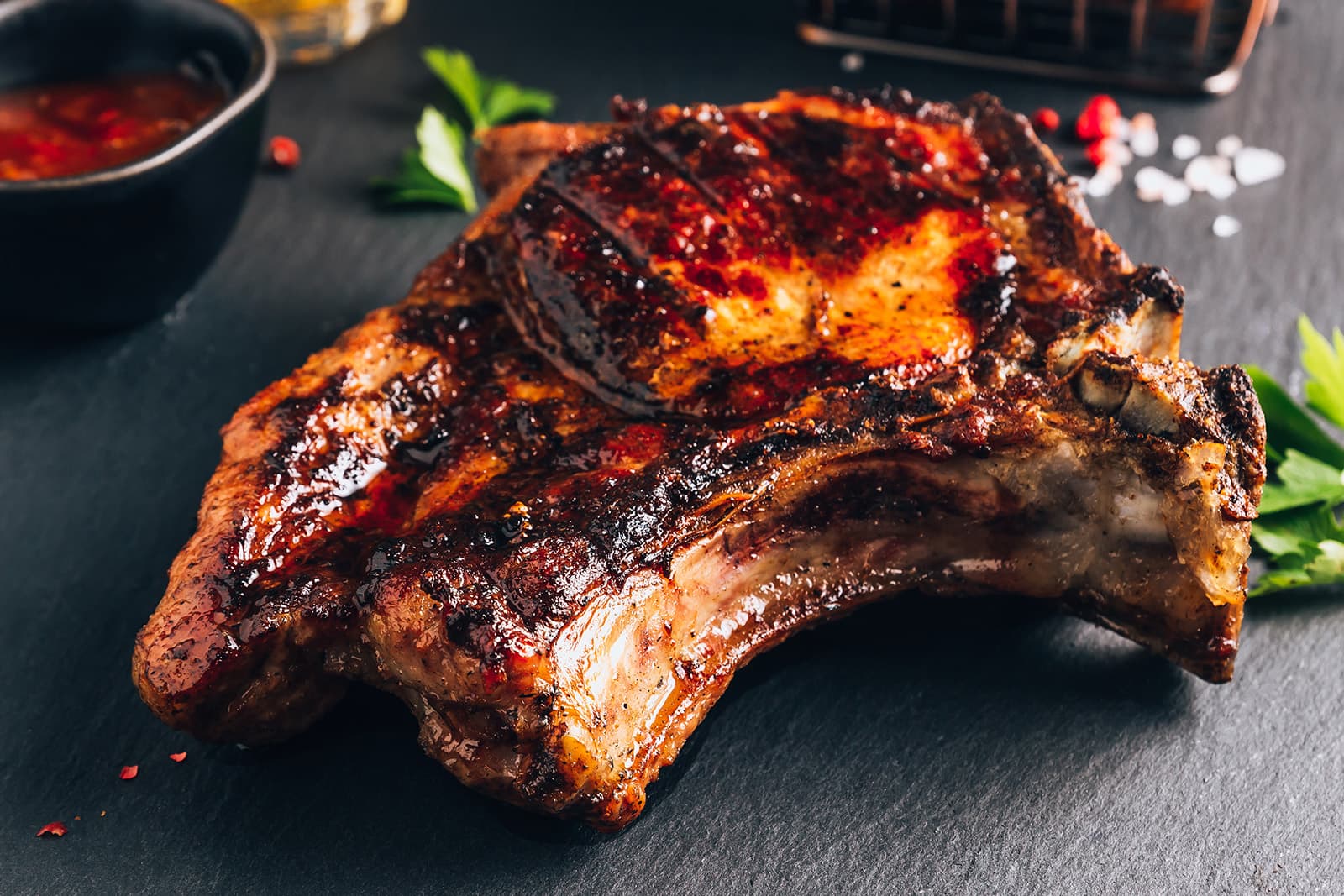
A thick, bone-in pork chop seasoned with Molten Earth Espresso Rub, brought up to temperature slowly in a low oven, then seared hard in a screaming hot skillet. The low oven warms the rub without browning it. The sear is where the rub blooms: espresso, cocoa, and smoked paprika darken into a savory crust in 90 seconds of intense contact. The result is an evenly pink interior with a dark, mineral exterior that could not exist without both phases.
Ingredients, method, and practical notes
Equipment
Method
Remove the pork chops from the refrigerator 20 minutes before cooking. Pat completely dry with paper towels. Season all sides with kosher salt. Drizzle with one tablespoon of olive oil and rub to coat. Apply Molten Earth Espresso Rub over all surfaces, pressing firmly. The coating should be even and dark with no bare patches.
👁 The chops are evenly coated in a dark, near-black layer of rub. The surface feels slightly tacky rather than wet or powdery.WhyTempering ensures even cooking. A cold chop from the fridge will overcook on the outside before the center reaches temperature, even with the reverse sear method. Twenty minutes at room temperature is enough for a 1.5-inch chop.What to noticeThe rub looks dark and imposing on the raw chop. That is the espresso and cocoa. It will transform during the sear, but at this stage it should smell bitter and coffee-forward.Preheat the oven to 250°F. Place the seasoned chops on a wire rack set over a sheet pan. Roast on the center rack for 25 to 30 minutes until the internal temperature reads 115°F in the thickest part, away from the bone.
👁 The chops look dry on the surface and the rub has adhered tightly, but there is no visible browning. The color is the same dark rub coating, not a developed crust.WhyThe low oven brings the center of the chop up to 115°F without browning the exterior. This is the critical setup for the reverse sear. At 115°F, the meat needs only 90 seconds per side of hard searing to reach the final target of 140°F (with carryover to 145°F during rest). The rub warms and dries during this phase, preparing it to bloom instantly when it contacts the hot pan.What to noticeLook at the chops when you pull them from the oven. The rub has not changed color. No crust has formed. This is intentional. All the visual and aromatic transformation happens in the next step.If something's offThe rub is already browning and the surface shows visible crust at this stage.Fix: The oven is too hot. At 250°F, no browning should occur. Check your oven temperature with a thermometer. If browning has started, reduce sear time accordingly.
While the chops are in the oven, heat a 12-inch cast iron skillet over high heat for 3 full minutes. The pan must be screaming hot. Add one tablespoon of high-heat oil and swirl to coat.
👁 The oil shimmers immediately and produces faint wisps of smoke within seconds of being added. If you hold your hand 6 inches above the pan, you feel aggressive radiant heat.WhyThe entire crust forms in 90 seconds per side. That is only possible if the pan is hot enough to trigger instant browning. A lukewarm pan produces a slow, gradual cook that turns the rub dusty rather than developing it into a dark, savory crust.If something's offNo smoke wisps from the oil after 30 seconds in the pan.Fix: The pan is not hot enough. Continue heating. Cast iron takes longer to reach temperature than thinner pans. Three full minutes over high heat is the minimum.
Place the chops in the skillet and press gently to ensure full contact with the pan. Sear without moving for 90 seconds. Flip and sear the second side for 90 seconds. In the last 30 seconds, add the butter and thyme sprigs to the pan. Tilt the pan slightly and spoon the foaming brown butter over the tops of the chops three or four times.
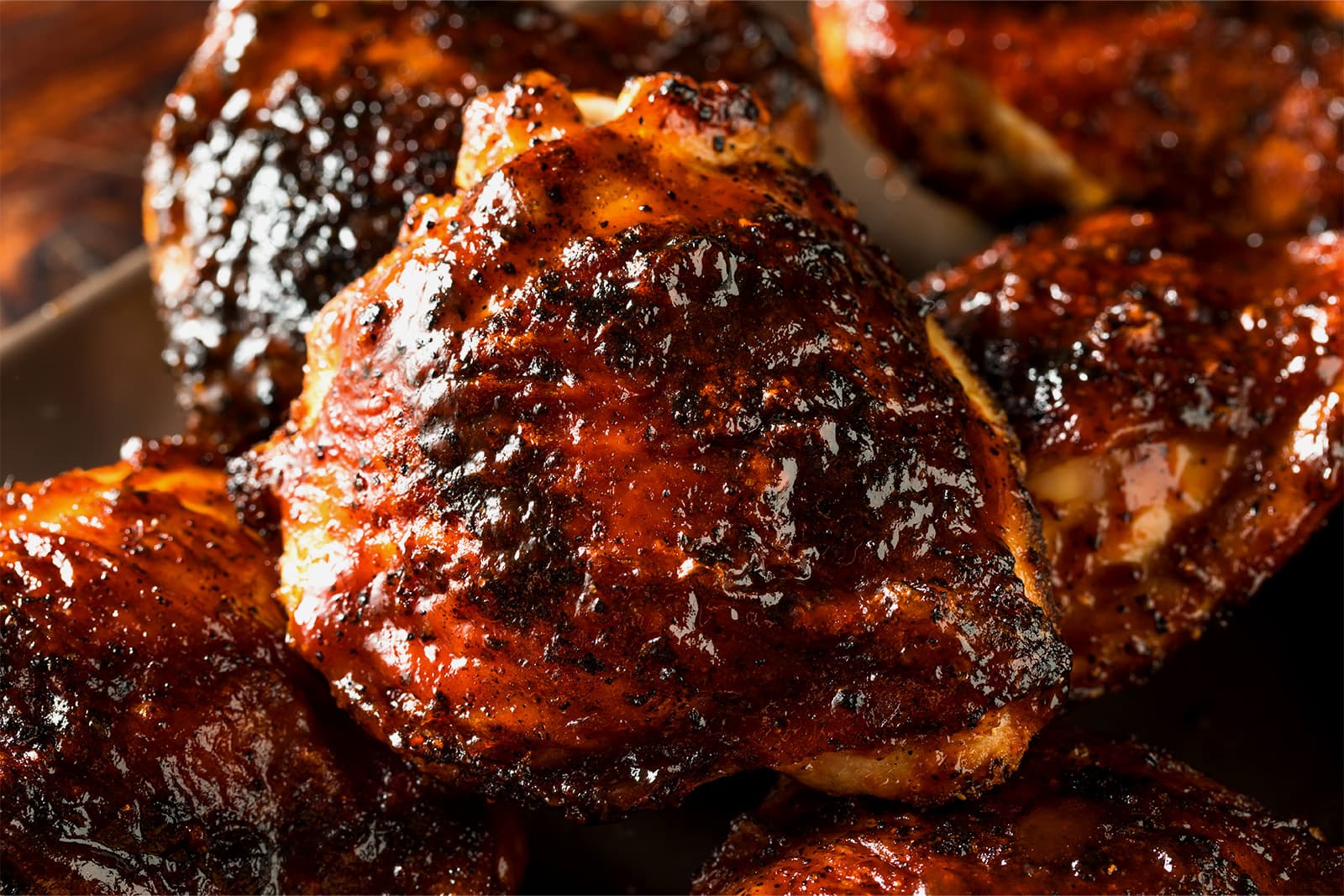
👁 The first side emerges with a dark, nearly black crust that is rough and uneven. The rub has transformed from a flat, powdery coating into a developed, roasted surface. The butter foams and turns golden-brown around the thyme sprigs. The kitchen fills with the aroma of roasted spice and brown butter.Bloom PhaseWhyThis is the bloom. Everything that was dormant in the rub during the low oven phase activates in 90 seconds of intense heat. The espresso and cocoa darken from their raw state into a roasted crust. The smoked paprika deepens. The brown sugar caramelizes on contact. Cumin and coriander, which have been invisible until now, release their volatile compounds into the fat and become part of the crust's savory backbone. The brown butter baste adds another layer of roasted compounds that complement the espresso and cocoa. This is the most concentrated bloom in any Emberloft recipe: the full transformation happens in under 3 minutes.What to noticeThe aroma change is immediate and dramatic. Within the first 30 seconds, the kitchen shifts from raw, bitter coffee to dark, savory roast. The butter baste amplifies this further. When the butter hits the crust, the smell should be deeply roasted and appetizing, not burnt or acrid.If something's offThe crust is patchy, with some areas browned and others still looking like raw rub.Fix: The pan was not hot enough or the chop's surface was not making full contact. Press gently with a spatula after placing the chop to ensure the rub touches the hot surface evenly.
Transfer the chops to a cutting board and rest for 5 minutes. Do not cut into them. The internal temperature will continue to rise 5 to 8°F during the rest, reaching 140 to 145°F.
👁 The chops look dark and imposing with a rough, near-black crust. After 5 minutes, cutting reveals an evenly pink interior from edge to edge with no gray band. Juices pool slowly on the board rather than flooding out.Rest PhaseWhyThe rest allows carryover cooking to bring the chop to its final temperature and lets the juices redistribute so the meat stays moist when cut. The reverse sear method produces an exceptionally even cook, so the pink interior should extend almost all the way to the crust with no gray overcooked band underneath.What to noticeCompare the crust to what you remember when the rub was first applied. The same coating that smelled aggressively bitter and looked flat has become a rough, roasted, mineral crust with depth and texture. That transformation happened entirely during the 90-second sear. Time and heat in concentrated form.If something's offThe interior has a thick gray band between the crust and the pink center.Fix: The oven phase was too hot or the chop was too thin. At 250°F with a 1.5-inch chop, the gray band should be nearly nonexistent. If your oven runs hot, drop to 225°F. If chops are thinner than 1.5 inches, reduce oven time and check temperature earlier.
What This Recipe Teaches
How a two-phase cooking method allows a rub to bloom in concentrated, intense form rather than gradually, and how the espresso and smoked paprika in the rub establish the crust's identity while the cumin and coriander provide the savory structure underneath.
How the Blend Behaves Here
Molten Earth Espresso Rub sits warm but unchanged during the 25-minute low oven phase. It dries, adheres, and prepares. Then in 90 seconds of extreme heat, everything happens at once. The espresso darkens from its raw, bitter state into a roasted compound. The cocoa follows. The smoked paprika deepens into visible color. The brown sugar caramelizes on contact and fuses the crust. The cumin and coriander, which are invisible during all of this, release their volatile compounds into the fat and create the savory backbone that makes the crust taste like food rather than just roasted bitterness. The hierarchy is visible: espresso and smoked paprika are the lead, responsible for the dark color and roasted aroma that define the crust. Cumin and coriander are the anchor, providing the savory depth that makes the crust satisfying. Garlic sits in support, carrying through the brown butter baste.
What to Notice
Aromatic entry: Dark roasted spice and brown butter. The crust announces itself before the first bite with a savory, mineral aroma that does not smell like coffee or chocolate.
Mid-palate: Juicy, evenly cooked pork with a steady savory warmth from cumin and coriander. The crust adds concentrated mineral depth with each bite. The brown butter baste provides a round richness that connects the crust to the meat.
Lingering finish: Long and mineral. The espresso and cocoa, transformed by the intense sear, leave a roasted finish that fades slowly without bitterness. The black pepper provides a quiet lift at the very end.
Traditional Sear vs. Reverse Sear
How the reverse sear method allows the rub to bloom more completely and produces a more even cook than a traditional sear-first approach.
How: Season two identical chops with the same amount of rub. Cook one using the reverse sear method in this recipe. Cook the other traditionally: sear first in a hot pan for 90 seconds per side, then finish in a 375°F oven until 140°F internal. Slice both and compare side by side.
Compare: The reverse-seared chop will have a thinner gray band (or none at all) between the crust and the pink interior. The traditionally seared chop will have a noticeable overcooked layer under the crust. The crust quality may also differ: the reverse sear gives the rub a drier surface to work with, which often produces a more even bloom. Taste both crusts and compare their depth.
Symptom: The crust tastes bitter and raw rather than roasted and mineral
Cause: The pan was not hot enough and the sear took too long. A slow sear warms the rub gradually without generating the intense browning that transforms espresso and cocoa from bitter to roasted. The bloom needs concentrated, intense heat.
Fix: Preheat the cast iron for 3 full minutes over high heat. The oil should shimmer and produce faint smoke within seconds. If the chop does not produce an immediate, hard sizzle on contact, the pan is not ready.
Symptom: The interior is gray and overcooked despite a good crust
Cause: The oven phase was too hot or ran too long. The internal temperature exceeded 120°F before searing, and the sear pushed it well past the target.
Fix: Use an instant-read thermometer and pull at 115°F. The oven must be at 250°F, not higher. The sear adds 20 to 25°F of carryover. Every degree over 115°F at the start of the sear translates to a degree of overcooking at the end.
Symptom: The crust is patchy, dark in some spots and pale in others
Cause: The chop's surface was uneven or it was not pressed into full contact with the pan. Rub that does not touch the hot surface cannot bloom.
Fix: After placing the chop in the pan, press gently with a spatula to flatten any spots that are not in contact. Also check that the rub was applied evenly. Bare spots will not develop a crust.
Notes
Why Reverse Sear
The reverse sear gives you control. The low oven brings the center to temperature gradually and evenly. The sear is then only about the crust, not about cooking the interior. This means the rub gets the concentrated, intense heat it needs to bloom without the risk of overcooking the meat. It is particularly well suited to Molten Earth Espresso Rub because the rub needs extreme heat to transform.
Other Cuts
Thick-cut bone-in ribeye steaks work exceptionally well with this method and rub. Increase rest time to 8 minutes. Lamb loin chops also work but are leaner. Avoid boneless cuts thinner than 1.25 inches since there is not enough thermal mass for the reverse sear to work.
Pan Choice
Cast iron is essential for this recipe. It holds heat better than any other pan material, which means the temperature does not crash when the cold chop hits the surface. A carbon steel pan is the only acceptable substitute. Do not use stainless steel or nonstick.
What to Serve Alongside
The dark, mineral crust pairs well with something bright and clean. Roasted broccoli with lemon, a simple arugula salad with vinaigrette, or smashed potatoes. The richness of the pork and the intensity of the crust need a counterpoint, not more richness.
More recipes like this
New recipes and seasonal cooking ideas, once a week. Never more.
See everything that's in the newsletter