Grilled Chicken with Molten Earth Espresso Rub and Mop Sauce
A dark, serious crust built on the grill and a savory mop that restores everything the fire takes away.
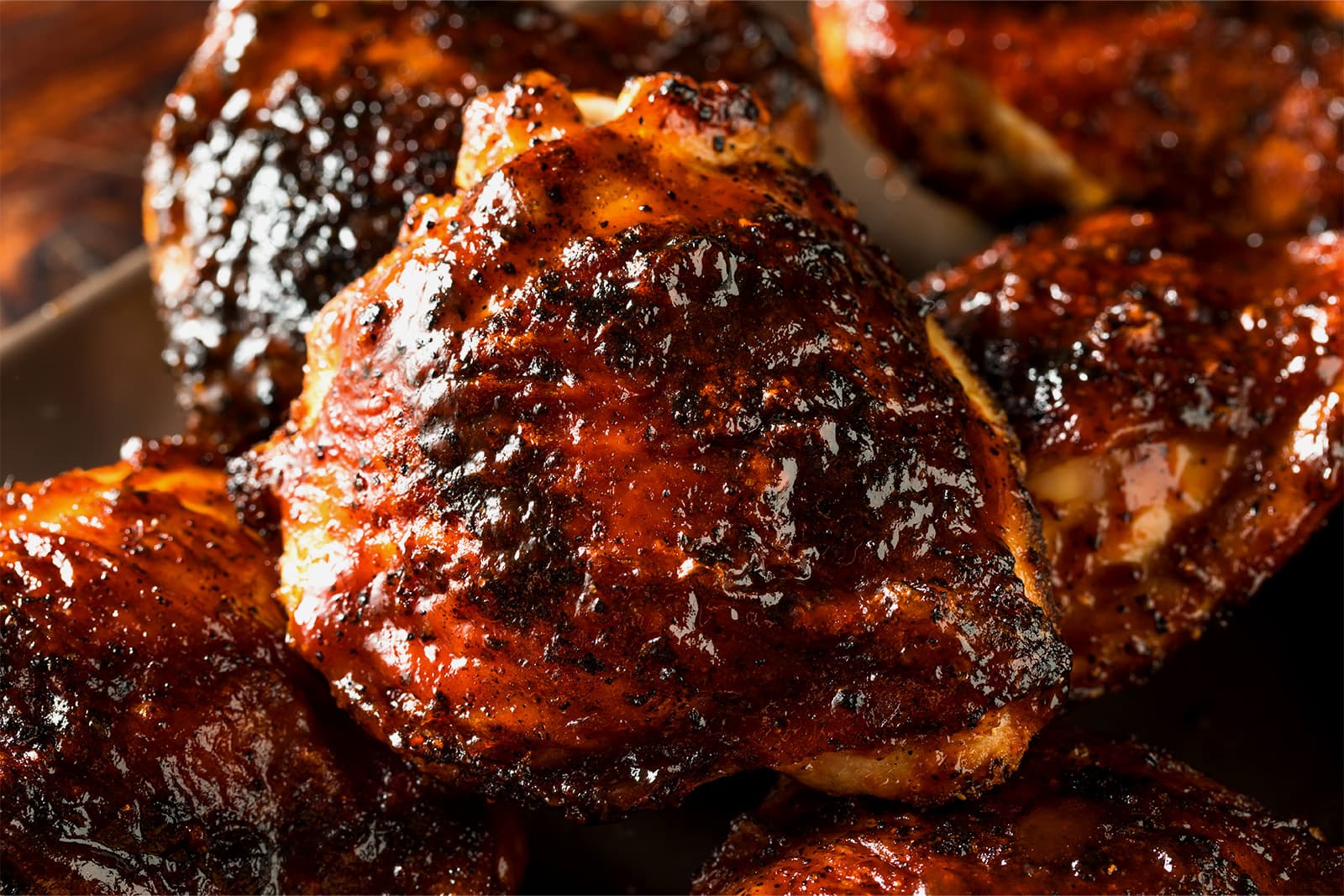
Bone-in, skin-on chicken thighs rubbed with Molten Earth Espresso Rub and grilled over medium heat until the skin crisps and the rub forms a dark, roasted crust. A savory mop sauce, built from stock, vinegar, tomato paste, and more of the same rub, is brushed on in layers during the last minutes of grilling. The mop adds gloss, moisture, and acid that moderate the bitter, mineral crust. Without the mop, the crust is one-dimensional. With it, the chicken tastes balanced, glossy, and deeply savory.
Ingredients, method, and practical notes
Equipment
Method
Pat the chicken thighs completely dry with paper towels. Season all sides with kosher salt. Drizzle with olive oil and rub to coat. Apply two tablespoons of Molten Earth Espresso Rub over all surfaces, pressing firmly into the skin. Set aside while you make the mop sauce.
👁 Each thigh is evenly coated in a dark, near-black layer of rub. The skin feels dry and tacky under the coating, not wet.WhyDrying the skin thoroughly before applying the rub ensures the skin will crisp on the grill rather than steaming. The rub adheres better to dry skin and oil than to moisture.What to noticeThe rub looks aggressive and dark on the raw chicken. That is normal. The espresso and cocoa will transform on the grill.Make the mop sauce. In a small saucepan, combine the chicken stock, apple cider vinegar, tomato paste, Worcestershire sauce, and brown sugar. Stir until the tomato paste dissolves. Bring to a gentle simmer over medium heat and cook until reduced by about one-third, 6 to 8 minutes. The sauce should have light body but not be thick.
👁 The liquid has reduced from about one and a quarter cups to about three-quarters of a cup. It coats a spoon lightly and has a deep reddish-brown color. The aroma is sharp and savory.WhyReducing the base concentrates the acid and umami so the mop has enough intensity to cut through the rich, dark crust on the chicken. A thin, unreduced liquid would run off the chicken without leaving any impression. The reduction gives the mop enough body to coat and cling.If something's offThe sauce reduces too far and becomes thick and paste-like.Fix: Add a few tablespoons of stock or water to thin it back. The mop should coat a spoon lightly, not thickly. It needs to flow and spread, not sit in a glob.
Whisk one and a half tablespoons of Molten Earth Espresso Rub and one tablespoon of oil or bacon fat into the reduced mop base. Simmer for 2 minutes only, then remove from heat and let rest for 10 minutes before using.
👁 The mop is dark, glossy, and smells of savory roasted spice. The rub is suspended in the liquid rather than sitting in clumps at the bottom. The fat adds a visible sheen.WhyThe rub simmers for only 2 minutes because the mop's job is different from the dry crust. In the mop, the espresso and cocoa are tempered by the stock and vinegar, expressing as savory depth rather than assertive bitterness. Longer simmering would dull the rub's aromatics. The 10-minute rest off heat allows the spices to settle and the mop to develop body.What to noticeTaste the mop. It should be sharp, savory, and slightly bitter in a way that is appetizing rather than harsh. The vinegar should be noticeable but not dominant. If it tastes too sharp, it will mellow when it hits the hot chicken surface.Prepare a grill for two-zone cooking. Set one side to medium-high heat (about 400°F) and leave the other side unlit or on low. Clean and oil the grates. Place the chicken thighs skin side down over direct heat.
👁 An immediate sizzle when the chicken hits the grates. The skin side is in direct contact with the heat.WhyTwo-zone grilling gives you control. Direct heat crisps the skin and develops the rub into a crust. The indirect zone is where the chicken finishes cooking through without burning the exterior. Starting skin side down builds the primary crust first.Grill the chicken skin side down over direct heat for 5 to 6 minutes without moving. Do not press down on the chicken. Flip and grill the second side over direct heat for 4 to 5 minutes.
👁 The skin side develops a dark, crispy crust with visible char marks from the grates. The rub has darkened from its raw coating into a rough, roasted surface. Some rendered fat may cause brief flare-ups, which add char.Bloom PhaseWhyThis is where the dry rub blooms. Direct grill heat triggers the same transformation as the cast iron sear: espresso and cocoa darken from bitter to roasted, smoked paprika intensifies, and the brown sugar caramelizes into the skin. The grill adds an additional dimension that the oven and pan cannot: actual char from flame contact, which reinforces the rub's dark, fire-kissed character.What to noticeWatch the color change on the skin. It shifts from the flat, dark coating of raw rub to a rough, textured crust with areas of deep brown and black. The aroma shifts from sharp and bitter to roasted and savory. By the time you flip, the kitchen should smell like something serious is happening.If something's offAggressive flare-ups that engulf the chicken in flame for more than 3 seconds at a time.Fix: Move the affected pieces to the indirect zone temporarily. Flare-ups from rendered chicken fat can char the rub beyond recovery. Brief flare-ups add character. Sustained flame burns the rub and produces acrid bitterness.
Move all the chicken to the indirect heat zone. Close the grill lid and cook for 10 to 12 minutes until the internal temperature reads 160°F in the thickest part, not touching bone.
👁 The chicken is no longer directly over flame. The lid is closed, trapping heat for even cooking. The skin side crust remains intact.Cook-In PhaseWhyIndirect heat finishes cooking the thighs through without burning the crust further. The rub continues to develop in the trapped heat, and the chicken fat renders slowly into the meat, keeping it moist. Pulling at 160°F allows carryover to bring the chicken to 165°F during the mopping and rest.If something's offThe internal temperature is only 145°F after 12 minutes on indirect.Fix: The grill is not hot enough on the indirect side. Increase the burner on the direct side (with the lid closed, the heat circulates). Or move the chicken slightly closer to the heat source. Bone-in thighs are forgiving, so do not worry about a few extra minutes.
When the chicken reaches 160°F, begin mopping. Brush a generous layer of mop sauce over each thigh, working the sauce into the crust and the crevices of the skin. Close the lid for 2 minutes. Open and brush a second layer of mop over each piece. Close the lid for 2 more minutes. Apply a third and final layer of mop.
👁 After each layer, the chicken looks glossier and darker. The mop clings to the crust rather than running off. By the third application, the surface has a lacquered, reflective quality. It should look wet and shiny, not dry or matte.Finish PhaseWhyThree thin layers build a more even glaze than one thick application. Each layer dries slightly in the closed grill before the next arrives, creating a composite coating. The mop does three things simultaneously: it adds moisture to the crust surface, restoring what the grill took away. It introduces acid from the vinegar and tomato that moderates the crust's bitter, mineral character. And it adds gloss that makes the chicken look as good as it tastes. This is the checks and balances pair in action: the assertive, bitter crust needs the moderating acid of the mop to feel balanced.What to noticeTaste a small piece of crust before mopping and again after the third layer. Before the mop, the crust is dark, roasted, and assertively bitter with a long mineral finish. After the mop, the same crust tastes sharper, more complex, and more balanced. The bitterness is still there but it has been joined by acid and umami that give it dimension. The mop did not remove the crust's character. It completed it.If something's offThe mop runs off the chicken immediately and pools on the grill grate rather than clinging.Fix: The mop was not reduced enough and is too thin. Return it to the stove and simmer for another 3 minutes to build body. Or the chicken surface is too hot and dry. Let the chicken rest for 1 minute off direct heat before mopping.
Transfer the chicken to a cutting board or serving platter. Rest for 10 minutes before serving. The internal temperature will rise to 165°F or above during the rest. Serve with any remaining mop sauce on the side as a dipping sauce.
👁 The chicken looks dark, glossy, and lacquered. The skin has set into a firm, crispy layer under the mop glaze. When you tear into a thigh, the interior is juicy and the meat pulls cleanly from the bone.Rest PhaseWhyThe rest allows juices to redistribute and the mop glaze to set. During these 10 minutes, the final layer of mop dries slightly, becoming tacky and shiny rather than wet. The flavor of the crust and the mop continues to integrate. Resting also ensures food safety, as the carryover brings the temperature past 165°F.What to noticeThe final flavor should be dark, savory, and balanced. The bitter, mineral crust provides depth. The mop provides acid and gloss. Together they create a grilled chicken that tastes serious and layered, not one-dimensionally smoky or sweet. Compare this to a typical barbecue sauce application: the mop does not mask the rub. It reveals it.
What This Recipe Teaches
How an assertive, bitter crust needs a moderating element to reach its full expression, and how a mop sauce provides that moderation through acid and umami rather than sweetness.
How the Blend Behaves Here
Molten Earth Espresso Rub appears in two forms in this recipe. As a dry rub, it builds an assertive crust: espresso and cocoa darken over direct heat, smoked paprika intensifies, and the brown sugar caramelizes the skin. This crust is deliberately incomplete on its own. It is dark, mineral, and one-dimensional without a counterpoint. In the mop sauce, the same rub is tempered by stock, vinegar, and tomato paste. The espresso reads as savory depth rather than bitterness. The vinegar provides the acid that the crust needs. When the mop is brushed over the dry crust, the two expressions of the rub meet: the assertive surface and the moderated liquid. The result is a crust that tastes balanced and layered rather than blunt.
What to Notice
Aromatic entry: Dark roasted spice under a glossy, lacquered surface. The aroma combines the mineral depth of the dry crust with the sharp, savory tang of the mop. Smoke from the grill is present but not dominant.
Mid-palate: Juicy chicken with crispy, dark skin. The crust provides concentrated mineral and roasted depth. The mop's acid cuts through the rendered fat and keeps the richness in check. Cumin and smoked paprika provide a steady savory backbone throughout.
Lingering finish: Long and layered. The espresso's mineral character lingers, moderated by the vinegar's sharpness. The tomato paste adds a quiet sweetness at the very end that rounds the finish without turning it dessert-like. The sensation is savory, dark, and clean.
The Mop vs. No-Mop Test
How the mop sauce transforms the crust from one-dimensional to balanced, and why the assertive bitter crust was designed to be incomplete without acid.
How: Grill 8 thighs identically with the same rub. Apply the mop sauce to only 4 of them (three layers as directed). Serve the mopped and unmopped thighs side by side.
Compare: The unmopped thighs will taste dark, serious, and mineral with a one-dimensional finish. They are not bad, but they are blunt. The mopped thighs will taste sharper, more complex, and more layered. The same crust is there, but the acid from the mop gives it dimension and prevents the bitterness from dominating the experience. The mop does not soften the crust. It completes it.
Symptom: The crust tastes bitter and harsh even after mopping
Cause: The mop was not applied generously enough or was not reduced enough to have concentrated acid. A thin, dilute mop does not have the intensity to moderate the crust.
Fix: Ensure the mop base is reduced by one-third before adding the rub. Apply three full layers, using the brush generously. The chicken should look wet and glossy after each application. If the mop is too thin, return it to the stove and reduce further.
Symptom: The chicken skin is soft and soggy under the mop rather than crispy
Cause: The mop was applied too early, before the skin had crisped over direct heat. Or the chicken spent too long on indirect heat with the lid closed after mopping.
Fix: Crisp the skin fully over direct heat before mopping. The skin should be firm, dark, and audibly crispy before the first mop layer goes on. Apply the mop only in the last 5 minutes of cooking, and serve within 10 minutes. The mop should coat the crust, not saturate it.
Symptom: The mop tastes too sharp and vinegary on the chicken
Cause: The mop was over-reduced, concentrating the vinegar too much. Or not enough stock was used in the base.
Fix: Add 2 to 3 tablespoons of stock to the mop to dilute the acid. The mop should be sharp but not puckering. When brushed on hot chicken, the vinegar mellows as it meets the fat and crust. If it is still too sharp after application, the base ratio was off.
Symptom: Flare-ups blackened parts of the chicken beyond recovery
Cause: Chicken thighs render significant fat, which drips onto the heat source and ignites. The rendered fat plus the brown sugar in the rub create conditions for flare-ups.
Fix: Keep the indirect zone ready and move chicken immediately when sustained flames appear. Brief flare-ups add character and are part of grilling. Sustained flame for more than 3 seconds will burn the rub. Trimming excess skin and fat before seasoning reduces flare-ups.
Notes
Advance Preparation
The mop sauce can be made up to 3 days ahead and refrigerated. Warm gently before using. The dry rub can be applied to the chicken up to 2 hours before grilling. Refrigerate uncovered on a rack to dry the skin further.
Other Cuts and Proteins
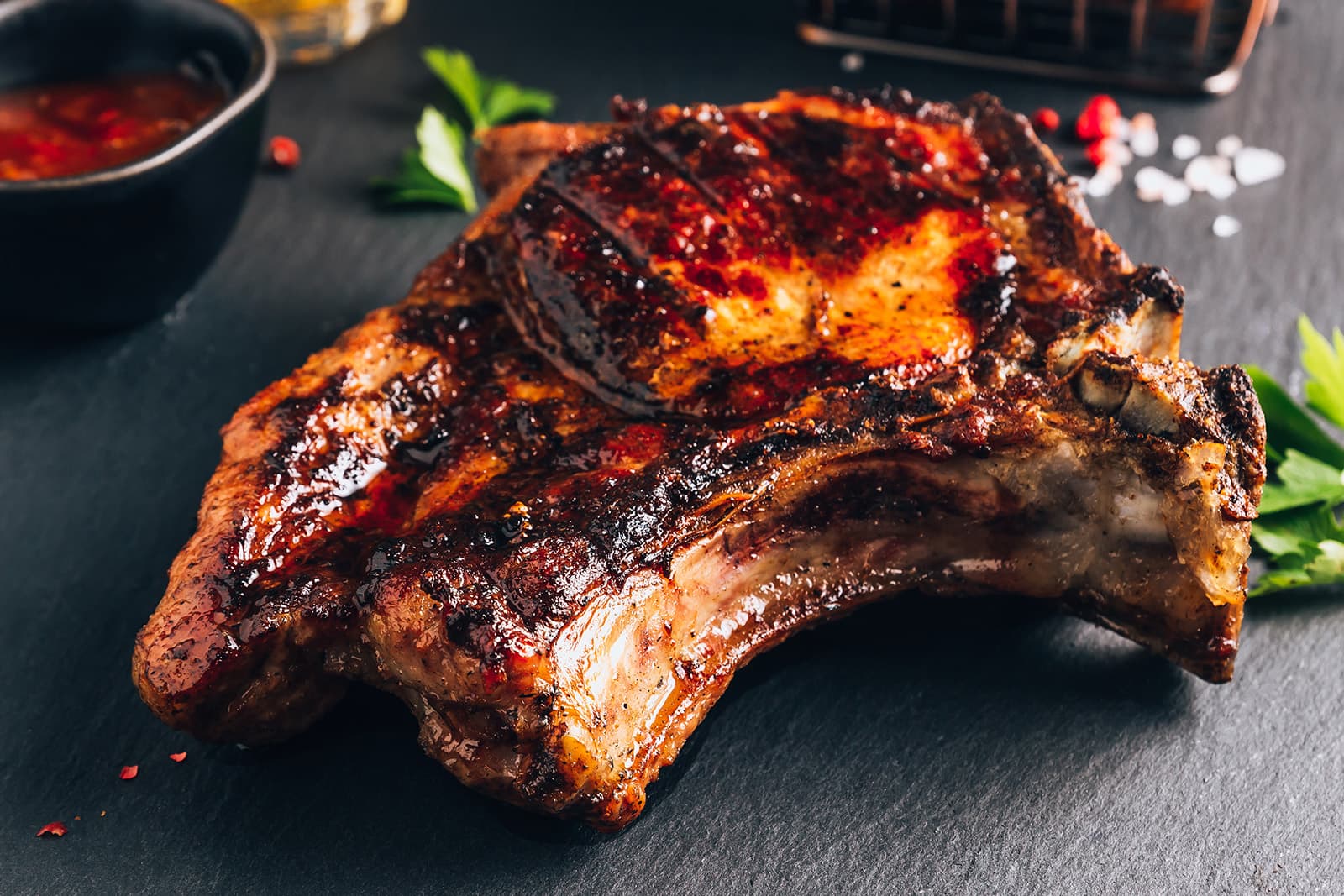
Bone-in chicken legs and drumsticks work with the same timing. Boneless thighs cook faster and need only 4 minutes per side over direct heat. For a mixed grill, add bone-in pork chops rubbed with Molten Earth Espresso Rub and mopped alongside the chicken.
Building the Mop Layers
Three thin layers are better than one thick application. Each layer dries slightly in the closed grill, creating a composite glaze. If you apply all the mop at once, it runs off and pools on the grate. Patience with the layers produces a chicken that looks lacquered and professional.
What to Serve Alongside
The dark, mineral chicken needs brightness and crunch on the plate. Coleslaw with a vinegar-based dressing, grilled corn, or a simple cucumber salad all work. Avoid heavy sides. The mop has already balanced the richness. The sides should stay clean and fresh.
Indoor Alternative
If you do not have a grill, use a two-stage oven method. Roast at 400°F on a wire rack for 25 minutes until the skin crisps and the internal temperature reaches 155°F. Apply the mop in three layers under the broiler, 2 minutes between each layer, watching carefully. The result will lack char but will demonstrate the same rub-mop balance.
More recipes like this
New recipes and seasonal cooking ideas, once a week. Never more.
See everything that's in the newsletter