Roasted Cauliflower with Amber Root Base Blend
Golden-charred florets on cool yogurt, drizzled with pomegranate molasses, scattered with toasted almonds and torn mint.
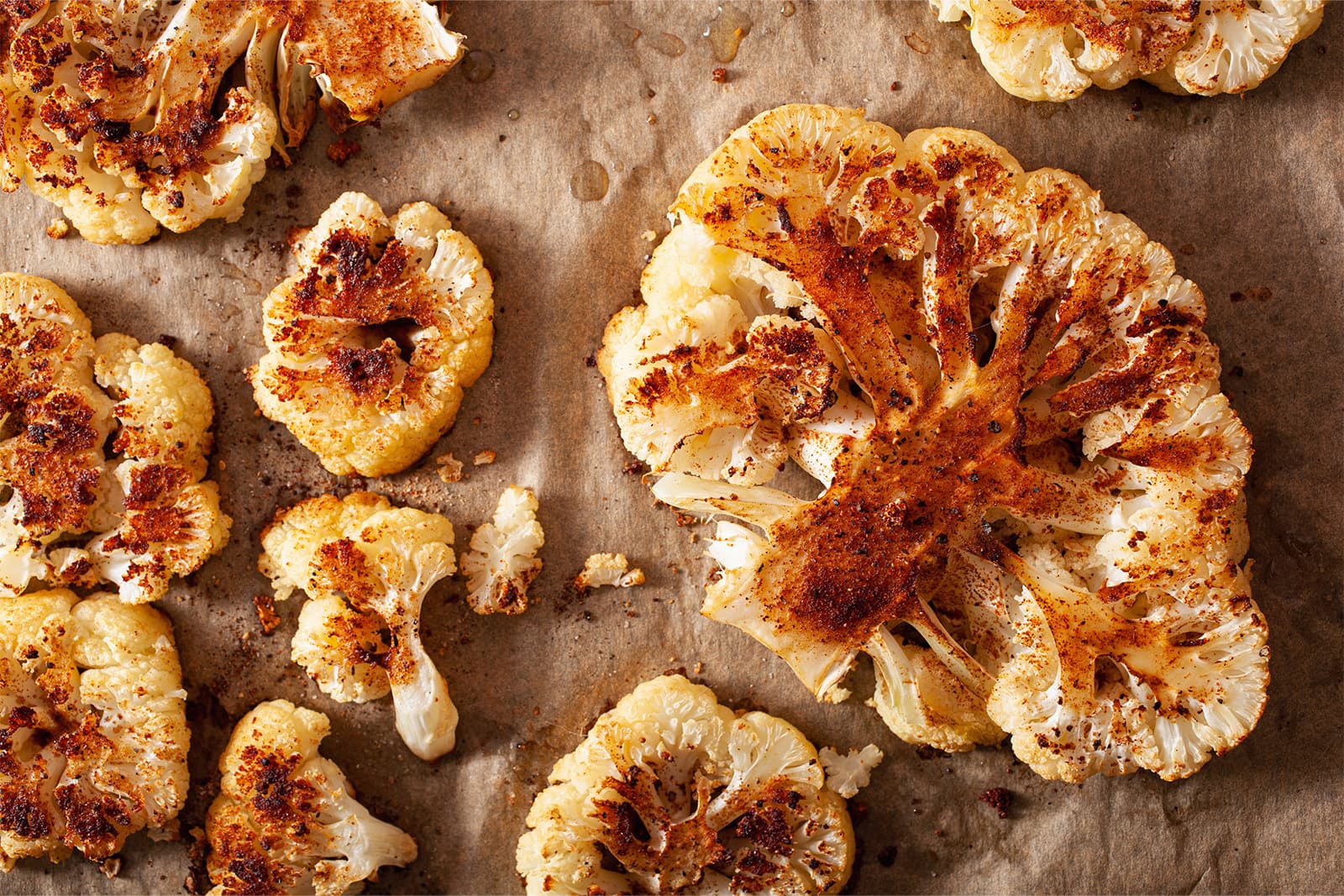
Cauliflower florets tossed in oil bloomed with Amber Root Base Blend, then roasted on a preheated pan until the flat sides develop a deep golden-brown crust and the tops stay pale and tender. Served over a cool swirl of lemon yogurt that contrasts with every warm, charred bite. Pomegranate molasses drizzled across the top adds a sweet-tart depth that plays against the turmeric's warmth. Toasted almonds give a nutty crunch that is nothing like the cauliflower's char. Fresh mint and cilantro torn over at the end lift everything with raw, volatile brightness. The bloom happens in the bowl, not the pan, which makes this technique transferable to any roasted vegetable. The preheated pan sears on contact, creating two expressions of the same blend on the same tray: concentrated and dark where the cauliflower pressed flat, mellow and warm where it faced up toward the oven's ambient heat.
Ingredients, method, and practical notes
Equipment
Method
Preheat the oven to 425°F with a sheet pan on the center rack. The pan heats with the oven so that it is scorching hot when the cauliflower lands on it.
WhyThe preheated pan is the mechanism that creates the charred flat sides. When the oiled, bloomed cauliflower hits the hot metal, it sears on contact, just like placing a steak in a hot skillet. Without this, the cauliflower steams gently on a cold pan and never develops the concentrated crust that makes the bloom's behavior visible.In a large bowl, warm three tablespoons of olive oil. You can microwave it for 20 seconds or set the bowl near the preheating oven for a few minutes. The oil should be warm to the touch but not hot. Add one tablespoon of Amber Root Base Blend and stir for 15 to 20 seconds until the oil turns golden and the aroma shifts from dusty and raw to warm and toasted.
👁 The oil shifts from clear to golden-amber. The aroma changes from dry, raw spice to something warm, savory, and inviting. That shift is the bloom completing.Bloom PhaseWhyThis is the bowl-bloom technique. The same 20-second principle as a stovetop bloom, adapted for roasting. Warming the oil first is enough to open the turmeric, coriander, and fenugreek. The volatile compounds bind to the fat in the bowl, so when the cauliflower is tossed, every surface gets coated with active, bloomed spice rather than dry powder. This technique transfers to any roasted vegetable: toss in bloomed oil in a bowl, then spread on a hot pan.What to noticeSmell the oil before and after adding the blend. Before: nothing. After stirring for 20 seconds: warm, savory, slightly sweet from the coriander, with a faint fenugreek note. That is the bloom. If the aroma is still dusty and raw, stir for a few more seconds or warm the oil slightly more.If something's offThe oil is not warm enough and the blend sinks to the bottom without coloring the oil.Fix: Warm the oil a bit more. It needs to be warm to the touch, not room temperature. The bloom will not activate in cold oil. Alternatively, stir the blend in a small saucepan over medium-low heat for 20 seconds and then pour it into the bowl.
Add the cauliflower florets to the bowl of bloomed oil. Add three-quarters of a teaspoon of salt. Toss thoroughly until every floret is evenly coated in golden oil with no dry patches.
👁 Every floret is glistening with golden oil. The turmeric stains are visible and even. No dry, white patches remain. If some florets still look pale, drizzle a small amount of plain olive oil and toss again.WhyEven coating is essential because the oven will amplify whatever is on each surface. Areas with bloomed oil will develop deep golden-brown crust. Areas without oil will dry out and taste dusty. The bloom distributed through the oil ensures that the spice coating is uniform rather than patchy.If something's offLarge patches of cauliflower are still white and dry after tossing.Fix: Not enough oil, or the oil was not warm enough to bloom evenly. Add another tablespoon of olive oil and toss again.
Carefully remove the preheated sheet pan from the oven. Spread the cauliflower in a single layer, pressing each floret flat-side down against the hot pan. Leave space between the pieces. Do not crowd.
👁 Each floret has its flat side pressed against the pan. You should hear a faint sizzle when the first pieces land. The pan has visible space between florets.WhyThe flat side pressed against the hot metal is where the most intense expression of the bloom occurs. The bloomed oil trapped between the cauliflower and the pan concentrates under direct contact heat. This creates the deeply golden, almost caramelized crust that is the defining texture of the dish. Crowding prevents contact and produces steamed, pale florets.What to noticeThe sizzle when each floret hits the pan. This is the bloom compounds making direct contact with hot metal, the same reaction as a stovetop sear but achieved through a preheated oven pan.If something's offNo sizzle when the cauliflower hits the pan.Fix: The pan was not hot enough. Next time, ensure the pan preheats for the full duration of the oven preheat, at least 15 minutes at 425°F.
Roast for 25 to 30 minutes without stirring or flipping until the bottom edges are deeply golden-brown to charred and the tops are tender when pierced with a knife. Do not open the oven during the first 20 minutes.
👁 The tops are pale gold and tender. When you lift a floret with a spatula, the flat side is deeply golden-brown with dark char at the edges. The turmeric and coriander have concentrated into a visible, almost lacquered crust on the bottom.Cook-In PhaseWhyThe oven is the extended cook-in phase. Over 25 to 30 minutes, the bloom compounds undergo two different transformations on the same pan. On the flat sides pressed against the metal, the turmeric darkens, the coriander concentrates, and the fenugreek deepens into a savory crust. On the tops and rounded sides, the same compounds stay mellower and warmer because they are exposed only to the oven's ambient heat, not direct contact. The result is two intensities of the same blend on the same tray. This is the time and heat phases lesson made visible: heat exposure determines expression.What to noticeAt 25 minutes, lift one floret with a spatula and compare the flat bottom to the pale top. The bottom should be deeply golden to charred with a concentrated, savory, slightly bitter spice crust. The top should be warm, mellow, and gently golden. Same bloom, same oven, same time. Different heat contact. Different result. That difference is the entire lesson.If something's offAfter 25 minutes, the flat sides are still pale with no golden crust.Fix: The pan was not hot enough or the oven temperature is low. Increase to 450°F for the remaining time. For future batches, ensure the pan preheats with the oven for at least 15 minutes and check your oven with a thermometer if results are consistently pale.
While the cauliflower roasts, make the yogurt base. Stir together the yogurt, one tablespoon of lemon juice, one tablespoon of olive oil, and a quarter teaspoon of salt. The mixture should be smooth and pourable. Set aside at room temperature.
👁 A smooth, pourable sauce that falls from a spoon in a slow ribbon. Not as thick as scooped yogurt, not as thin as milk.WhyThe yogurt base is the cool, tangy counterpoint to the hot, charred cauliflower. Its lactic acid cuts through the warm spice and its creamy richness provides a textural bed that the crispy florets sit in. The contrast between hot and cool, charred and smooth, warm-spiced and tangy is what gives the dish opposition in the first bite.Toast the almonds. In a small dry skillet over medium heat, cook the chopped almonds for 2 to 3 minutes, stirring frequently, until golden and fragrant. Transfer immediately to a plate.
👁 The almonds are golden, fragrant, and a shade or two darker than when they started. They smell nutty and rich.WhyToasting transforms almonds from bland and waxy to fragrant, crispy, and rich. In the dish, they provide a crunch that is fundamentally different from the cauliflower's char: dense, nutty, and oily rather than brittle and caramelized.If something's offThe almonds are dark brown and smell acrid.Fix: They went too far. Almonds go from golden to burnt quickly. Stir frequently and remove from the skillet immediately when they are fragrant and golden.
Assemble the plate. Spread the lemon yogurt across a serving platter or divide among four plates in a wide swirl. Pile the hot roasted cauliflower directly on top of the yogurt, charred sides facing up so the crust is visible. Drizzle pomegranate molasses over the cauliflower and yogurt. Scatter toasted almonds across the plate. Tear fresh mint leaves and scatter them over the top along with the cilantro. Finish with Aleppo chile flakes if using. Serve immediately.
👁 Golden-charred cauliflower sitting in a pool of white yogurt. Dark ruby pomegranate molasses drizzled in thin lines across the florets and yogurt. Golden almond pieces scattered throughout. Bright green torn mint and cilantro on top. Red Aleppo flakes if used. The plate is warm, bright, and layered with color.Finish PhaseWhyThe assembly creates the first-bite opposition that the Recipe Design Protocol requires. Hot cauliflower meets cool yogurt (temperature contrast). Charred crust meets smooth cream (textural contrast). Warm turmeric and coriander meet tangy lemon yogurt (flavor contrast). The pomegranate molasses bridges warm and cool with its sweet-tart depth. The almonds add a third texture. The torn mint releases volatile oils on contact with the warm cauliflower, providing the late-stage aromatic that lifts the entire plate. Nothing is decorative. Every element changes the experience of the bite.What to noticeTake a bite of just cauliflower dipped in yogurt. Warm and charred meets cool and tangy. Now take a bite that also catches pomegranate molasses and a piece of almond. The sweet-tart drizzle shifts the finish from warm-spice into something darker and more interesting. The almond adds a crunch that the cauliflower's char cannot. Now add a torn mint leaf. The mint lifts everything and clears the palate. The first bite is opposition. The second bite is complexity. The third bite is the reason you make it again.
What This Recipe Teaches
How the bowl-bloom technique adapts the stovetop bloom for roasted vegetables, and how a preheated pan creates two different expressions of the same bloom on the same tray: concentrated and dark where the cauliflower presses flat, mellow and warm where it faces up.
How the Blend Behaves Here
Amber Root Base Blend is bloomed in warm oil in a bowl before the cauliflower is tossed. The bloom activates the turmeric, coriander, and fenugreek, binding them to the fat so they distribute evenly across every surface. The oven becomes the cook-in phase. On the flat sides pressed against the preheated pan, the bloom compounds darken and concentrate under direct contact heat, producing a deep golden-brown crust with slightly bitter, intensely savory character. On the tops and rounded sides, the same compounds stay mellower and warmer, exposed only to ambient oven heat. The result is two intensities from a single bloom, visible on the same tray.
What to Notice
Aromatic entry: Warm turmeric and toasted coriander from the charred crust. Fresh mint releasing volatile oils on contact. The aroma is warm and bright simultaneously.
Mid-palate: The charred crust delivers concentrated, savory depth from the bloom. Cool yogurt contrasts with the heat. Crunchy almonds add nutty richness and a different texture. The pomegranate molasses introduces a sweet-tart note that darkens and deepens the warm spice rather than competing with it.
Lingering finish: The pomegranate molasses lingers as a dark, tart echo. The mint keeps the finish clean and lifted. The yogurt's tanginess resets the palate. The warmth from the bloom fades gradually and invites the next bite.
The Bowl Bloom vs. Dry Sprinkle Test
How blooming the blend in warm oil before tossing produces an entirely different result than sprinkling the dry blend directly onto oiled cauliflower.
How: Split the cauliflower into two batches. Toss the first batch in oil bloomed with the blend as directed. Toss the second batch in plain olive oil and then sprinkle the same amount of dry blend over the top. Roast both batches on the same preheated pan, keeping them separated. Taste side by side after roasting.
Compare: The bloomed batch will be evenly golden with a cohesive, savory crust. The flavor is integrated and the spice reads as seasoning rather than powder. The dry-sprinkled batch will have uneven patches: spots where the dry blend burned into dark, bitter patches, and other areas that are pale and underseasoned. The bloom distributes. The dry sprinkle decorates.
Symptom: The cauliflower tastes dusty and the spice feels gritty rather than savory and integrated
Cause: The bloom did not complete. The oil was not warm enough, or the blend was not stirred long enough for the volatile compounds to open and bind to the fat.
Fix: The oil needs to be warm to the touch before the blend goes in. Stir for a full 20 seconds. Look for the color shift from clear to golden and the aroma shift from raw to warm. If neither happens, warm the oil more.
Symptom: The flat sides of the cauliflower are pale with no golden crust
Cause: The pan was not preheated, or the cauliflower was crowded. Without a scorching hot pan, the florets steam rather than sear. Without space between them, moisture traps and prevents browning.
Fix: Preheat the pan with the oven for at least 15 minutes. Spread the florets in a single layer with visible space between each piece. Press each floret flat-side down firmly so it makes full contact with the hot metal.
Symptom: The bloom oil has dark, burnt patches on some florets and no color on others
Cause: The blend was not mixed evenly into the oil before tossing. Clumps of dry blend concentrated on some surfaces and burned while other surfaces had only plain oil.
Fix: Stir the blend into the warm oil thoroughly before adding the cauliflower. The oil should be uniformly golden with no visible clumps. Then toss the cauliflower in the bowl until every surface glistens evenly.
Symptom: The dish tastes one-dimensional despite proper roasting
Cause: The finishing elements were undersized. The pomegranate molasses was too sparse to register, or the herbs were omitted, or the yogurt was treated as a light drizzle rather than a bed.
Fix: The yogurt should be a generous swirl covering the plate, not a thin drizzle. The pomegranate molasses should be visible as distinct ruby lines across the cauliflower. The herbs should be generous, not a light scatter. These are not garnish. They are what makes the dish a complete event.
Notes
The Bowl Bloom
This technique transfers to any roasted vegetable. Warm oil in a bowl, stir in Amber Root Base Blend for 20 seconds, toss the vegetables, and spread on a preheated pan. Brussels sprouts, sweet potatoes, carrots, and parsnips all work beautifully. The principle is the same: bloom in the bowl, sear on the pan, cook in the oven.
Pomegranate Molasses Alternatives
If you cannot find pomegranate molasses, a drizzle of good balsamic vinegar or a squeeze of lemon with a half teaspoon of honey achieves a similar sweet-tart effect. The flavor will be different but the structural role is the same: a finishing acid with some sweetness that plays against the warm spice.
Scaling Up for Entertaining
This plates beautifully on a large platter as a centerpiece side dish. Spread the yogurt first, pile the hot cauliflower in the center, and drizzle and scatter the finishing elements over the top. The color contrast of golden cauliflower, white yogurt, ruby molasses, green herbs, and red chile flakes makes it the dish people photograph at the table.
Finishing Upgrade
Replace the Aleppo chile flakes with a pinch of [Scarlet Citrus Fire Finishing Salt](https://www.emberloftspices.com/blends/scarlet-citrus) for bright citrus and clean heat that connects to the pomegranate molasses and amplifies the lemon in the yogurt.
Advance Preparation
The yogurt base and toasted almonds can be made hours ahead. The cauliflower should be roasted fresh. Assemble just before serving so the hot-cool contrast is at its most dramatic.
More recipes like this
New recipes and seasonal cooking ideas, once a week. Never more.
See everything that's in the newsletter