Red Lentil Soup with Amber Root Base Blend
A 20-second bloom that builds the whole foundation, finished with a crackling spiced butter that sizzles when it hits the bowl.
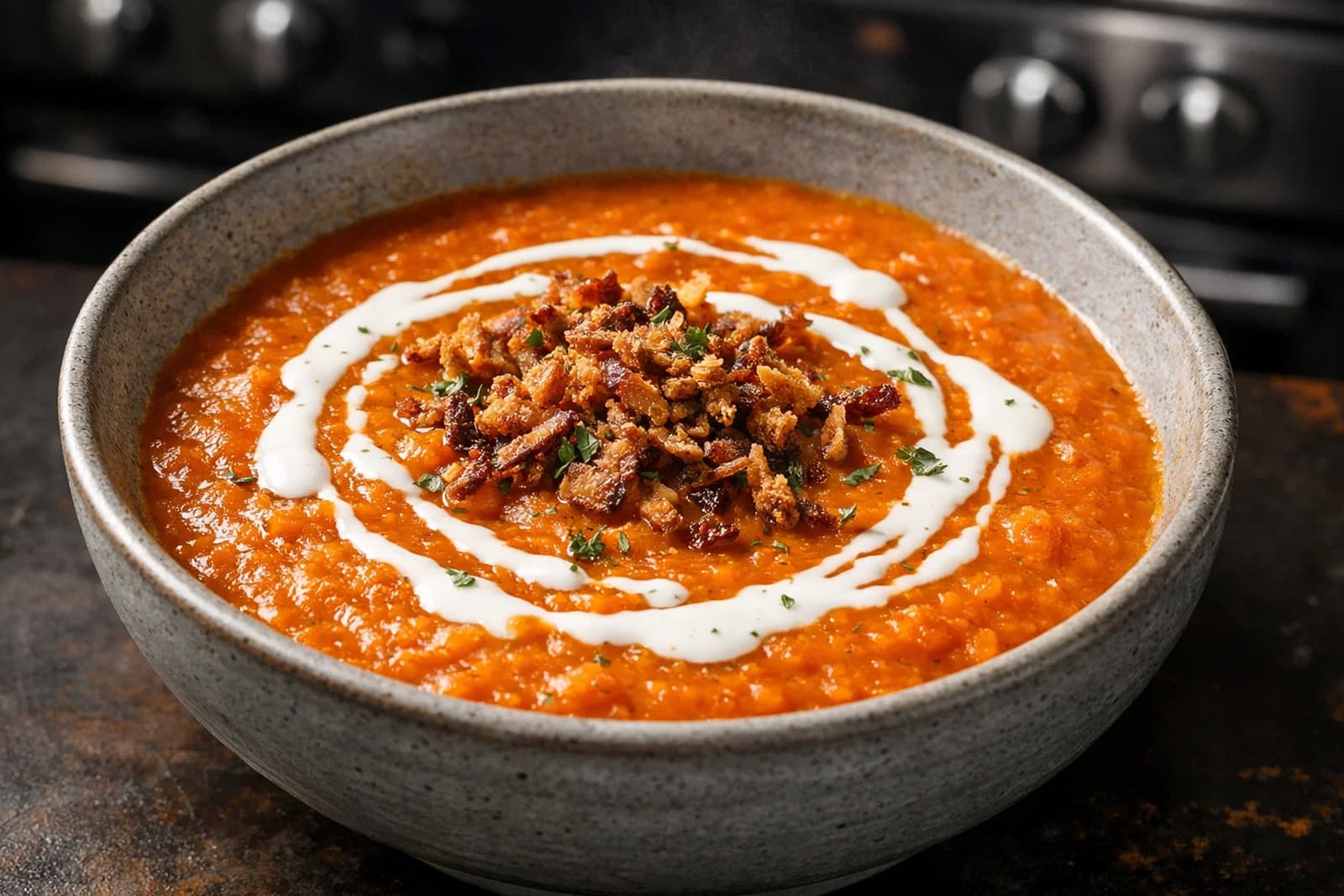
A red lentil soup built on a single bloom. Amber Root Base Blend opens in hot oil for 20 seconds before anything else enters the pot. That bloom, plus water, builds a complete savory foundation that stock could not improve. The lentils cook in the spiced liquid and dissolve into a thick, golden soup that tastes seasoned from the inside out. Then the finishing event arrives: a crackling tadka of cumin seeds and garlic slivers fried in butter, poured sizzling over each bowl. A swirl of cool yogurt. Crispy fried shallots scattered across the surface. Torn cilantro and a squeeze of lemon. The soup is the lesson. The finishing is why you tell someone about it.
Ingredients, method, and practical notes
Equipment
Method
Heat three tablespoons of olive oil in a large pot or Dutch oven over medium heat until the oil shimmers.
👁 The oil shimmers and flows easily across the bottom of the pot when tilted. Not smoking.WhyMedium heat is correct for the bloom. Too high and the blend will burn in the 20 seconds it needs to open. Too low and the volatile compounds will not activate.Add one and a half tablespoons of Amber Root Base Blend to the hot oil. Stir constantly for 20 seconds until the oil turns golden and the aroma shifts from dusty and raw to warm and savory.
👁 The oil changes from clear to golden-amber. The kitchen fills with a warm, savory aroma. Fenugreek is the first note you should notice, followed by coriander and a faint warmth from the ginger and black pepper in the blend.Bloom PhaseWhyThis is the foundational 20-second bloom. Turmeric opens and colors the oil. Coriander releases its warm, citrusy aromatics. Fenugreek and asafoetida create an instant savory base that smells like a dish already in progress. These compounds bind to the fat and will spread through the entire soup. Everything that enters the pot after this moment cooks in a spiced foundation rather than plain oil.What to noticeThe aroma shift is the single most important moment in this recipe. Before the blend hits the oil: nothing. Twenty seconds later: the kitchen smells like dinner is already happening. That shift is the grounding and umami systems activating simultaneously. The fenugreek creates savory pull. The asafoetida deepens it. The turmeric and coriander spread it. If the aroma is still dusty and raw after 20 seconds, stir for another 5 to 10 seconds. If it turns acrid or the blend darkens past golden-brown, the heat was too high.If something's offThe blend turns dark brown or black within the first 10 seconds and the aroma is sharp and acrid rather than warm.Fix: The heat was too high. Discard the burned oil and start over at medium heat. A burned bloom cannot be corrected. The bitter compounds will carry through the entire soup.
Add the diced onion to the bloomed spice oil. Stir to coat and cook over medium heat for 4 to 5 minutes until the onion is soft and translucent, with no raw white remaining.
👁 The onion pieces are translucent and soft, stained golden from the turmeric in the bloom. The aroma deepens as the onion's moisture releases into the spiced oil.Cook-In PhaseWhyThe onion cooks in the bloomed oil and absorbs the fenugreek and turmeric immediately. This is the first layer of building on top of the bloom. The onion's released moisture helps distribute the spiced oil through the pot.What to noticeThe onion pieces turn golden almost immediately as the turmeric in the oil stains them. This is visual proof that the bloom is transferring to the next ingredient.If something's offThe onion is browning rather than softening.Fix: The heat is too high. Lower to medium-low. For this soup, the onion should be soft and translucent, not caramelized.
Add the minced garlic and grated fresh ginger. Stir and cook for 1 minute until fragrant.
👁 The garlic and ginger are fragrant and softened. The aroma has another layer now: brighter and sharper on top of the warm bloom.Cook-In PhaseWhyFresh ginger adds a brightness and warmth that echoes the dried ginger in the blend but with more volatility and bite. The fresh garlic adds pungent savoriness that the blend's asafoetida has already hinted at.If something's offThe garlic turns brown.Fix: The heat is too high or the garlic has been cooking too long. Brown garlic turns bitter. If it has browned, scrape it out and add fresh garlic.
Add the rinsed red lentils and stir to coat in the spiced onion mixture. Cook for 1 minute, stirring constantly.
👁 The lentils are coated in golden oil and beginning to smell slightly toasted.Cook-In PhaseWhyBriefly toasting the lentils in the bloomed oil before adding liquid allows the spice compounds to begin penetrating the lentils' surface. As they dissolve during cooking, they carry this flavor into the body of the soup.Add five cups of water and one teaspoon of kosher salt. Increase heat to medium-high and bring to a boil. Once boiling, reduce heat to medium-low, partially cover, and simmer for 25 to 30 minutes until the lentils have completely broken down and the soup is thick and creamy. Stir occasionally to prevent sticking on the bottom.
👁 The lentils have dissolved into a thick, creamy, golden soup. No intact lentil shapes remain. The soup coats the back of a spoon. When you stir, it moves slowly.Cook-In PhaseWhyThe long simmer is where the bloom's work becomes invisible in the best way. The turmeric, coriander, and fenugreek that opened in the first 20 seconds have now spread through five cups of liquid and dissolved into over a cup of lentils. The soup does not taste like spice sitting on top of food. It tastes like food that was born seasoned. That is what the grounding and umami systems do when they have time and liquid to work through.What to noticeTaste at 15 minutes and again at 25 minutes. At 15 minutes, the spice is identifiable as distinct warmth. At 25 minutes, it has integrated so fully that the soup just tastes like itself. The turmeric is not identifiable. The coriander is not identifiable. The fenugreek is not identifiable. But the soup tastes complete. That is the systems working as a collective rather than as individual ingredients.If something's offAfter 25 minutes, the lentils are still intact and the soup is thin and watery.Fix: The heat was too low. Red lentils need a steady simmer to break down. Increase heat to maintain gentle bubbling and cook for another 10 to 15 minutes. Stir more frequently as the soup thickens to prevent scorching on the bottom.
Remove the pot from the heat. Stir in the juice of one lemon, about two tablespoons. Taste and add more salt if needed. The soup should taste warm, savory, and bright. Let the soup rest for 5 minutes off heat while you prepare the finishing components.
👁 The soup is thick, golden, and glossy. The lemon juice has been absorbed and the color may have brightened slightly.WhyThe lemon juice is the primary acid in the soup base. It lifts the warm, grounding character and prevents the soup from tasting flat or heavy. The 5-minute rest allows the acid to integrate rather than sitting sharp on the surface. Use this time to fry the shallots and make the tadka.What to noticeTaste before and after adding the lemon juice. Before: warm, savory, complete, but one-dimensional. After: the same warmth with a brightness at the end that makes you want another spoonful. The acid does not make the soup sour. It makes it more.While the soup rests, fry the crispy shallots. Heat half a cup of neutral oil in a small saucepan or skillet over medium heat. Add the sliced shallot rings. Cook, stirring occasionally, for 5 to 7 minutes until they are deeply golden and crispy. The shallots will continue to darken slightly after draining. Transfer with a slotted spoon to a paper towel-lined plate. Sprinkle lightly with salt.
👁 The shallots are deep golden brown, curled, and visibly crispy. They make a faint crackling sound when they hit the paper towel. They smell sweet and caramelized.WhyCrispy shallots provide the textural disruption that a smooth, creamy soup needs. They shatter between the teeth and add a sweet, caramelized flavor that the savory bloom base does not. Without them, the soup is one texture from first spoonful to last. With them, every bite has a crispy, crunchy interruption on the surface.What to noticePull the shallots when they are golden, not dark brown. They continue cooking in their residual heat after draining. Shallots that look perfect in the oil will be slightly too dark on the plate.If something's offThe shallots are dark brown to black and taste bitter.Fix: They cooked too long or the heat was too high. Shallots go from golden to burnt in about 30 seconds. Start checking at 4 minutes and pull them when they are a shade lighter than you want.
Make the tadka. In a small skillet or butter warmer, melt three tablespoons of butter over medium heat. When the butter foams, add one teaspoon of cumin seeds. Let them sizzle and pop for 20 to 30 seconds until fragrant and slightly darkened. Add the sliced garlic and cook for 30 seconds until the garlic is golden and crisp at the edges. Add the Aleppo chile flakes if using. Immediately remove from heat.
👁 The butter is golden-brown. The cumin seeds have darkened a shade and are crackling. The garlic slices are golden with crispy edges. The butter smells nutty, earthy, and warm. If Aleppo flakes were added, the butter has a red-gold tint.Finish PhaseWhyThe tadka is a second bloom. The soup's foundation was built on the first bloom: Amber Root Base Blend opened in olive oil at the start, integrated invisibly into the base over 30 minutes. The tadka is a finish-phase bloom: cumin seeds and garlic opened in butter at the very end, poured crackling over the surface. The first bloom is invisible and structural. The second bloom is visible, aromatic, and immediate. Same principle. Different phase. Different expression. Together they demonstrate that blooming is not a single technique used once. It is a principle used whenever fat, heat, and aromatics meet.What to noticeListen to the cumin seeds. When they hit the hot butter, they crackle and pop. That sound is the volatile compounds escaping as the seed opens. This is the same mechanism as the first bloom but at a scale you can hear. The aroma that fills the kitchen in these 30 seconds is different from the aroma of the original bloom: the cumin seeds are whole and more volatile, the butter's milk solids are browning, and the garlic is crisping rather than softening. Two blooms, two aromas, two textures.If something's offThe cumin seeds turn black and the butter smells acrid.Fix: The heat was too high. Cumin seeds burn quickly. Use medium heat and remove from the burner as soon as the garlic is golden. The residual heat in the butter continues cooking everything for another 10 to 15 seconds.
Ladle the soup into bowls. Add a generous swirl of cold yogurt to each bowl. Pour the hot tadka directly over the yogurt and soup. The butter will sizzle on contact. Scatter crispy shallots over the surface. Tear cilantro and scatter it over each bowl. Serve immediately.
👁 Golden soup with a white yogurt swirl. The golden-brown tadka butter pools on the surface with visible cumin seeds and crispy garlic chips. Crispy shallot rings scattered across. Bright green torn cilantro on top. The bowl is warm, layered, and alive. You can hear the tadka sizzle.Finish PhaseWhyThe assembly is the event. The soup base is warm, golden, and smooth. The yogurt adds cool, tangy contrast. The tadka sizzles when it hits the surface, releasing a burst of cumin and browned butter aroma that is the last thing the nose registers before the first bite. The crispy shallots shatter the smooth surface. The cilantro lifts everything with raw brightness. The first spoonful contains opposition in every dimension: hot soup and cold yogurt, smooth lentils and crispy shallots, warm bloom spice and bright torn cilantro, integrated grounding flavor in the base and immediate volatile aroma from the tadka on top.What to noticeThe moment the tadka hits the soup surface. The sizzle. The burst of cumin and brown butter aroma. That is the finish-phase bloom arriving on top of the cook-in-phase bloom. Two blooms, two phases, one bowl. The soup below was built by the first. The surface is defined by the second.
What This Recipe Teaches
How a single 20-second bloom creates a complete savory foundation from water and lentils, and how a second bloom at the finish (the tadka) demonstrates that blooming is a repeatable principle, not a one-time technique.
How the Blend Behaves Here
Amber Root Base Blend is bloomed once in oil at the start. Turmeric, coriander, fenugreek, and asafoetida open and bind to the fat in 20 seconds. The onions, garlic, ginger, lentils, and water all cook in this spiced foundation. Over 25 to 30 minutes of simmering, the bloom compounds integrate so completely that they become invisible as individual ingredients. The soup does not taste like turmeric or coriander or fenugreek. It tastes complete, warm, and savory. That is the grounding system (coriander, turmeric, fenugreek anchoring in savory depth) and the umami system (fenugreek and asafoetida creating the sensation of completeness) working as a collective. The water-not-stock decision isolates this: the bloom is the only source of savory depth in the pot.
What to Notice
Aromatic entry: Brown butter, crackling cumin seeds, and crispy garlic from the tadka. Fresh cilantro. The first thing that reaches you is the finish-phase bloom on the surface, not the cook-in bloom in the base. The two aromas layer: warm and integrated from below, volatile and immediate from above.
Mid-palate: Thick, creamy lentils carrying the warm grounding base. The turmeric and coriander are not individually identifiable. The soup tastes savory, warm, and complete. Cool yogurt provides tangy contrast. Crispy shallots shatter and add sweet, caramelized crunch.
Lingering finish: Lemon brightness from the acid stirred into the base. Cumin warmth from the tadka lingering on the palate. The finish is clean and warm rather than heavy, and the acid prevents the grounding base from accumulating into flatness.
The Bloom vs. No-Bloom Test
How the first 20 seconds in hot oil transforms the same blend from a surface seasoning into a structural flavor that spreads through the entire soup.
How: Make the recipe twice in two separate pots, using exactly the same quantities. In the first pot, bloom the blend in hot oil for 20 seconds before adding anything else. In the second pot, skip the bloom and stir the blend directly into the water along with the lentils. Finish both with the same tadka, yogurt, shallots, and cilantro.
Compare: Taste both soups side by side. The bloomed version should taste seasoned through, with warmth and savoriness woven into the lentils themselves. The unbloomed version will have color from the turmeric but the spice will taste like powder stirred into liquid. The lentils underneath will taste plain. The difference is not subtle. This is the single most instructive test in the entire Amber Root Base Blend recipe set.
Symptom: The soup tastes flat despite using the full amount of blend
Cause: The bloom was skipped or too short. The spice compounds did not open and bind to fat, so they are sitting as powder in the liquid rather than distributed through the lentils.
Fix: Ensure the oil is shimmering before adding the blend, and stir for a full 20 seconds until the color shifts and the aroma is warm, not dusty. If the aroma does not shift, the oil was not hot enough.
Symptom: The spices taste harsh and gritty rather than warm and smooth
Cause: The oil was too hot during the bloom. The blend scorched instead of opening. Or the blend was added to dry heat without sufficient fat.
Fix: Reduce heat to medium. Ensure three tablespoons of oil are in the pot. The blend should sizzle gently, not pop or smoke immediately.
Symptom: The soup is thin and watery after 30 minutes
Cause: The heat was too low during the simmer and the lentils did not fully dissolve. Or too much water was added.
Fix: Red lentils need a steady, gentle simmer to break down. If the soup is thin, increase heat slightly and cook uncovered for another 10 to 15 minutes, stirring frequently. The lentils will continue dissolving and the liquid will reduce.
Symptom: The tadka tastes burnt rather than nutty and warm
Cause: The cumin seeds or garlic cooked too long. The tadka takes under 60 seconds total.
Fix: Use medium heat. Add the cumin seeds and wait 20 to 30 seconds. Add the garlic and wait 30 seconds. Remove from heat immediately when the garlic is golden. The residual heat continues cooking for 10 to 15 seconds. If anything is dark brown or black, start over with fresh butter.
Notes
Two Blooms, One Bowl
This recipe demonstrates blooming as a repeatable principle. The first bloom (Amber Root Base Blend in oil at the start) is invisible and structural. The second bloom (cumin seeds and garlic in butter at serving) is visible and immediate. Together they show that blooming is not a single technique used once per recipe. It is a principle that applies whenever fat, heat, and aromatics meet.
Advance Preparation
The soup base improves overnight as the bloom compounds continue to settle and integrate. Make the soup a day ahead and refrigerate. Reheat gently. Make the crispy shallots and tadka fresh just before serving. The finishing components lose their magic if they sit.
If You Cannot Find Shallots
Thinly sliced yellow onion works as a substitute for the crispy shallots. The flavor is sharper and less sweet, but the textural function is the same. Fry in the same manner and pull when golden.
Leftovers
The soup base stores well for 4 to 5 days refrigerated. It thickens considerably as it cools. Thin with water when reheating and re-season with a squeeze of lemon. Make fresh tadka, shallots, and yogurt for each serving. Reheated soup with fresh finishing tastes nearly as good as the first night.
Finishing Upgrade
Replace the Aleppo chile flakes in the tadka with a pinch of [Scarlet Citrus Fire Finishing Salt](https://www.emberloftspices.com/blends/scarlet-citrus) scattered directly over the assembled bowl. The bright citrus and clean heat amplify the lemon in the base and the cumin in the tadka simultaneously.
More recipes like this
New recipes and seasonal cooking ideas, once a week. Never more.
See everything that's in the newsletter