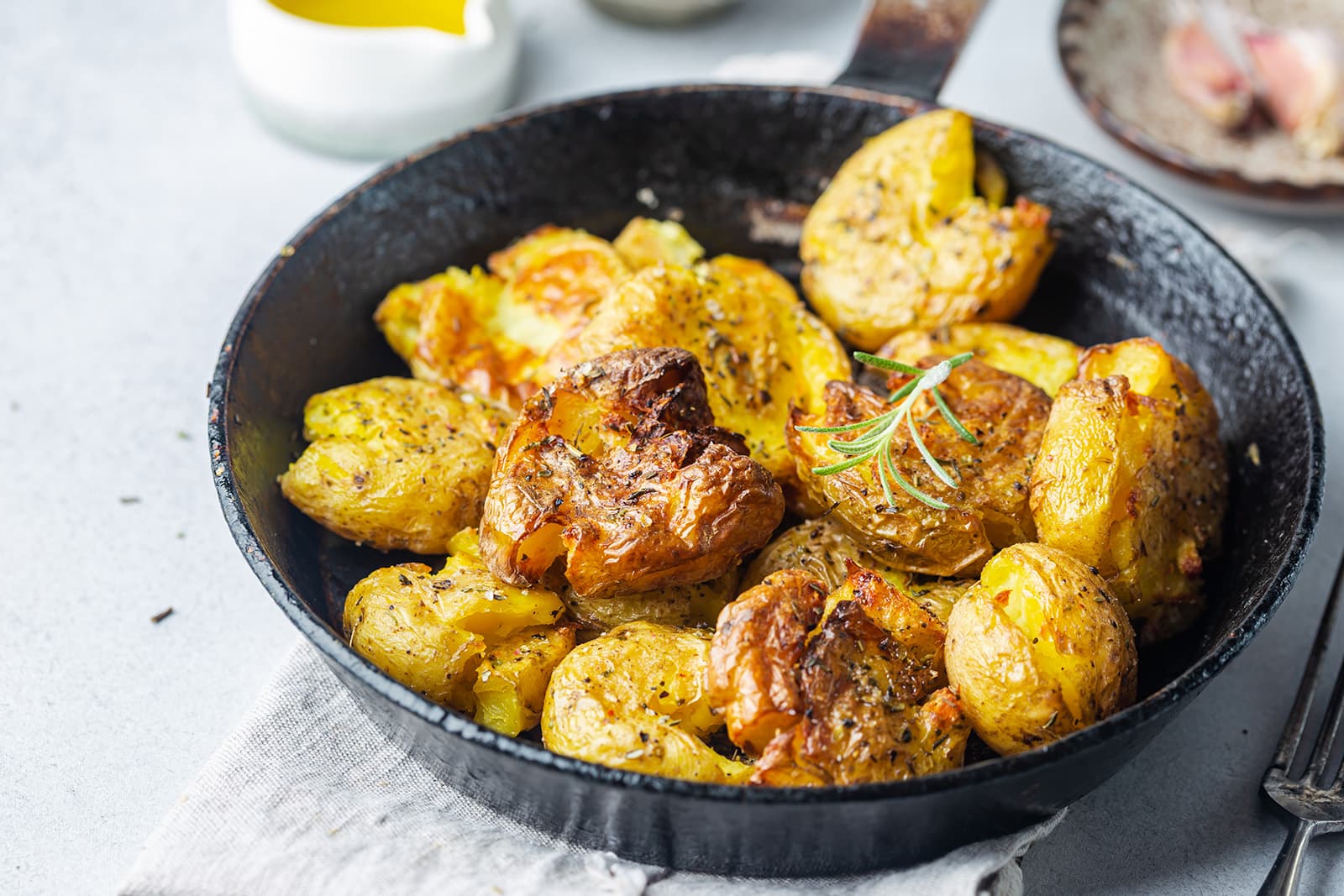
Crispy Smashed Potatoes with Savory Hearthbread Blend
Shattered edges, creamy centers, and garlic-herb butter in every bite.
Small gold potatoes boiled tender, smashed flat, and roasted at high heat with butter and Savory Hearthbread Blend. The garlic and herbs open in the hot fat and settle into every crispy edge. The sage rounds the garlic so it tastes savory rather than sharp, and the sumac keeps the butter from feeling heavy.
Ingredients, method, and practical notes
Equipment
Method
Place the potatoes in a large pot and cover with cold water by about two inches. Add two tablespoons of kosher salt. Bring to a boil over high heat, then lower the heat to medium and simmer until the potatoes are completely tender when pierced through the center with a paring knife, 15 to 20 minutes depending on size.
👁 A paring knife slides through the center of the largest potato with no resistance. The skins may have split slightly on a few potatoes.WhyStarting in cold water ensures the potatoes cook evenly from the outside in. If dropped into boiling water, the exteriors turn soft and fragile before the centers are done, and the potatoes fall apart when smashed instead of holding together.What to noticeCheck a potato at 15 minutes. If the knife meets any firmness in the center, give them another 3 to 5 minutes. Undercooked potatoes crack and crumble when smashed. You want them soft enough to flatten without breaking into pieces.If something's offPotatoes break apart into chunks when you try to smash them.Fix: They were not cooked long enough. The center needs to be completely soft. Next time, test with a knife and wait until there is truly zero resistance.
While the potatoes boil, position a rack in the upper third of the oven and preheat to 450°F. Line a large sheet pan with parchment paper.
WhyThe upper rack position provides more direct radiant heat from above, which helps the exposed potato surfaces crisp and brown. Parchment prevents sticking and makes cleanup easier.In a small bowl, stir together the melted butter, olive oil, Savory Hearthbread Blend, and black pepper until evenly combined.
👁 A fragrant, golden-brown butter mixture with visible herb flecks suspended throughout. No dry clumps of blend sitting at the bottom.WhyMixing the blend into the fat before it touches the potatoes ensures even distribution. If the blend is sprinkled on dry, some potatoes get too much and others get none. The fat is the delivery system.What to noticeThe butter mixture should already smell savory and appetizing. That is the garlic and herb aromatics beginning to open in the warm fat, even before roasting.Drain the potatoes thoroughly and spread them on the prepared sheet pan with at least two inches of space between each potato. Using the flat bottom of a drinking glass or a measuring cup, press each potato firmly until it is about half an inch thick. The edges should crack and split open. Do not worry about pieces that break off.
👁 Flat, ragged discs with cracked edges and exposed starchy interior. Some pieces may break off around the edges. That is fine. Those loose pieces will become the crispiest bites on the pan.WhySmashing creates maximum surface area. Every crack, split, and rough edge becomes a site where butter and blend can pool, crisp, and brown. Smooth, round potatoes will not develop the same crust. The space between potatoes prevents steaming.What to noticePress firmly and evenly. You want flat discs, not gently squished spheres. The more surface area touching the pan, the more crust you get.If something's offThe potatoes barely flatten and spring back to a rounded shape.Fix: They were undercooked. Properly tender potatoes flatten easily with moderate pressure and stay flat.
Spoon the butter-blend mixture evenly over each smashed potato, making sure it pools into the cracks and edges. Use the back of the spoon to spread it across the surface.
👁 Every potato glistens with the herb butter. The mixture has settled into the cracks and around the edges. No dry, exposed starch remaining on the surface.WhyThe butter carries the blend into every crevice. Anywhere the fat reaches, the garlic and herbs will open during roasting. Dry spots will not crisp, they will just harden.If something's offMost of the butter mixture runs off the potatoes and pools on the pan around them.Fix: The potatoes were still too wet from boiling. Next time, let them sit on the sheet pan for 2 to 3 minutes after smashing to let surface moisture evaporate before adding the butter.
Roast on the upper rack for 25 to 30 minutes without moving the potatoes. Do not flip them. They are done when the edges are deeply golden brown and the tops are visibly crisp.
👁 Edges are deep golden brown to dark brown. The tops look dry and crisp rather than soft. The herb butter has browned into the surface. The kitchen smells like garlic bread.Bloom PhaseWhyThis is where the blend does its work. The garlic and onion open in the hot butter during the first 10 minutes, filling the kitchen with aroma. Rosemary and thyme deepen over the full roast. Sage rounds the garlic so the finished potatoes taste savory and warm rather than sharp. Not moving them allows the bottoms to form a continuous golden crust against the pan.What to noticeAt about 10 minutes, the kitchen will smell strongly of garlic and herbs opening in butter. That is the bloom happening. By 20 minutes, the aroma shifts from sharp garlic to something rounder and more savory. That is the sage doing its work. By 25 minutes, everything smells toasted and deeply appetizing.If something's offAfter 25 minutes, the potatoes are still pale and soft on top with no visible browning.Fix: The oven was not hot enough or the rack was too low. Move to the upper third and give them another 5 to 8 minutes. If your oven runs cool, try 475°F next time.
Remove the pan from the oven and let the potatoes rest on the pan for 2 to 3 minutes. Use a thin spatula to release them from the parchment. Transfer to a serving plate and finish with flaky salt or Scarlet Citrus Fire Finishing Salt.
👁 The edges have firmed and the potatoes release cleanly from the parchment with an audible crunch when the spatula slides underneath.Finish PhaseWhyA brief rest firms the crust so the potatoes hold their shape when you lift them. Finishing salt applied while they are still hot dissolves just slightly on contact, creating a burst of seasoning that the roasted blend cannot replicate. Scarlet Citrus Fire Finishing Salt adds bright citrus that cuts through the butter.What to noticeListen when you slide the spatula under. A good potato will crackle. If it is silent and soft, it needed more time in the oven.If something's offThe potatoes stick to the parchment and tear apart when you try to lift them.Fix: They needed more time. The bottom crust was not set. Slide them back in for another 5 minutes.
What This Recipe Teaches
How a garlic-led herb blend behaves differently when it opens in hot fat across an extended roast than when it is simply sprinkled on food, and how sage's rounding role keeps garlic from turning sharp in a butter-and-starch context.
How the Blend Behaves Here
Savory Hearthbread Blend opens in the melted butter during the first 10 minutes of roasting. Garlic and onion hit first, creating the sharp, appetizing aroma that fills the kitchen. Over the next 15 minutes, rosemary and thyme deepen and the sage begins to moderate the garlic, pulling it from sharp and forward to warm and savory. The sumac works quietly throughout, lifting the butter just enough that the finished potatoes taste clean and craveable rather than heavy. By the end of the roast, the blend has become part of the crust rather than a coating on it.
What to Notice
Aromatic entry: Warm, toasted garlic butter rising from the crust before the first bite. Rosemary and thyme underneath, steady and savory.
Mid-palate: Creamy, starchy potato interior meeting the crispy, herb-crusted edge. The garlic has settled into warmth rather than sharpness. The butter carries flavor through every bite without heaviness.
Lingering finish: A clean, savory fade. The sage keeps the garlic from lingering too long. If [Scarlet Citrus Fire Finishing Salt](https://www.emberloftspices.com/blends/scarlet-citrus) is applied, a quick bright lift that cuts the richness and disappears cleanly.
The Dry Sprinkle vs. Fat Carrier Test
How fat changes the way Savory Hearthbread Blend expresses during roasting. The same amount of blend produces a noticeably different result depending on whether it is carried by butter or sprinkled dry.
How: Smash and roast two batches of potatoes side by side on the same pan. Brush one batch with plain melted butter, then sprinkle the dry blend on top. Mix the blend into the melted butter for the other batch and spoon it on as the recipe directs. Use the same total amount of butter and blend for each batch.
Compare: The dry-sprinkled potatoes will taste more sharply garlicky and the herbs will sit on the surface. The butter-carried potatoes will taste more integrated and savory, with the garlic reading as warmth rather than bite. The sage rounds more effectively when it is dissolved in fat.
Symptom: The potatoes taste sharply garlicky rather than warm and savory
Cause: The blend was not mixed into fat before application, or the potatoes did not roast long enough for the sage and thyme to catch up to the garlic. At 10 to 15 minutes, garlic dominates. At 25 minutes, the other herbs have rounded it.
Fix: Always mix the blend into the butter and oil first. And trust the full 25 to 30 minutes. The shift from sharp to savory happens in the last 10 minutes of roasting.
Symptom: The potatoes are soft and pale with no crispy edges
Cause: The oven was not hot enough, the potatoes were crowded too closely together (trapping steam), or there was too much residual moisture on the potatoes after boiling.
Fix: Use 450°F with the rack in the upper third. Leave at least two inches between potatoes. After smashing, let them sit for 2 to 3 minutes before applying the butter so surface moisture can evaporate.
Symptom: The garlic and herbs taste burnt rather than toasted
Cause: The oven was too hot or the potatoes were on a rack too close to the top heating element. The blend's garlic powder can scorch above 475°F with direct radiant heat.
Fix: Stay at 450°F. If your oven runs hot, drop to 425°F and extend the roast by 5 minutes. Move the rack to the center position if the tops are browning faster than the edges.
Symptom: The potatoes crumbled apart when smashed and the pan is full of loose pieces
Cause: The potatoes were overcooked past tender into falling-apart, or russet potatoes were used instead of waxy gold potatoes. Russets are starchy and dry, so they shatter rather than flatten.
Fix: Use Yukon Gold or similar waxy potatoes. Check tenderness at 15 minutes. They should be soft but still hold their shape when lifted from the water. The loose pieces will still crisp nicely, so roast them anyway.
Notes
Advance Preparation
Potatoes can be boiled and smashed up to 4 hours ahead. Spread them on the sheet pan, cover loosely, and refrigerate. The surface dries in the fridge, which actually improves crisping. Add the butter-blend mixture and roast straight from the refrigerator, adding 3 to 5 minutes to the roast time.
Potato Varieties
Any small waxy potato works. Baby red potatoes, fingerlings, or Creamer potatoes are all good. Avoid russets and large baking potatoes. They are too starchy and dry to hold together when smashed.
Cooking for a Crowd
This recipe doubles easily. Use two sheet pans on separate racks and rotate them halfway through roasting. Do not crowd potatoes onto a single pan. Steam from crowding prevents crisping.
What to Serve Alongside
These pair well with simply roasted or grilled protein. The garlic-herb butter is rich, so the main dish can be clean and straightforward. Excellent next to a roast chicken, seared steak, or grilled fish.
Getting the Crispiest Edges
Three things matter most: the potatoes must be thoroughly cooked so they smash flat, the butter must coat every crack and edge, and the oven must be fully preheated to 450°F. If you want even more crust, brush a thin layer of olive oil on the parchment before placing the potatoes.
More recipes like this
New recipes and seasonal cooking ideas, once a week. Never more.
See everything that's in the newsletter