Garlic-Herb Cream Pasta with Shrimp
A rich cream sauce that never feels heavy, built on garlic-herb butter and finished with lemon.
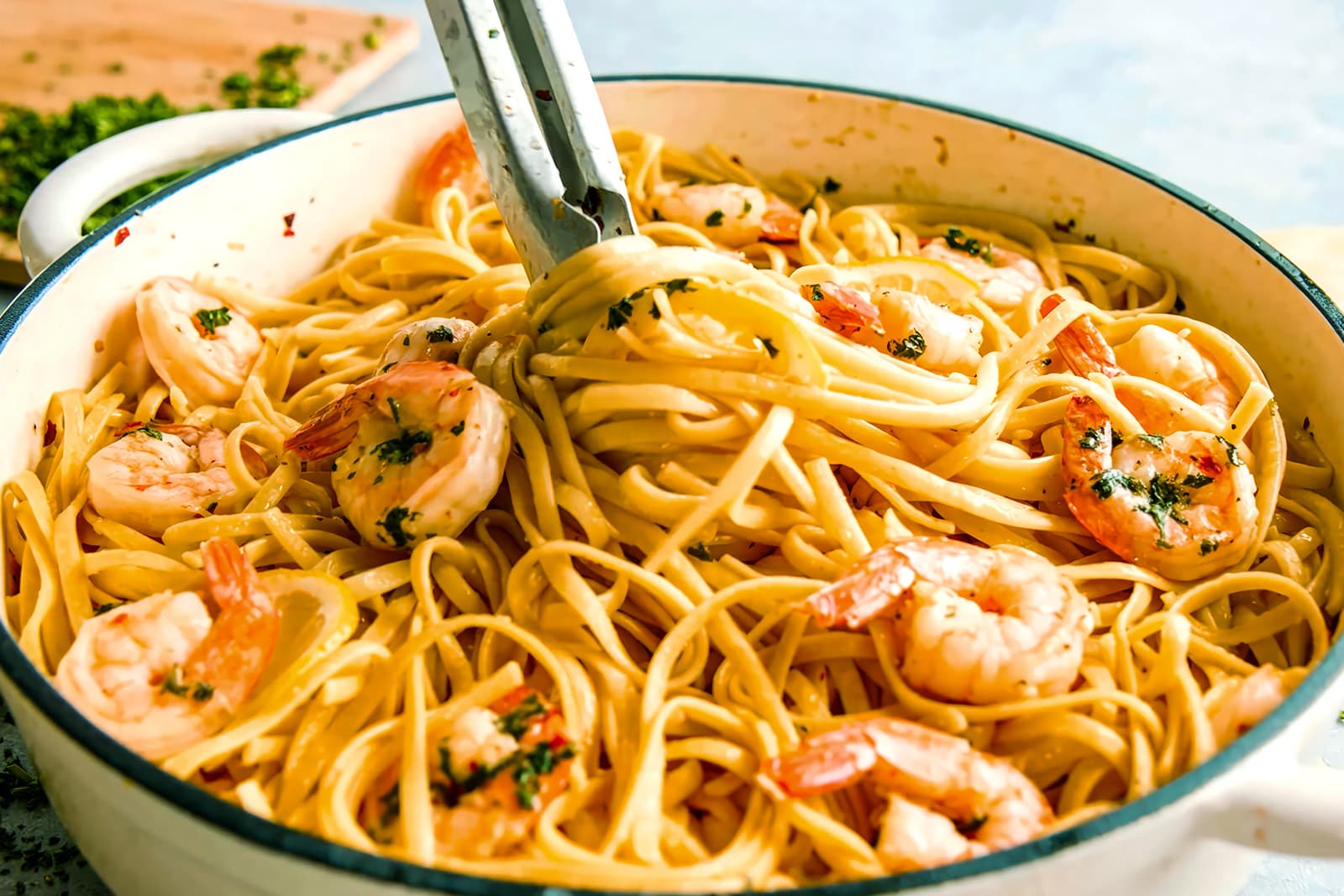
Seared shrimp tossed with linguine in a cream sauce built on Savory Hearthbread Blend and butter. The blend opens in hot fat, then integrates as the cream reduces, creating a sauce that tastes deeply savory without becoming dense or one-dimensional. The sumac inside the blend and a squeeze of lemon at the finish keep the cream clean and the next bite appealing.
Ingredients, method, and practical notes
Equipment
Method
Bring a large pot of water to a boil over high heat. Add two tablespoons of kosher salt. Cook the linguine according to the package directions, but pull it one minute before the suggested time. Before draining, reserve one cup of the starchy pasta cooking water. Drain the pasta and set it aside.
👁 The pasta should be firm when bitten, with a thin white core visible when you break a noodle in half. It will finish cooking in the sauce.WhyPulling the pasta one minute early is important because it finishes cooking in the cream sauce. If the pasta is fully cooked before it goes in, it turns soft and stops absorbing the sauce. The reserved cooking water is starchy and salted, and it thins the sauce without diluting flavor the way plain water would.What to noticeTaste a noodle before draining. It should have a slight resistance at the center, not quite pleasant to eat on its own. That last minute of cooking happens in the pan with the sauce.If something's offThe pasta is completely soft with no bite when you drain it.Fix: Reduce the boil time by another minute next time. In this recipe, slightly underdone is always better than fully cooked. The sauce finishing step will take it the rest of the way.
While the pasta water comes to a boil, pat the shrimp thoroughly dry with paper towels. Season with half a teaspoon of kosher salt.
👁 The shrimp surfaces are matte and dry to the touch, not shiny or wet. The salt has begun to dissolve into the surface.WhyWet shrimp release moisture in the hot pan and steam instead of searing. Steamed shrimp turn rubbery and do not develop the light golden color that indicates proper heat contact. Dry surfaces sear.Heat one tablespoon of olive oil in a 12-inch skillet over medium-high heat until the oil shimmers. Add the shrimp in a single layer, leaving space between each. Cook without moving for 90 seconds, then flip and cook the second side for 60 to 90 seconds. Transfer the shrimp to a plate immediately. They will be just barely cooked through. Do not wash the skillet.
👁 The bottoms are light pink-gold with a few spots of browning. When flipped, the cooked side should look opaque about two-thirds of the way through. The centers may still be slightly translucent.WhyShrimp go from perfectly cooked to rubbery in about 30 seconds. Pulling them slightly underdone is deliberate because they go back into the hot sauce later. The residual heat and the brief toss in the sauce finish them gently. The fond left in the skillet, the golden bits stuck to the surface, becomes the first layer of flavor in the sauce.What to noticeWhen you flip the shrimp, look for a clean release from the pan. If they stick, they are not ready. Give them another 15 to 20 seconds. A properly seared shrimp releases on its own.If something's offThe shrimp release a pool of liquid and turn from raw to fully white and curled in the pan.Fix: The shrimp were too wet, the pan was not hot enough, or the pan was crowded. Sear in two batches if needed, and make sure the surfaces are bone dry before they hit the oil.
Lower the heat to medium. Add three tablespoons of unsalted butter to the same skillet. Once the butter is melted and foaming, add the Savory Hearthbread Blend and stir constantly for 30 seconds.
👁 The butter turns fragrant and slightly golden with visible herb flecks suspended in the foam. The kitchen fills with garlic and herb aroma. The fond from the shrimp begins to dissolve into the butter.Bloom PhaseWhyThis is where the sauce begins. The blend's garlic, rosemary, thyme, and sage open in hot butter and bind to the fat. Everything that follows, the cream, the pasta, the shrimp, carries this flavor. The fond from the shrimp dissolves into the butter, adding savory depth that the blend builds on.What to noticeThe aroma shifts within 30 seconds. It starts sharp and raw, then turns warm and appetizing. That transition is the garlic powder and dried herbs releasing their volatile compounds into the fat. If the blend smells dusty or stale, the butter was not hot enough.If something's offThe blend darkens quickly and the butter smells acrid rather than savory.Fix: The heat was too high. Savory Hearthbread Blend contains garlic powder, which scorches easily above medium heat in butter. Lower the heat and add a splash of cream immediately to stop the cooking.
Add the sliced garlic to the butter and stir for 45 seconds to one minute, until the garlic is fragrant and just starting to turn golden at the edges. Do not let it brown.
👁 The garlic slices are softened and translucent with pale gold edges. The aroma is sweet and warm, not sharp or acrid.Bloom PhaseWhyFresh garlic reinforces the garlic powder already in the blend. The powder distributed through the fat. The slices provide visible presence and a slightly different, sweeter garlic character that you can see and taste in the finished dish. Together they establish garlic as the clear lead of this sauce.What to noticeThe garlic aroma layers on top of the bloom that is already underway. It should smell richer and more complex than either the fresh garlic or the blend would produce alone.If something's offThe garlic slices turn dark brown or black.Fix: The heat was too high or the garlic sat too long without the cream. Add the cream immediately if the garlic is getting dark. Browned garlic turns bitter and will make the entire sauce taste acrid.
Pour in the heavy cream and add half a teaspoon of cracked black pepper. Stir to combine, scraping up any remaining fond from the bottom of the pan. Bring the sauce to a gentle simmer and cook, stirring occasionally, for 4 to 5 minutes until the cream has reduced by about one-third and coats the back of a spoon.
👁 The sauce has thickened noticeably. When you drag a spoon through it, the trail fills in slowly rather than immediately. The color has shifted from white to a warm, golden cream with visible herb flecks.Cook-In PhaseWhyThis is where the blend transitions from bloom to cook-in. As the cream reduces, the rosemary and thyme settle into the sauce and the sage begins rounding the garlic. The sumac inside the blend provides acid that prevents the cream from turning heavy or cloying. Without that internal acid, the sauce would taste rich but flat. Reducing by one-third concentrates the blend's flavor and thickens the sauce naturally.What to noticeTaste the sauce at 2 minutes and again at 4 minutes. At 2 minutes, the garlic is still forward and the cream tastes simply rich. At 4 minutes, the herbs have integrated and the sauce tastes more savory and composed. That shift is the cook-in phase completing. The sage and sumac have done their work.If something's offAfter 5 minutes, the sauce is still thin and watery, barely coating a spoon.Fix: The heat was too low or the cream was not fully simmering. Increase heat to medium and continue reducing. The sauce needs gentle but active bubbling to reduce properly. Do not boil hard or it may break.
Remove the skillet from the heat. Add the drained pasta directly to the sauce along with about a quarter cup of the reserved pasta water. Toss vigorously with tongs for 30 seconds until the pasta is evenly coated and the sauce clings to every strand.
👁 Every strand of pasta is glossy and coated. The sauce has tightened around the noodles rather than pooling at the bottom. No dry pasta visible.Cook-In PhaseWhyTossing off heat prevents the cream from breaking. The starchy pasta water emulsifies the sauce, helping it cling to the noodles instead of sliding off. Too much water thins it out. Too little makes it tight and clumpy. A quarter cup is the starting point. Add more a tablespoon at a time if the sauce is too thick.What to noticeThe sauce should look slightly looser than you want it to serve. It tightens as the pasta absorbs liquid over the next 60 seconds. If it looks perfect now, it will be too thick on the plate.If something's offThe sauce separates into greasy liquid and clumps of cream rather than forming a smooth, glossy coating.Fix: The sauce broke, most likely from too much heat during tossing or from the cream reducing too far before the pasta was added. Add two tablespoons of cold pasta water and toss gently off heat. The starch should help re-emulsify the sauce.
Add the grated Parmigiano-Reggiano and toss to melt evenly into the sauce. Add the seared shrimp and fold gently to warm through without breaking them, about 30 seconds.
👁 The cheese has melted seamlessly into the sauce, making it slightly thicker and more glossy. The shrimp are warm and opaque throughout, curled into a loose C-shape rather than a tight O.WhyAdding the cheese off heat prevents it from clumping into gritty strings. The residual heat from the pasta and sauce is enough to melt it smoothly. The shrimp only need 30 seconds in the warm sauce to finish cooking through. If they were slightly underdone when they came out of the pan, this step completes them gently.What to noticeIf the shrimp are tightly curled into an O-shape, they are overcooked. A loose C-curve means they are tender and just done.If something's offThe cheese forms visible clumps or stringy knots in the sauce.Fix: The pan was still too hot. Next time, ensure the skillet is fully off the heat and let the pasta sit for 30 seconds before adding the cheese. If clumps form, add a tablespoon of warm pasta water and stir vigorously.
Squeeze the lemon juice over the pasta and add the lemon zest. Add the chopped parsley. Toss once more to distribute. Serve immediately in warm bowls. Finish each serving with a pinch of Scarlet Citrus Fire Finishing Salt if desired.
👁 Bright green parsley and yellow zest flecks visible against the golden cream sauce. The aroma lifts immediately when the lemon hits the warm pasta.Finish PhaseWhyThis is the second layer of acid. The blend's sumac worked inside the sauce during cooking to keep it from feeling heavy. The lemon works on the outside, cutting through richness at first bite and lifting the aroma. Together they create a cream sauce that tastes rich but never dense. The parsley adds raw freshness that cooked herbs cannot provide. Scarlet Citrus Fire Finishing Salt adds a third layer: immediate citrus and a quick clean heat that fades fast.What to noticeTaste the pasta just before adding the lemon. It should taste savory, creamy, and complete, but notice how it sits. Now taste after the lemon. The same richness is there, but the finish is brighter and cleaner. That is the checks and balances pair at work: fat and acid.
What This Recipe Teaches
How two layers of acid, one built into the cooking and one applied at the finish, keep a rich cream sauce from becoming heavy or one-dimensional. This is the checks and balances pair of fat and acid, demonstrated through a sauce that would be fog without them.
How the Blend Behaves Here
Savory Hearthbread Blend enters the butter before the cream and opens quickly. Garlic and onion establish the lead in the first 30 seconds. When the cream arrives, the blend transitions into its cook-in phase. Over 4 to 5 minutes of gentle reduction, rosemary and thyme settle into the sauce while sage rounds the garlic's sharp edges. The sumac, which is the least obvious ingredient in the blend, does its most important work here: it provides a quiet, persistent tartness inside the sauce that prevents the cream-butter-starch combination from collapsing into heaviness. You will not taste sumac. You will taste a cream sauce that stays clean.
What to Notice
Aromatic entry: Garlic-herb butter and lemon zest. The aroma lifts from the warm pasta before the fork reaches your mouth. Fresh parsley adds a green note on top.
Mid-palate: Creamy, savory, and deeply herbed. The garlic is warm rather than sharp. The cream feels rich but not coating. Parmesan adds a quiet, salty depth underneath the herbs. The shrimp are sweet and tender against the sauce.
Lingering finish: Clean and bright. The lemon pulls the cream away cleanly rather than letting it linger. The sage prevents any garlic sharpness from hanging around. If [Scarlet Citrus Fire Finishing Salt](https://www.emberloftspices.com/blends/scarlet-citrus) was added, a quick flash of citrus heat that fades completely within seconds.
The Acid Layer Test
How two layers of acid create a fundamentally different cream sauce than one layer or none. This variation isolates the checks and balances pair of fat and acid.
How: Make the sauce three ways in small batches. Batch one: the full recipe with Savory Hearthbread Blend and lemon finish (both acid layers). Batch two: use garlic powder, dried rosemary, dried thyme, and dried sage at the same proportions as the blend, but omit the sumac (one acid layer, lemon only). Batch three: use the full blend but skip the lemon finish (one acid layer, sumac only). Toss each with a small portion of pasta.
Compare: Batch one will taste rich, savory, and clean. Batch two will taste bright on first bite but heavy by the third. Batch three will taste balanced but flat on entry, with no lift at the start. The full recipe layers acid at two points: inside the sauce and on top of it. Neither layer alone produces the same result.
Symptom: The sauce tastes rich but heavy and flat, with no brightness or pull toward the next bite
Cause: The lemon finish was skipped or too timid. Without the external acid layer, the blend's sumac can only do half the work. The cream-butter-starch combination needs acid from both inside and outside to stay clean.
Fix: Add the full two tablespoons of lemon juice and all the zest. Taste after adding. The difference should be immediate: same richness, but the finish lifts instead of sitting. If it still feels heavy, add another squeeze of lemon.
Symptom: The sauce tastes garlicky and sharp rather than savory and warm
Cause: The bloom was too short or the cream did not reduce long enough for the sage and thyme to catch up to the garlic. At 1 to 2 minutes of reduction, garlic still leads aggressively. At 4 to 5 minutes, the other herbs have integrated and moderated it.
Fix: Let the cream reduce for the full 4 to 5 minutes. The shift from sharp garlic to warm, rounded savoriness happens in the last 2 minutes of that reduction. Trust the time.
Symptom: The sauce is thin and does not coat the pasta
Cause: The cream was not reduced enough before the pasta was added, or too much pasta water was used when tossing.
Fix: The sauce should coat the back of a spoon before the pasta goes in. If it is already thin, return the skillet to low heat and simmer for another 2 minutes before adding the pasta. Use pasta water one tablespoon at a time rather than pouring freely.
Symptom: The shrimp are tough and rubbery
Cause: The shrimp were fully cooked during the initial sear and then overcooked again in the sauce. Or they were wet when they hit the pan and steamed rather than seared.
Fix: Sear the shrimp only until they are about two-thirds opaque, still slightly translucent in the center. They finish in the warm sauce. Pat them aggressively dry before seasoning. If you are unsure, pull them earlier rather than later.
Notes
Protein Alternatives
Seared scallops work beautifully with the same technique: sear 2 minutes per side and add back at the end. Chicken breast, sliced thin and seared, is also good but needs 3 to 4 minutes per side. For a vegetarian version, skip the protein entirely and add a handful of sautéed mushrooms or roasted cherry tomatoes.
Pasta Shape
Linguine is the first choice because its flat surface holds the cream well. Fettuccine and bucatini both work. Penne or rigatoni will work but hold sauce differently, pooling inside the tubes rather than coating the surface. Avoid thin spaghetti or angel hair, which cannot support the weight of this sauce.
Pasta Water Is Not Optional
The starchy cooking water is what binds the cream sauce to the pasta. Without it, the sauce slides off and pools at the bottom of the bowl. Always reserve at least one cup before draining. You may not use it all, but you cannot add it later if you forget.
Plating
Serve in warm bowls. Cold bowls cause the cream sauce to tighten and thicken immediately, making it gummy. To warm bowls, run them under hot water for 30 seconds or place them in a low oven (200°F) while you cook.
Advance Preparation
Cream pasta does not hold well. The sauce tightens as it sits. Make this start to finish and serve immediately. You can prep all the ingredients up to 4 hours ahead: season the shrimp, slice the garlic, grate the cheese, zest and juice the lemon, chop the parsley. The actual cooking takes about 20 minutes.
More recipes like this
New recipes and seasonal cooking ideas, once a week. Never more.
See everything that's in the newsletter