Pull-Apart Dinner Rolls with Savory Hearthbread Blend
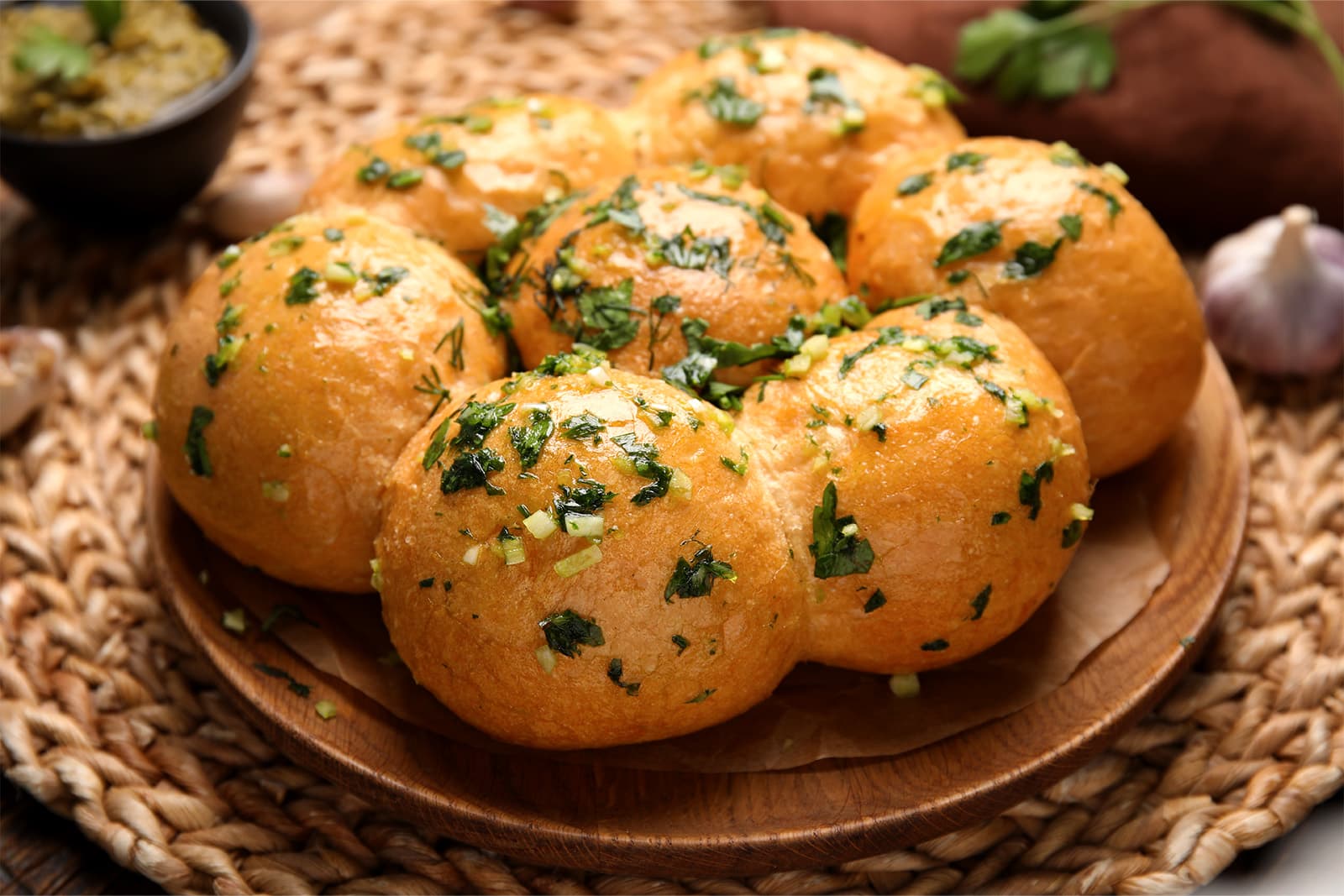
Soft rolls with garlic-herb flavor baked into the crumb and brushed on top while still hot.
Enriched dinner rolls with Savory Hearthbread Blend worked into the dough and brushed on as herb butter straight from the oven. The blend expresses twice in the same dish: mellow and savory inside the crumb where heat and time softened the garlic, and bright and forward on the surface where the butter carried the aromatics without cooking them down. Pulling the rolls apart releases a wave of warm garlic and rosemary from the seams.
Ingredients, method, and practical notes
Equipment
Method
Pour the warm milk (105 to 110°F) into a large mixing bowl. Sprinkle the yeast and one teaspoon of the sugar over the surface. Stir gently once and let it sit undisturbed for 5 to 8 minutes until the surface is foamy and smells faintly of bread.
👁 The surface should have a layer of tan foam about a quarter inch thick. Tiny bubbles are visible at the edges. If the surface is still flat and clear after 8 minutes, the yeast is dead.WhyProofing confirms the yeast is alive before you commit the rest of the ingredients. Dead yeast produces flat, dense rolls with no rise. The sugar gives the yeast something to feed on. The warm milk activates it.What to noticeThe foam should appear within 5 minutes if the milk temperature was correct. If it takes longer than 8 minutes with no foam, start over with new yeast and double-check your milk temperature.If something's offNo foam after 8 minutes. The surface looks the same as when you started.Fix: The yeast was dead or the milk was too hot. Discard and start again. Use a thermometer to confirm 105 to 110°F. Check the expiration date on the yeast packet.
Add the remaining sugar, the egg, and the softened butter to the yeast mixture. Stir until roughly combined. Add the flour, kosher salt, and one and a half tablespoons of Savory Hearthbread Blend. Stir with a wooden spoon until a shaggy dough forms and no dry flour remains.
👁 A rough, sticky dough ball with visible herb flecks throughout. The bowl should be mostly clean with the dough pulled together in a single mass.WhyAdding the blend at the dough stage ensures the garlic and herbs are distributed evenly through every roll. If added only to the surface, the interior would taste like plain bread. The blend needs to be in the crumb so it can transform during baking.What to noticeYou can smell the garlic and herbs as you stir. This is the raw expression of the blend, sharp and forward. It will change dramatically during the rise and bake.Turn the dough out onto a lightly floured surface and knead for 6 to 8 minutes. Push the dough away from you with the heel of your hand, fold it back over itself, rotate a quarter turn, and repeat. Add flour one tablespoon at a time only if the dough sticks aggressively to your hands.
👁 The dough should be smooth, slightly tacky but not sticky, and spring back when poked gently with a finger. Herb flecks are visible but evenly distributed throughout.WhyKneading develops the gluten network that gives the rolls structure and a soft, pull-apart texture. Under-kneaded dough produces dense rolls that crumble instead of pulling apart in soft sheets. The dough should feel elastic and alive in your hands.What to noticeAt 3 minutes, the dough will still feel rough and uncooperative. By 6 minutes, it should feel smooth, supple, and stretchy. That transition is the gluten developing. Do not rush it with extra flour, which toughens the crumb.If something's offAfter 8 minutes, the dough is still rough, shaggy, and tears easily when stretched.Fix: Under-kneading is the most likely cause. Give it another 3 minutes. If the dough is extremely wet and will not come together, add flour one tablespoon at a time. Humidity and flour brand affect hydration.
Lightly oil a clean large bowl. Place the dough in the bowl, turning once to coat. Cover tightly with plastic wrap or a damp towel. Let rise in a warm spot until doubled in size, about 60 minutes.
👁 The dough has visibly doubled. It looks puffy and domed. When you poke it gently with a floured finger, the indent stays rather than springing back.WhyThe first rise develops flavor through fermentation and builds the airy structure of the crumb. Yeast produces gas that inflates the gluten network. The blend's garlic and herbs begin to mellow during this rest as they absorb moisture from the dough.What to noticeThe dough should smell yeasty and faintly savory. If your kitchen is cool (below 70°F), the rise may take 75 to 90 minutes. If it is warm (above 80°F), check at 45 minutes. The poke test is more reliable than time.If something's offAfter 90 minutes in a warm kitchen, the dough has not risen noticeably.Fix: The yeast was too weak or the kitchen is too cold. Move the bowl to a warmer location. A turned-off oven with the light on provides steady warmth around 80°F. If no rise at all, the yeast was likely dead at the start.
Grease a 9 by 13-inch baking pan or a 10-inch round cast iron skillet with butter or cooking spray. Gently punch down the risen dough and turn it onto a lightly floured surface. Divide the dough into 12 equal pieces. The easiest method: cut in half, then each half in thirds, then each third in half. Roll each piece into a smooth ball by cupping your hand over it and rolling in a tight circle on an unfloured section of the counter. Arrange the balls in the prepared pan with about half an inch between each.
👁 Twelve smooth, round balls arranged in rows with small gaps between them. The tops are taut and even.WhyRolling on an unfloured surface creates friction that pulls the dough taut, forming a smooth skin on each ball. This skin holds the shape during the second rise and bake. The gaps between the balls close during the rise so the rolls bake together and pull apart later.What to noticeIf the dough is sticking to the counter and tearing instead of rolling smoothly, lightly dampen the counter instead of flouring it. A slightly tacky surface creates better friction for rolling than a floured one.If something's offThe balls are lumpy, seamed, or misshapen after rolling.Fix: The dough surface was too floured. Brush off excess flour and try rolling again. Cup your hand over the ball and use the base of your palm to create a rolling cage. The motion is circular, not back and forth.
Cover the pan loosely with plastic wrap or a damp towel. Let the rolls rise for 25 to 35 minutes until they have puffed noticeably and the gaps between the balls have closed. The rolls should be touching each other and look pillowy. While the rolls rise, preheat the oven to 375°F.
👁 The rolls have expanded to fill the gaps and are pressing gently against each other. The tops are domed and puffy. When you tap the side of the pan, the dough jiggles slightly.WhyThe second rise gives the rolls their final airy texture and ensures they bake together into a connected sheet that pulls apart along the seams. Under-risen rolls will be dense. Over-risen rolls may collapse in the oven.What to noticeThe rolls should look about one and a half times their shaped size, not doubled. Over-proofing at this stage makes rolls that rise and then fall flat during baking.If something's offAfter 40 minutes, the rolls have not expanded and still have visible gaps between them.Fix: The kitchen is too cold. Move the pan to a warmer spot and give them another 15 minutes. If the first rise was sluggish too, the yeast may be weak.
Bake the rolls on the center rack for 22 to 26 minutes until the tops are golden brown and the internal temperature of a center roll reads 190°F on an instant-read thermometer.
👁 The tops are even, golden brown. The edges where the rolls meet are slightly paler. The rolls have risen above the rim of the pan by about an inch. The kitchen smells deeply of warm bread with garlic and herbs underneath.Cook-In PhaseWhyThis is where the first application of Savory Hearthbread Blend completes its transformation. Over 22 to 26 minutes in the oven, the garlic powder mellows from sharp to warm. The rosemary and thyme settle into the crumb and lose their raw edge. The sage rounds everything, creating an interior that tastes savory and complete rather than herb-sprinkled. By the time the rolls are done, the blend has become part of the bread, not a coating on it.What to noticeThe aroma in the kitchen shifts during baking. In the first 10 minutes, it smells like yeast bread with sharp garlic. By 20 minutes, the garlic has mellowed and the herbs have softened into a warm, bakery-like savoriness. That shift is the cook-in phase completing. The blend and the bread have become one thing.If something's offThe tops are pale after 26 minutes and the center roll feels doughy when pressed.Fix: The oven was too cool. Increase temperature to 385°F and bake for another 5 minutes. If the tops are browning but the centers are raw, tent with foil and continue baking until 190°F internal.
While the rolls bake, stir together three tablespoons of melted butter and one tablespoon of Savory Hearthbread Blend in a small bowl until evenly combined.
👁 A fragrant, golden butter with visible herb flecks. The garlic aroma should be sharp and immediate, noticeably different from what you smell coming from the oven.WhyThis is the second application. The blend stirred into warm melted butter will not undergo the extended heat that transforms it inside the dough. When brushed on the hot rolls, it expresses at nearly full strength: garlic forward and sharp, herbs bright and aromatic. The contrast between this surface layer and the mellow interior is the point of the recipe.What to noticeSmell the herb butter in the bowl, then smell the rolls baking in the oven. The butter smells sharp and herby. The oven smells warm and savory. Same blend, different expressions. That is time and heat doing two different things to the same ingredients.Remove the rolls from the oven and immediately brush the herb butter generously over the tops and into the seams where the rolls meet. Use all of the butter. Scatter a pinch of flaky salt over the top if desired. Let the rolls rest in the pan for 5 minutes before serving.
👁 The butter melts on contact and soaks into the seams between the rolls. The surface glistens and the herb flecks are visible against the golden crust. The aroma lifts immediately, sharp garlic and bright rosemary rising from the hot surface.Finish PhaseWhyBrushing while the rolls are still oven-hot ensures the butter melts and carries the blend into every seam. When someone pulls a roll apart, they crack open the butter-soaked joint between rolls and release that sharp, fresh garlic-herb aroma. The 5-minute rest lets the butter absorb into the crust without making the surface soggy. The rolls stay soft inside and glazed on top.What to noticePull a roll from the edge of the pan. The seam where it was touching its neighbor should be slightly paler, softer, and saturated with herb butter. That seam is where both expressions of the blend meet: the mellow crumb from the inside and the bright butter from the brush.If something's offThe butter sits on the surface in pools instead of absorbing into the crust and seams.Fix: The rolls cooled too much before brushing. The surface needs to be hot enough to melt the butter on contact. Brush within 30 seconds of pulling from the oven.
What This Recipe Teaches
How the same spice blend expresses completely differently depending on when it encounters heat, and how two applications of the same blend at two different phases create a layered flavor experience that neither application could produce alone.
How the Blend Behaves Here
Savory Hearthbread Blend appears twice in this recipe, and each time it does different work. In the dough, the blend spends 25 minutes in oven heat surrounded by starch and fat. The garlic mellows from sharp and forward to warm and background. Rosemary and thyme lose their raw edge and settle into the crumb. Sage rounds everything, creating an interior that tastes like savory bread rather than bread with spices in it. In the butter brush, the blend contacts the hot roll surface for only seconds. No sustained heat, no time to mellow. The garlic stays sharp, the herbs stay bright, and the sumac lifts the butter. The result is two layers: a warm, composed crumb and a bright, aromatic surface. The seams where the rolls touch, which get both the internal blend and the butter brush, are where the two expressions overlap.
What to Notice
Aromatic entry: Warm, sharp garlic butter and bright rosemary rising from the glazed surface and the pulled-apart seams. The aroma hits before the first bite.
Mid-palate: Soft, tender crumb with warm, mellow savoriness baked through. The garlic inside reads as warmth, not bite. Thyme and rosemary are present but settled. The sage has rounded everything so the interior tastes like one cohesive flavor rather than identifiable herbs.
Lingering finish: A clean, savory fade. The sumac in the blend prevents the butter from leaving a heavy coating on the palate. The finish is warm and appetizing rather than rich and muting.
The Single vs. Double Application Test
How two applications of Savory Hearthbread Blend at different phases produce a fundamentally different experience than a single application at either phase alone.
How: Make a batch of 12 rolls and divide into three groups of four. Group one: blend in the dough only, brush with plain butter. Group two: no blend in the dough, brush with herb butter only. Group three: the full recipe, blend in dough and herb butter brush. Pull one roll from each group and taste side by side.
Compare: Group one will taste savory throughout but lack the bright garlic punch on the surface. Group two will have a sharp, aromatic exterior but a plain bread interior. Group three will have both: mellow savoriness inside and bright herb-garlic on top, with the seams as the richest intersection. The full recipe creates a more complete and interesting roll than doubling the blend at a single phase ever would.
Symptom: The rolls taste like plain bread with garlic butter on top, no flavor inside
Cause: The blend was only added to the butter brush and omitted from the dough, or the dough blend was under-measured. Without the blend in the dough, the interior has no savory character and the roll reads as surface-only seasoning.
Fix: Always add the full one and a half tablespoons of Savory Hearthbread Blend to the dough at the mixing stage. It must be incorporated before kneading so it distributes evenly through every roll.
Symptom: The rolls are dense and heavy rather than soft and pillowy
Cause: The dough was under-risen (yeast was weak or the kitchen was cold), or too much flour was added during kneading. Excess flour tightens the crumb and makes it tough.
Fix: Use the poke test rather than time alone to judge the first rise. The indent should stay when you poke the dough. During kneading, add flour only one tablespoon at a time and stop as soon as the dough is smooth and barely tacky. Slightly sticky dough produces better rolls than dry dough.
Symptom: The herb butter did not soak into the seams and sits on the surface as a greasy layer
Cause: The rolls were not hot enough when brushed. The butter needs oven-hot surfaces to melt and absorb. If the rolls cooled for more than 2 minutes before brushing, the butter stays on top rather than migrating into the crust and seams.
Fix: Have the herb butter mixed and ready before the rolls come out of the oven. Brush within 30 seconds of removing the pan. Work quickly, starting with the seams and then covering the tops.
Symptom: The garlic tastes burnt or acrid in the crumb
Cause: The oven temperature was too high. Garlic powder in dough is insulated by starch and fat at 375°F, but above 400°F it can scorch, especially in rolls on the outer edges of the pan that receive more radiant heat.
Fix: Bake at 375°F on the center rack. If your oven runs hot, drop to 365°F. If the outer rolls are browning much faster than the center, rotate the pan 180 degrees halfway through baking.
Notes
Overnight Rolls
Shape the rolls and arrange in the pan, then cover tightly and refrigerate overnight. In the morning, remove from the fridge and let sit at room temperature for 45 to 60 minutes until the rolls puff and the gaps close. Bake as directed. The slow cold rise develops slightly more complex flavor in the dough.
Brush the Seams First
When applying the herb butter, focus on the seams between the rolls before covering the tops. The seams are where the butter soaks in deepest and where the two expressions of the blend overlap. This is the part of the roll people remember.
Pan Options
A 9 by 13-inch baking pan produces rectangular rolls in a neat grid. A 10-inch round cast iron skillet produces rolls that pull apart in a more rustic pattern and develops a slightly crispier bottom crust. Both work well. For a muffin tin, place one ball per cup for individual rolls that bake without touching. They will not have pull-apart seams but the dough and butter brush still work.
Leftovers
Store in an airtight container at room temperature for up to 2 days. Reheat wrapped loosely in foil at 300°F for 8 to 10 minutes. The herb butter aroma returns as the rolls warm. Brush with a thin layer of fresh herb butter after reheating for the best result.
When to Serve
These rolls are best within 30 minutes of baking, when the herb butter is still fragrant and the crumb is at its softest. Serve alongside roasted chicken, a braise, or soup where the bread can soak up liquid. They also stand alone as an appetizer with good olive oil or compound butter.
More recipes like this
New recipes and seasonal cooking ideas, once a week. Never more.
See everything that's in the newsletter