One-Pan Herbed Orzo with Silken Garden Green Blend
Herb butter, toasted pasta, and flavor so even you forget it started from a single spoonful.
Orzo toasted in herb-bloomed butter, then cooked absorption-style until every grain carries the same steady, savory flavor. Silken Garden Green Blend prevents what loose dried herbs do to starch: scatter randomly across bites so one spoonful tastes like mint and the next tastes like nothing. Finished with a sharp lemon vinaigrette, toasted almonds, and torn fresh herbs.
Ingredients, method, and practical notes
Equipment
Method
Toast the sliced almonds in a dry skillet over medium heat for 3 to 4 minutes, shaking the pan frequently, until golden and fragrant. Transfer immediately to a plate and set aside.
👁 Even golden color across most slices. A sweet, nutty aroma. Some light brown spots are fine.WhyAlmonds go from golden to burnt quickly. Moving them to a plate stops the residual heat from carrying them past the target.If something's offDark brown or black patches spreading unevenly.Fix: The heat was too high or the almonds sat too long in the hot pan. Use medium heat and transfer to a cool plate the moment they turn golden.
In a large, deep skillet or wide saucepan over medium heat, melt two tablespoons of butter. When the butter is foaming but not yet browning, add one tablespoon of Silken Garden Green Blend. Stir gently for 20 seconds until the butter turns a soft green-gold and the aroma shifts from raw and dusty to warm and herbal.
👁 The butter takes on a green-gold tint. The kitchen smells like warm herbs in butter, not dry spice.Bloom PhaseWhyThis is where the hierarchy begins. Blooming the blend in butter opens the coriander first, because it is the largest component. The coriander's warm, savory character infuses the fat and becomes the anchor that every other herb in the blend attaches to. Without this step, the herbs would sit on the orzo's surface as individual, disconnected notes.What to noticeSmell the butter before and after the bloom. Before: you can pick out raw, dusty herb notes. After: the aroma is warm, rounded, and harder to separate into individual herbs. The coriander has started organizing the others. That shift is the bloom completing.If something's offThe butter is browning rapidly or the blend smells scorched and bitter.Fix: The heat is too high. Pull the pan off the burner for 15 seconds, lower the heat to medium-low, and proceed. The blend needs warmth, not aggressive heat.
Add the diced shallot to the herb butter. Stir and cook for 2 minutes until the shallot is soft and translucent, not browned.
👁 The shallot pieces are limp and glassy. No color on the edges.WhyThe shallot adds a quiet, sweet base note. Browning it would add caramelized sweetness that competes with the blend's gentle savoriness.Add the dry orzo to the pan. Stir constantly for 2 minutes until the orzo is coated in herb butter and lightly toasted. You should hear a faint crackling and see a few grains turn slightly golden.
👁 The orzo glistens with herb butter. A few grains have turned from pale yellow to light gold. The pan smells toasted and herbal.Bloom PhaseWhyToasting the orzo in the herb butter does two things. First, it gives each grain a light nuttiness that deepens the finished flavor. Second, and more importantly, it coats every grain in herb-infused fat before any liquid arrives. When the stock goes in, the orzo absorbs liquid through a layer of herb butter. This is how the flavor gets inside the starch, not just on top of it.What to noticeWatch the color change. The orzo should shift from pale to faintly golden. If it darkens beyond that, you are burning the blend along with the pasta.If something's offThe orzo is browning unevenly or the butter is turning dark brown.Fix: Lower the heat and stir more frequently. The goal is a gentle toast, not a hard sear. If the butter has darkened past golden, it has burned and will taste bitter. Start over with fresh butter and a lower flame.
Pour in two and a half cups of low-sodium stock. Add half a teaspoon of kosher salt. Stir once to distribute the orzo evenly. Bring to a boil over medium-high heat, then immediately lower the heat to medium-low so the liquid holds a gentle simmer.
👁 Small bubbles breaking the surface steadily but not aggressively. The orzo should be submerged in liquid.Cook-In PhaseWhyA gentle simmer lets the orzo absorb the liquid gradually and evenly. A hard boil causes the starch to release too fast, making the dish gummy rather than creamy. The herb-infused butter that coated each grain now spreads into the cooking liquid, so the flavor distributes as the orzo absorbs.If something's offThe liquid is boiling hard, with large bubbles and splashing.Fix: Lower the heat until you see only small, lazy bubbles. Stir once to prevent sticking.
Simmer uncovered, stirring every 2 to 3 minutes, for 10 to 12 minutes. The orzo is ready when it is tender with a slight bite and the liquid has been mostly absorbed. The consistency should be creamy and loose, not dry or sticky. If the liquid absorbs before the orzo is tender, add a splash of hot water and continue.
👁 The orzo is plump and tender. A spoon dragged through the pan leaves a trail that fills in slowly. The surface looks creamy, not soupy and not dry.Cook-In PhaseWhyStirring every few minutes prevents the bottom from sticking and helps the starch release evenly, creating the creamy texture. This is also where the hierarchy lesson completes. Over 10 to 12 minutes, the blend's herbs have fully integrated into the starch. Every spoonful should taste the same: warm, savory, herby. If one spoonful tastes like mint and another tastes like nothing, the herbs did not integrate, which means the bloom was insufficient or the stirring was uneven.What to noticeTaste at 8 minutes and again at 12. At 8 minutes, individual herb notes may still be faintly detectable. By 12, the flavor should be even and unified across every spoonful. That evenness is the hierarchy at work.If something's offThe orzo is tender but the dish is watery and soupy.Fix: Continue simmering and stirring for another 2 to 3 minutes. The starch will continue to absorb and thicken. Do not add more pasta to compensate.
Add the frozen peas directly to the pan. Stir gently and cook for 2 minutes until the peas are warmed through but still bright green and sweet.
👁 Peas are bright green and heated through. They should still pop slightly when bitten, not feel mushy.Cook-In PhaseWhyPeas go in late so they keep their sweetness and texture. Cooking them longer turns them starchy and dull, which would flatten the contrast between the savory orzo and the sweet, bright peas.If something's offThe peas have turned olive green and feel soft and mushy.Fix: They cooked too long. Next time, add them even later and stir just until heated. Frozen peas only need warmth, not actual cooking.
Remove the pan from the heat. In a small bowl or measuring cup, whisk together two tablespoons of olive oil, two tablespoons of lemon juice, one teaspoon of lemon zest, and a quarter teaspoon of cracked black pepper. Pour the vinaigrette over the orzo and stir gently to combine.
👁 The orzo loosens slightly and takes on a subtle sheen from the olive oil. The lemon aroma lifts immediately.Finish PhaseWhyThe vinaigrette is the brightness mechanism. The orzo is rich, buttery, and deeply savory from the blend. Without acid, it settles into a pleasant but one-note starchiness. The lemon juice cuts through the butter and the zest lifts the herb aroma without adding more acidity. Adding it off heat preserves the sharpness. Lemon cooked into the orzo would soften and lose the edge the dish needs.What to noticeTaste the orzo before and after stirring in the vinaigrette. Before: warm, savory, rich, maybe starting to feel heavy. After: brighter, lighter, and the herb flavor suddenly sounds clearer. The acid did not add lemon flavor. It made the herbs more audible.Let the orzo rest off heat for 5 minutes. It will thicken slightly as the starch settles. Taste and adjust salt if needed.
👁 The orzo holds its shape on a spoon without running off, but is still loose enough to spread when plated.Rest PhaseWhyResting lets the starch finish absorbing and the flavors settle. The orzo will be slightly thicker and more cohesive after 5 minutes. If it becomes too thick, stir in a tablespoon of warm water before serving.Spoon the orzo into shallow bowls. Scatter toasted almonds generously over each serving. Tear fresh herbs over the top. If using cheese, grate a light dusting of pecorino or parmesan over everything. Serve immediately.
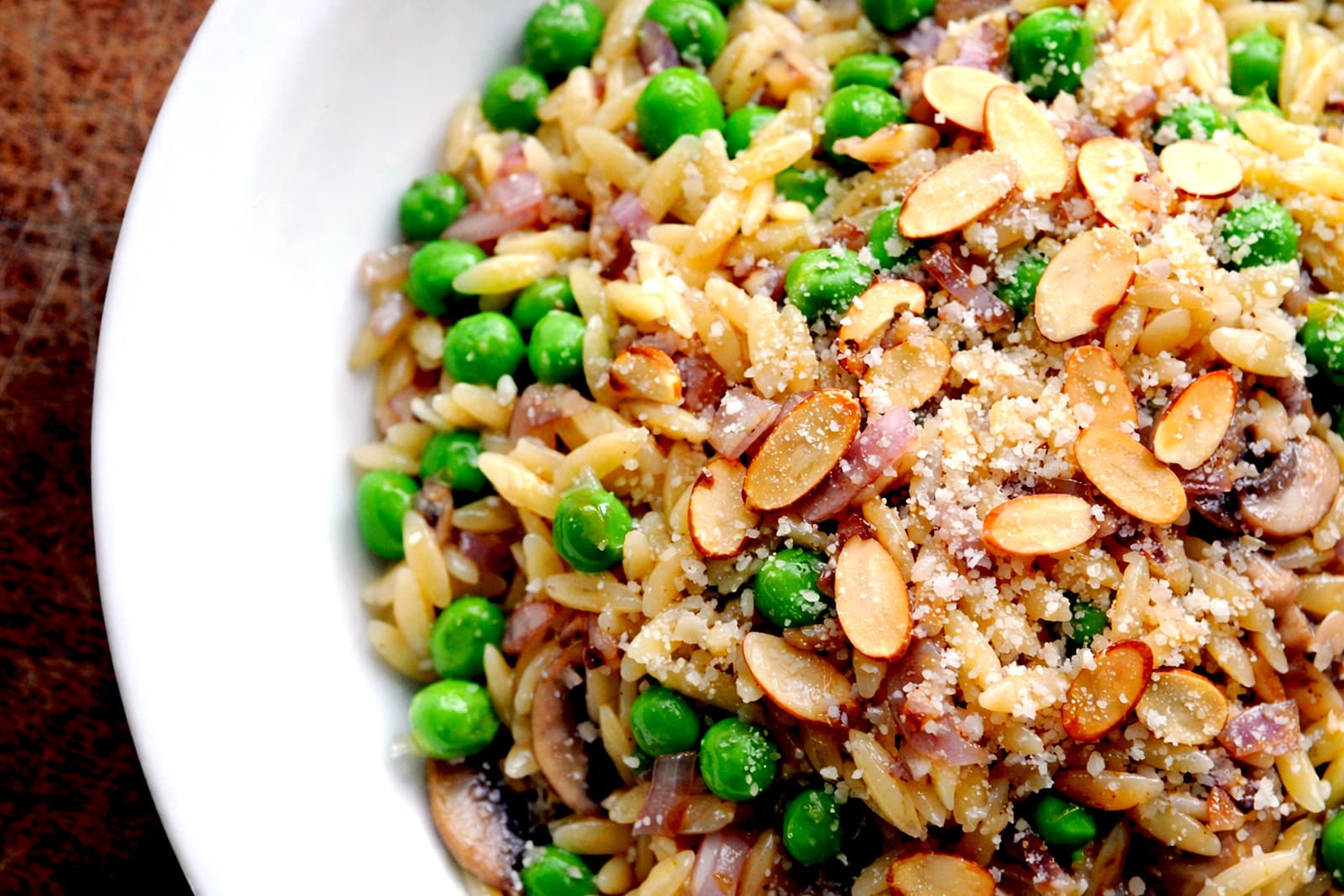
👁 Creamy, green-flecked orzo with bright peas, golden almond slices, and torn green herbs on top. The surface should look textured and inviting, not smooth and uniform.Finish PhaseWhyEvery finishing element solves a structural problem. The almonds break the soft-on-soft texture of orzo and peas. The fresh herbs add volatile aroma that the cooked blend can no longer provide. The cheese, if used, adds a thin layer of umami that reinforces the savory character. None of these are decoration.What to noticeTake one bite with almonds and one without. The almonds do not add almond flavor. They add crunch, which changes how you perceive everything else in the bite. That is texture as structure, not garnish.
What This Recipe Teaches
How a blend's internal hierarchy prevents herb scatter in starchy dishes by organizing individual herbs into one cohesive, evenly distributed flavor.
How the Blend Behaves Here
Silken Garden Green Blend blooms in butter for 20 seconds, then coats every grain of orzo during toasting. As the orzo cooks absorption-style, the herb-infused butter spreads through the starch from inside each grain. The coriander, the largest component by weight, anchors the parsley, basil, dill, and mint so they distribute evenly rather than landing randomly. By the time the orzo is tender, every spoonful tastes the same: warm, savory, herby, unified. No single herb calls attention to itself. That evenness is the hierarchy at work.
What to Notice
Aromatic entry: Warm herb butter and toasted starch. The first impression is comfort and savoriness, not spice.
Mid-palate: Creamy, tender orzo carrying an even herb flavor throughout. The peas add pops of sweetness against the savory grain. The butter provides richness without heaviness.
Lingering finish: The lemon vinaigrette lifts the herbs and cuts the butter. The toasted almonds leave a sweet, nutty note. The fresh torn herbs provide a bright aromatic echo that the cooked blend cannot deliver on its own.
The Herb Scatter Test
What happens when dried herbs lack an anchoring ingredient to organize them in starch.
How: Make the recipe twice. The first time, use Silken Garden Green Blend as written. The second time, replace the blend with one tablespoon of a simple mix of equal parts dried parsley, dried basil, dried dill, and dried mint, with no coriander. Use the same butter, the same technique, the same timing for both.
Compare: Taste five spoonfuls of each version from different parts of the pan. The Silken Garden Green version should taste even: every spoonful carries the same warm, savory, herby flavor. The loose-herb version will likely taste scattered: one spoonful heavy on mint, another with a burst of dill, a third that tastes like plain buttered orzo. That unevenness is what happens without a hierarchy. Coriander is the anchor that prevents it.
Symptom: Some bites taste herby and others taste like plain buttered pasta
Cause: The bloom was too short, or the orzo was not stirred during toasting, so the herb butter did not coat every grain evenly. Without even coating before the liquid goes in, some grains absorb herbs and others absorb only plain stock.
Fix: Bloom the blend for a full 20 seconds and stir the orzo constantly during the 2-minute toasting step. Every grain should glisten with herb butter before stock is added.
Symptom: The orzo is gummy, sticky, or clumped together
Cause: The simmer was too aggressive, causing the starch to release too quickly. Or the orzo was not stirred enough during cooking.
Fix: Keep the heat at medium-low so the surface barely bubbles. Stir every 2 to 3 minutes, scraping the bottom gently. If it has already become gummy, stir in a splash of hot water and a drizzle of olive oil to loosen it.
Symptom: The dish tastes flat and one-note despite using the full amount of blend
Cause: The vinaigrette was skipped or the lemon juice was cooked in rather than added off heat. Without the acid at the finish, the buttery starch has no brightness to cut through it.
Fix: Always add the vinaigrette after removing the pan from heat. The acid needs to stay sharp. If the dish is already on the table and tastes flat, a squeeze of fresh lemon over each bowl will recover most of the brightness.
Symptom: Individual herb flavors are identifiable (especially mint) rather than a unified savory character
Cause: The cooking time was too short for the hierarchy to fully organize. The herbs have not finished integrating into the starch.
Fix: Continue simmering and stirring for another 2 to 3 minutes. If the liquid is fully absorbed, add a splash of hot water. The herbs need more time in contact with the starchy cooking liquid to merge.
Notes
Grain Alternatives
Israeli couscous (pearl couscous) works with the same technique and ratio. Increase the simmering time to 14 to 16 minutes. Farro or barley need more liquid (3 cups) and longer cooking (25 to 30 minutes), but the bloom step and finishing are the same.
Adjusting Consistency
Orzo continues to absorb liquid as it sits. If the dish thickens too much during resting or serving, stir in a tablespoon of warm water or stock at a time until it loosens. It should be creamy and spoonable, not stiff.
Advance Preparation
Toast the almonds up to 3 days ahead and store in an airtight container at room temperature. Make the vinaigrette up to a day ahead and refrigerate. The orzo itself is best fresh, but leftovers reheat well with a splash of stock over low heat.
Scaling and Serving
This works as a main for 4 or a side for 6. For a heartier main, add seared chicken breast sliced on top or a poached egg that breaks into the warm orzo. For a side, reduce the portion and skip the cheese.
Leftovers
Refrigerate in an airtight container for up to 3 days. Reheat gently in a saucepan over low heat with a tablespoon of stock or water, stirring frequently. The herb flavor is actually more even the next day as the starch continues to absorb. Add fresh almonds and herbs when reheating since both lose their character overnight.
More recipes like this
New recipes and seasonal cooking ideas, once a week. Never more.
See everything that's in the newsletter