Grilled Stone Fruit with Burrata and Smoldering Fig Dust Blend
Caramelized fruit, torn burrata, and a warm dust that turns summer into something you linger over.
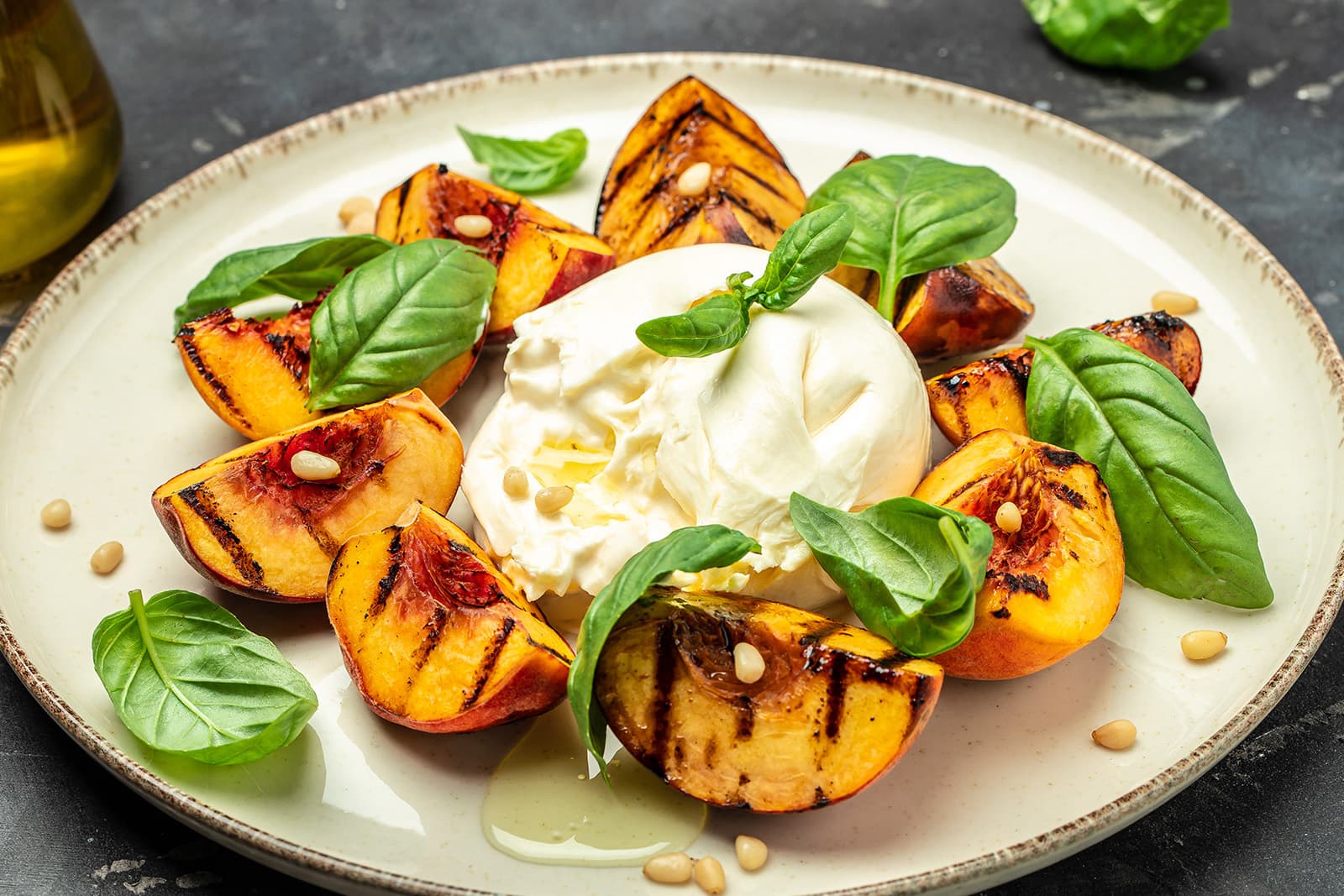
Ripe stone fruit grilled until caramelized and smoky, dusted with Smoldering Fig Dust Blend while still hot, then served with torn burrata, toasted pistachios, fresh basil, and olive oil. The blend does not lead this dish. The fruit does. But the blend is the reason the fruit tastes like more than fruit. It adds a warm, smoky finish that makes each bite feel deliberate rather than simple.
Ingredients, method, and practical notes
Equipment
Method
Remove the burrata from the refrigerator 15 to 20 minutes before assembling so it loses its chill. Cold burrata mutes the creaminess.
👁 The burrata should feel cool but not cold to the touch, and the outer shell should yield easily when gently pressed.WhyRoom-temperature burrata is creamier, more flavorful, and tears more naturally. Cold burrata is firm and muted, and the temperature contrast with the hot fruit becomes too jarring instead of pleasantly cool.Toast the pistachios in a dry skillet over medium heat, shaking the pan occasionally, for 2 to 3 minutes until fragrant and lightly golden. Transfer to a cutting board, let cool briefly, and chop roughly. Set aside.
👁 The pistachios deepen slightly in color and the kitchen smells nutty and warm. A few will pop.WhyToasting brings out the pistachios' nutty flavor and firms their texture, making the crunch more pronounced against the soft fruit and burrata.What to noticeThey go from toasted to burnt quickly. Remove from the pan the moment they smell nutty.If something's offDark brown spots and a sharp, acrid smell.Fix: Start with a fresh batch. Burnt nuts taste bitter and will clash with the blend's warmth.
Heat a grill or grill pan to medium-high heat. While it heats, brush the cut side of each peach half with olive oil.
👁 The cut surfaces are lightly glossy with oil. No pooling in the pit cavity.WhyOil on the cut side prevents sticking and promotes even caramelization. The pit cavity will collect juices during grilling, so focus the oil on the flat surface that contacts the grill.Place the peach halves cut-side down on the grill. Cook without moving for 3 to 4 minutes until the surface develops deep grill marks and the edges begin to soften and caramelize.
👁 Dark, defined grill marks on the cut surface. The flesh near the edges has softened but the halves still hold their shape. Juices are beginning to pool where the pit was.Bloom PhaseWhyThe high heat caramelizes the fruit's natural sugars on the cut surface, creating a layer of concentrated sweetness that the blend will sit on top of. Not moving the fruit allows clean grill marks to form, which is both textural (slightly charred edges) and visual.What to noticeListen for a gentle sizzle when the fruit hits the grill. If there is no sound, the grill is not hot enough. The fruit will steam rather than caramelize.If something's offThe fruit sticks and tears when you try to lift it, or there are no visible grill marks after 4 minutes.Fix: The grill was not hot enough or the fruit was not oiled. Let the grill recover its heat and oil the next batch more thoroughly. If the fruit tears, serve it torn-side up. It will still taste right.
Flip the peach halves and grill skin-side down for 1 to 2 minutes just to warm through. The skin side does not need grill marks.
👁 The fruit is warm all the way through. The halves are softened but still hold their shape when lifted with tongs.WhyA brief second side warms the fruit through without overcooking. Overgrilled peaches collapse into mush and lose the structural contrast between the caramelized cut surface and the softer interior.What to noticeThe fruit should yield gently when pressed but not fall apart. If the halves are starting to slump or the skin is pulling away, they are done.If something's offThe peach halves collapse or break apart when you lift them.Fix: The fruit was too ripe for the grill, or it cooked too long on the second side. Use firmer fruit next time. If it falls apart, pile the pieces on the plate. The flavor is still good.
Transfer the grilled peach halves to a serving plate, cut-side up. Immediately dust lightly with the Smoldering Fig Dust Blend while the fruit is still hot. Use your fingers or a small spoon and go light. You want a thin veil, not a visible coating.
👁 A barely visible dusting on the caramelized surface. If the blend looks like a layer of powder, shake some off. The color shift should be subtle: the golden-brown grilled surface gains a faint reddish warmth.Finish PhaseWhyThis is the hierarchy moment. The blend is applied at a proportion where it supports the fruit's lead without competing with it. The hot surface opens the ancho and warm spices just enough to add depth to the caramelized sweetness. The brown sugar in the blend echoes the fruit's own sugars rather than adding new sweetness. If the dusting is too heavy, the blend becomes the lead and the fruit becomes the backdrop, which inverts the hierarchy.What to noticeLean in and smell the dusted fruit. The aroma should be the caramelized peach with something warmer underneath it. If you smell cinnamon or chile distinctly, the dusting was too heavy.If something's offThe blend is visible as a distinct layer of powder on the fruit's surface.Fix: Tap or brush off the excess. Less is more. One pass of the fingers over a lightly loaded spoon across eight halves is usually right.
Let the dusted fruit rest for 3 to 5 minutes on the plate.
👁 The fruit juices have begun to pool on the plate, mixing with the blend. The aroma is warm and slightly smoky, but the peach is still the dominant scent.Rest PhaseWhyThe brief rest allows the blend's ancho and warm spices to settle into the caramelized surface. Sweetness from the blend's brown sugar recedes slightly and smoke comes forward. The fruit's own juices mix with the blend on the plate, creating a natural sauce in the pooled liquid.What to noticeThe pooled juice on the plate picks up color and warmth from the blend. Drizzle some of this back over the fruit when plating. It is concentrated flavor.Tear the burrata into irregular pieces and scatter over and around the fruit. Distribute the chopped pistachios across the plate. Tear the basil leaves and drop them over everything. Drizzle generously with olive oil, including any juices that pooled on the plate. Finish with a pinch of flaky salt. Serve immediately.
👁 A vivid plate. Golden-brown fruit with faint grill marks and a warm dust. White burrata torn open, its creamy center spilling. Green pistachios and basil scattered across. Olive oil glistening over everything. A few crystals of flaky salt catching the light.Finish PhaseWhyThe assembly is where the hierarchy becomes visible on the plate. The fruit occupies the most space and the most visual attention. The burrata supports with cool, creamy contrast. The pistachios disrupt with crunch. The basil lifts with aroma. The blend is invisible but present in every bite of fruit. No single supporting element overwhelms the lead.What to noticeTake a bite that includes fruit, burrata, a pistachio, and basil together. The first impression should be the warm, caramelized peach. The burrata cools and enriches. The pistachio crunches. The basil lifts. And underneath it all, a warm, smoky finish lingers longer than plain grilled fruit ever would. That lingering warmth is the blend's entire contribution.
What This Recipe Teaches
How a blend used at supporting proportion transforms a dish without leading it, and how hierarchy determines whether a flavor announces itself or quietly extends the experience.
How the Blend Behaves Here
Smoldering Fig Dust Blend is applied as a light veil on hot grilled fruit. At this proportion, the blend does not taste like a spice. The ancho's soft smoke meets the fruit's caramelized sugars and produces warmth and depth rather than a recognizable spice flavor. The brown sugar echoes the fruit's own sweetness, which means it reinforces the lead rather than competing with it. The cinnamon and nutmeg register only as a vague warmth in the finish. The blend is the reason the grilled fruit tastes more interesting than grilled fruit usually does, but you would not identify it by name in the finished dish. That is hierarchy: a supporting element that elevates the lead.
What to Notice
Aromatic entry: Caramelized peach and warm char from the grill. Basil releases when torn. The blend is in the background, adding a faint smokiness to the fruit's aroma.
Mid-palate: Sweet, concentrated fruit against cool, rich burrata. The pistachio provides a nutty crunch that resets the palate between bites. Olive oil spreads richness. The blend's warmth is present but not forward.
Lingering finish: The fruit's sweetness fades and something warmer takes its place. A quiet, smoky depth that lingers after the bite. The basil lifts the very end. The flaky salt sharpens the last impression. The blend is why the finish feels like more than just grilled fruit.
Dusted vs. Undusted: The Supporting Player Test
What the blend adds when it is not the lead, and how a supporting element changes the finish without changing the identity.
How: Grill an extra peach half and leave it undusted. Serve it alongside the dusted halves. Taste the undusted half first, then the dusted half. Focus on the finish: how long does the flavor linger, and what does it feel like as it fades?
Compare: The undusted half tastes bright, sweet, and clean. It ends quickly. The dusted half opens the same way but finishes warmer and longer. The lingering warmth is the blend's entire contribution. It does not change what the fruit tastes like. It changes how long and how warmly the fruit stays with you.
Symptom: The fruit collapsed into mush on the grill and lost its shape
Cause: The fruit was too ripe. Soft, yielding peaches that give easily when pressed are perfect for eating raw but too fragile for the grill. The heat breaks down the already-soft flesh and the halves fall apart.
Fix: Choose firm-ripe fruit. It should be fragrant and give very slightly at the stem end, but feel solid in your hand. If the fruit feels like it might bruise when you hold it, eat it raw and grill a firmer one.
Symptom: The blend tastes like a visible spice on the fruit rather than warmth in the background
Cause: The dusting was too heavy. At the correct proportion, the blend should not be identifiable by name. You applied enough to shift the blend from a supporting role to a lead.
Fix: Less than you think. A scant quarter teaspoon per peach half is usually enough. If you can see the blend as a distinct layer, tap off the excess before the rest. Next time, load less onto the spoon.
Symptom: The fruit stuck to the grill and tore when flipped
Cause: The grill was not hot enough, the cut surface was not oiled, or the fruit was moved too soon. Caramelized sugars release naturally from a hot surface once they set. Moving too early breaks the seal.
Fix: Make sure the grill is fully preheated (medium-high, not medium). Oil the cut side of the fruit, not the grill grate. Wait the full 3 to 4 minutes before checking. Slide a thin spatula under gently. If it resists, wait another minute.
Symptom: The dish tastes flat and each element feels separate rather than cohesive
Cause: The olive oil finishing drizzle was too light, or the pooled juices from the resting fruit were not used. Olive oil is the element that ties everything on the plate together, carrying flavor between the fruit, burrata, and blend.
Fix: Drizzle generously. The oil should pool slightly on the plate and glisten on every element. Use the juices that collected under the resting fruit as a natural sauce. The flaky salt also sharpens the connection between elements. Do not skip it.
Notes
Fruit Alternatives
Nectarines work identically to peaches with no adjustments. Plums are slightly firmer and more tart, which means the blend's sweetness becomes more noticeable. Reduce the dusting slightly for plums. Apricots also work but are smaller; halve them and grill a few extra per serving. Avoid fruit that is very soft, very juicy (like fully ripe mangoes), or does not caramelize well on the grill.
Cheese Alternatives
Fresh mozzarella works in place of burrata but loses the rich, creamy center that makes burrata special here. Stracciatella (the creamy interior of burrata, sold on its own) is even better if you can find it. Ricotta, lightly salted and drizzled with olive oil, is a good budget alternative.
Nut Alternatives
Toasted slivered almonds or toasted hazelnuts (roughly chopped) both work. You want crunch and a mild, nutty sweetness. Walnuts are fine but slightly more bitter, which changes the balance. Avoid strongly flavored nuts like pecans, which can compete with the blend.
Indoor Grill Pan
A cast iron grill pan works well if you do not have an outdoor grill. Preheat it over medium-high heat for 3 to 4 minutes until very hot. The grill marks will be thinner but the caramelization will be the same. You may get more smoke in the kitchen, so use your vent.
Plating
This dish looks best on a flat, wide plate or a large platter where the fruit halves can spread out rather than stack. Tear the burrata directly over the fruit so the creamy center spills onto the warm halves. Scatter the pistachios and basil at the very end so they stay on top rather than sinking. The visual impact is part of what makes this recipe work as a first course or a centerpiece.
More recipes like this
New recipes and seasonal cooking ideas, once a week. Never more.
See everything that's in the newsletter