Glazed Pork Tenderloin with Smoldering Fig Dust Blend
A fast sear, a restrained glaze, and a finish where vinegar does more work than you expect.
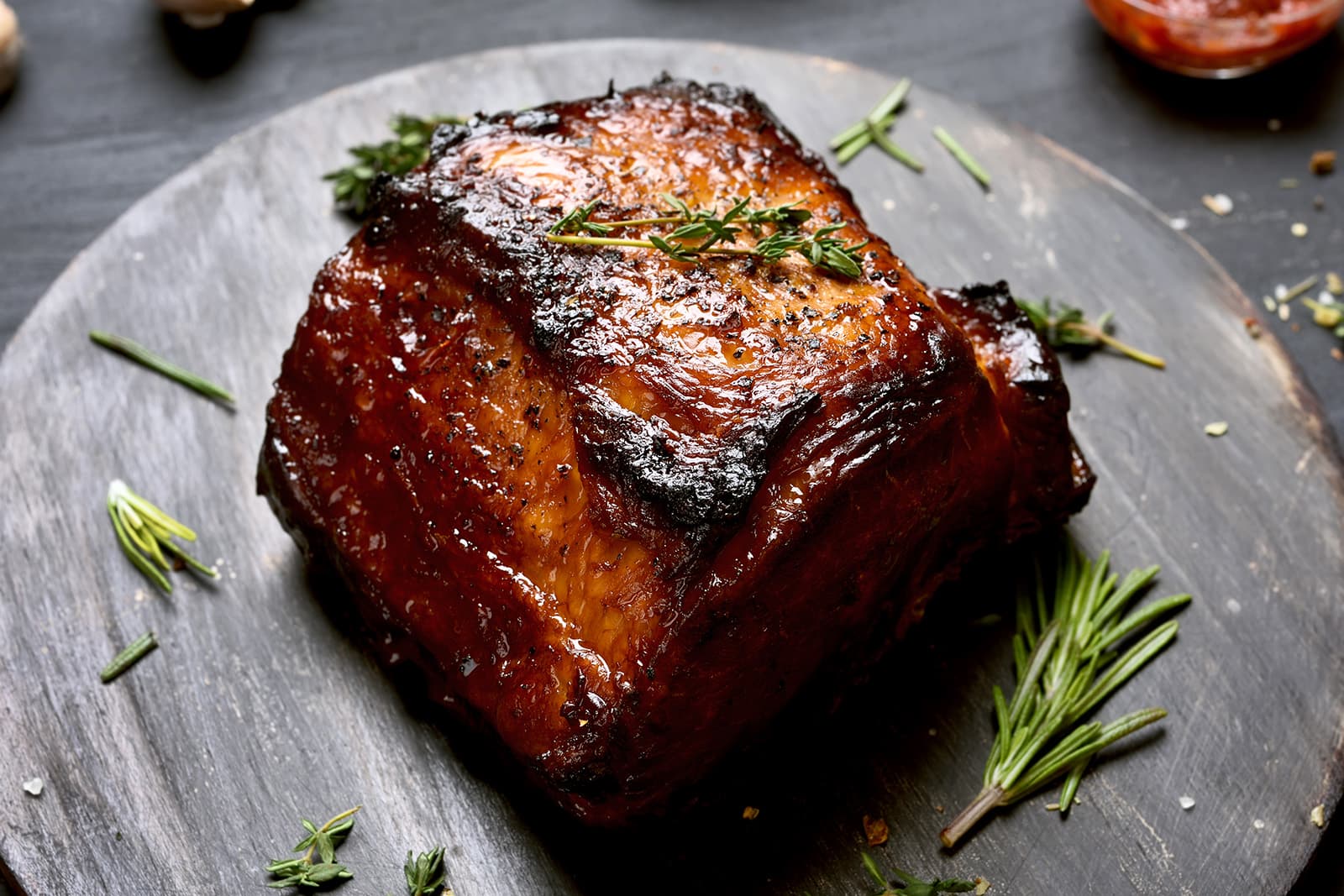
Seared pork tenderloin finished with a pan glaze built from Smoldering Fig Dust Blend, butter, stock, and apple cider vinegar. The blend's warm sweetness opens the glaze, but the vinegar quietly moderates it, keeping the finish savory and clean instead of heavy. The balance between those two forces is the whole lesson.
Ingredients, method, and practical notes
Equipment
Method
Remove the pork tenderloin from the refrigerator 20 minutes before cooking. Pat completely dry with paper towels, including the trimmed ends. Season all sides evenly with kosher salt and black pepper.
👁 The surface should feel dry and slightly tacky after seasoning, not wet or slippery.WhyTempering allows the pork to cook more evenly. Cold meat into a hot pan means the exterior overcooks before the center reaches temperature. Drying the surface is critical for crust formation. Wet surfaces steam instead of searing.What to noticeAfter 20 minutes, the salt will have drawn a thin sheen of moisture. Pat dry one more time just before searing for the best crust.If something's offThe surface still looks wet or has visible droplets when it goes into the pan.Fix: Pat dry again. The surface must be dry for browning. Even one pass with a fresh paper towel makes a difference.
Preheat the oven to 400°F. Position a rack in the center.
Heat a 12-inch oven-safe skillet (cast iron or stainless steel) over medium-high heat. Add the neutral oil and let it heat until it shimmers and just begins to smoke, about 2 minutes.
👁 The oil ripples and shimmers across the surface. Faint wisps of smoke begin to rise.WhyA properly heated pan is what produces the seared crust. If the oil is not hot enough, the pork will stick and steam instead of browning.What to noticeListen for an aggressive sizzle the moment the pork touches the pan. If it is quiet, the pan is not hot enough. Remove the pork, wait another minute, and try again.Place the tenderloin in the skillet and sear without moving it for 2 to 3 minutes, until the underside is deeply golden brown. Using tongs, rotate to the next side and sear for another 2 to 3 minutes. Repeat until all sides are browned, about 8 minutes total.
👁 Each side should be deep golden brown to dark brown. No gray or pale patches remaining on any surface.Bloom PhaseWhyThe seared crust provides a savory, caramelized exterior that the glaze will cling to. It also builds the browned bits (fond) on the bottom of the pan that become the flavor base for the glaze.What to noticeAs you turn the tenderloin, look at the bottom of the pan. Brown bits should be accumulating. These are not burnt. They are concentrated flavor that the stock will dissolve when you build the glaze.If something's offThe pork is releasing liquid and the sizzle turns to a bubbling sound. The surface is gray rather than browned.Fix: The surface was too wet, or the pan was not hot enough. Remove the pork, increase heat, and pat the surface dry before returning it to the pan.
Transfer the skillet with the pork directly into the 400°F oven. Roast for 12 to 16 minutes, until an instant-read thermometer inserted into the thickest part reads 135°F.
👁 The crust looks set and dry rather than wet. The thermometer reads 135°F in the thickest section.Cook-In PhaseWhyFinishing in the oven cooks the interior gently and evenly without burning the seared crust. Pulling at 135°F allows for carryover cooking during the rest, which will bring the final temperature to 140 to 145°F (medium, with a faint blush of pink).What to noticeStart checking temperature at 12 minutes. Tenderloin thickness varies, and the difference between 135°F and 150°F can be just a few minutes.If something's offThe thermometer reads over 150°F and the pork is uniformly gray-white when sliced.Fix: The pork was in the oven too long or the tenderloin was thinner than expected. Next time, check earlier and pull at 130 to 135°F. Thinner tenderloins need less time. The glaze will still work on slightly overcooked pork, but the texture suffers.
Transfer the pork to a cutting board. Tent loosely with foil and rest for 10 minutes. Do not skip the rest. Leave the skillet on the stovetop (handle will be very hot; use a towel or oven mitt whenever touching it).
👁 After 10 minutes, the pork feels firm but yields slightly when pressed. Juices have redistributed and the surface looks composed rather than wet.Rest PhaseWhyResting allows the juices to redistribute through the meat so they stay in the pork when you slice rather than flooding the cutting board. It also brings the internal temperature up to its final target through carryover cooking.What to noticeA small amount of juice will collect on the cutting board during the rest. Save it and add it back to the glaze.If something's offThe pork is sliced immediately and releases a pool of liquid. The interior looks wet at the center and dry at the edges.Fix: The rest was skipped. Next time, set a timer for the full 10 minutes. The glaze step fills this waiting time.
While the pork rests, build the glaze. Place the skillet over medium heat (remember the handle is hot). Add the butter. When it melts and begins to foam, stir in the Smoldering Fig Dust Blend and cook, stirring constantly, for 15 to 20 seconds until fragrant.
👁 The butter foams and darkens slightly as the blend dissolves. The aroma shifts from browned fond to warm spice with a hint of dark fruit.Finish PhaseWhyThe butter carries the blend's warm spice compounds and the brief contact with medium heat opens the ancho and cinnamon just enough to release their aroma. This is not a full bloom. It is a gentle opening. More than 20 seconds of direct heat will push the brown sugar toward bitterness.What to noticeThe moment the blend hits the butter, the aroma changes. You will smell warm spice and something faintly sweet. That is the window. Once you smell it, move immediately to the next step.If something's offThe blend smells sharp or acrid rather than warm and sweet.Fix: The heat was too high or the blend cooked too long. The butter may have burned as well. If it smells burnt, wipe the pan, start with fresh butter at lower heat, and keep the blend contact to 15 seconds.
Pour in the chicken stock (or water). Stir and scrape the bottom of the pan to dissolve any browned bits. Let the liquid simmer for 60 to 90 seconds until it reduces by about half and looks slightly thickened.
👁 The liquid darkens and thickens enough to coat the back of the spoon lightly. Bubbles shift from rapid and thin to slower and glossy.WhyThe stock dissolves the fond from the sear, which adds concentrated savory flavor. Reducing concentrates the glaze so it coats the pork rather than pooling. Too much liquid and the glaze is thin and watery. Too little and it breaks or burns.What to noticeTaste the glaze at this point, before adding the vinegar. It should taste warm, noticeably sweet, and heavy on the palate. This is the unmoderated blend. Remember this flavor. It is about to change.If something's offThe glaze is watery and does not coat a spoon even after 90 seconds.Fix: The stock quantity was too high or heat was too low. Continue simmering for another 30 to 60 seconds. The glaze should reduce to about 2 to 3 tablespoons of liquid.
Remove the pan from heat. Stir in the apple cider vinegar. Taste the glaze. It should taste warm and round with a clean, savory finish. The sweetness should feel lifted, not heavy. Add any resting juices from the cutting board.
👁 The glaze brightens slightly in color. The aroma gains a sharpness that settles within seconds into something cleaner.Finish PhaseWhyThis is the core lesson of the recipe. The vinegar is the moderating counterpart to the blend's assertive sweetness and smoke. Without it, the glaze sits heavy on the palate and the sweetness coats rather than finishes. With it, the tartness lifts the end of each bite, and the finish turns savory instead of sticky. The vinegar is added off heat so its brightness stays intact rather than cooking away.What to noticeTaste again after the vinegar. Compare it to the taste you noted before adding it. The sweetness should now feel managed rather than dominant. The finish should feel cleaner and more resolved. That shift is the balance pair at work.If something's offThe glaze tastes sour or sharp rather than balanced.Fix: Too much vinegar, or the glaze had not reduced enough before the vinegar went in (so the acid is not diluted by enough body). Add a small knob of butter to soften the acidity, or simmer gently for 15 seconds to take the raw edge off.
Slice the rested pork into medallions about half an inch thick. Arrange on a serving plate or cutting board. Spoon the glaze over the slices. Scatter the toasted walnuts on top. Serve immediately.
👁 Each medallion has a thin, glossy coating of glaze. The interior is faintly pink (medium) with a browned crust on the exterior. Walnut pieces are visible across the plate.WhySlicing after the full rest means the juices stay in the meat and the glaze coats cleanly. The walnuts provide the textural disruption that keeps each bite from blending into the next.
What This Recipe Teaches
How an assertive finishing blend requires a moderating counterpart to keep its sweetness and smoke from becoming heavy, and how a small amount of acid transforms the character of a glaze from cloying to composed.
How the Blend Behaves Here
Smoldering Fig Dust Blend enters the glaze through warm butter at medium heat. The ancho chile and cinnamon open gently, and the brown sugar produces an immediate, forward sweetness in the reduced sauce. Without moderation, this sweetness dominates the finish and coats the palate. When apple cider vinegar is added off heat, its tartness lifts the back end of the glaze. The sweetness still opens each bite, but now it recedes, and the finish turns savory and clean. The blend is the assertive element. The vinegar is the moderator. Together they produce a balanced glaze. Alone, the blend produces a one-dimensional one.
What to Notice
Aromatic entry: Warm spice and something faintly sweet rising from the glaze on hot pork. The ancho's soft smoke is in the background, not the foreground.
Mid-palate: Tender pork and rich butter carry the blend's warmth. The savory crust from the sear provides the backbone. The walnuts interrupt with a nutty crunch that resets the palate.
Lingering finish: The sweetness has faded. Soft smoke from the ancho lingers quietly. The vinegar's tartness keeps the finish clean and prevents the glaze from coating. What stays is savory and warm, not sweet.
The Moderated vs. Unmoderated Glaze Test
What happens when the blend's sweetness and smoke have no moderating counterpart, and how a small amount of acid transforms the entire finish.
How: When the glaze has reduced in step 8 but before you add the vinegar, spoon about one tablespoon into a small dish and set it aside. Then add the vinegar to the rest of the glaze as written. You now have two versions: one with the moderator (vinegar), one without. Taste them side by side on small pieces of pork. Focus on how the finish feels. The unmoderated version will coat and linger. The moderated version will lift and resolve.
Compare: The unmoderated spoonful tastes sweeter, heavier, and one-dimensional. It feels like it sits on the food rather than integrating. The moderated glaze tastes warm at the start but finishes cleaner. The tartness is not sour. It is structural. It prevents the sweetness from becoming the entire experience.
Symptom: The glaze tastes heavy, sweet, and one-dimensional
Cause: The vinegar was omitted or its quantity was too small. The blend's sweetness has no moderating counterpart, so it dominates the finish and coats the palate instead of resolving.
Fix: Add vinegar in small increments (half a teaspoon at a time) and taste after each addition. The target is not sourness. The target is a finish that lifts rather than sits. You should feel the difference immediately.
Symptom: The glaze tastes sour or sharp rather than balanced
Cause: Too much vinegar relative to the reduced glaze, or the glaze had not reduced enough before the vinegar was added (leaving insufficient body to absorb the acid).
Fix: Stir in a small knob of cold butter to soften the acidity. If the glaze is too thin overall, return to medium heat and reduce for another 30 seconds before adding the butter. Next time, make sure the glaze has reduced by half before the vinegar goes in.
Symptom: The pork is dry and tough even though it was pulled at the right temperature
Cause: Pork tenderloin is lean and loses moisture quickly once overcooked. The most common cause is not resting long enough, so juices flood the cutting board instead of redistributing. A secondary cause is slicing too early or too thin.
Fix: Rest for the full 10 minutes, no less. Slice into half-inch medallions, not thinner. The glaze adds moisture and richness, but it cannot recover a dry interior.
Symptom: The fond on the bottom of the pan is black and the glaze tastes bitter
Cause: The sear was too aggressive or the pan was too hot. The browned bits crossed from deep brown (concentrated flavor) to black (burned, bitter). When the stock dissolves these, the bitterness transfers into the glaze.
Fix: If the fond is black before you build the glaze, wipe the pan clean and start the glaze with fresh butter. You will lose the fond's savory contribution, but a clean glaze is better than a bitter one. Next time, reduce heat slightly during the sear.
Notes
Protein Alternatives
Bone-in pork chops (1 inch thick) work well with this glaze. Sear for 3 to 4 minutes per side and finish in the oven until they reach 140°F internal. Rest for 5 minutes. Chicken breast also works but is even leaner, so the glaze matters more. Sear skin-side down if using skin-on thighs, and skip the oven step since thighs cook through during the sear.
Walnut Alternatives
Toasted pecans or roughly chopped toasted hazelnuts both work well. You want something that adds crunch and a nutty quality without competing with the glaze. Avoid strongly flavored nuts like almonds or cashews, which can pull attention from the blend.
Building the Glaze
The glaze comes together in about 3 minutes and uses the pan the pork was seared in. Do not wash the pan before starting. The browned bits on the bottom are concentrated flavor from the sear, not burnt residue. The stock dissolves them and they become the savory backbone of the glaze.
Pan Choice
Use an oven-safe skillet. Cast iron or stainless steel both work. Avoid nonstick. Nonstick pans do not develop fond (the browned bits), which means the glaze loses its savory base. Also avoid any pan with a plastic or rubber handle that cannot go into a 400°F oven.
What to Serve Alongside
Roasted root vegetables, a simple green salad with a tart vinaigrette, or warm grain like farro or bulgur. The pork and glaze are rich and warm, so the sides should be clean and bright. Avoid anything sweet on the plate. The glaze already manages its own sweetness, and an additional sweet element (like a honey-roasted vegetable) will undo the balance the vinegar provides.
More recipes like this
New recipes and seasonal cooking ideas, once a week. Never more.
See everything that's in the newsletter