Golden Citrus Tahdig (Crispy Persian Rice)
Shatter the crust. Warm citrus rises. This is rice worth gathering around.
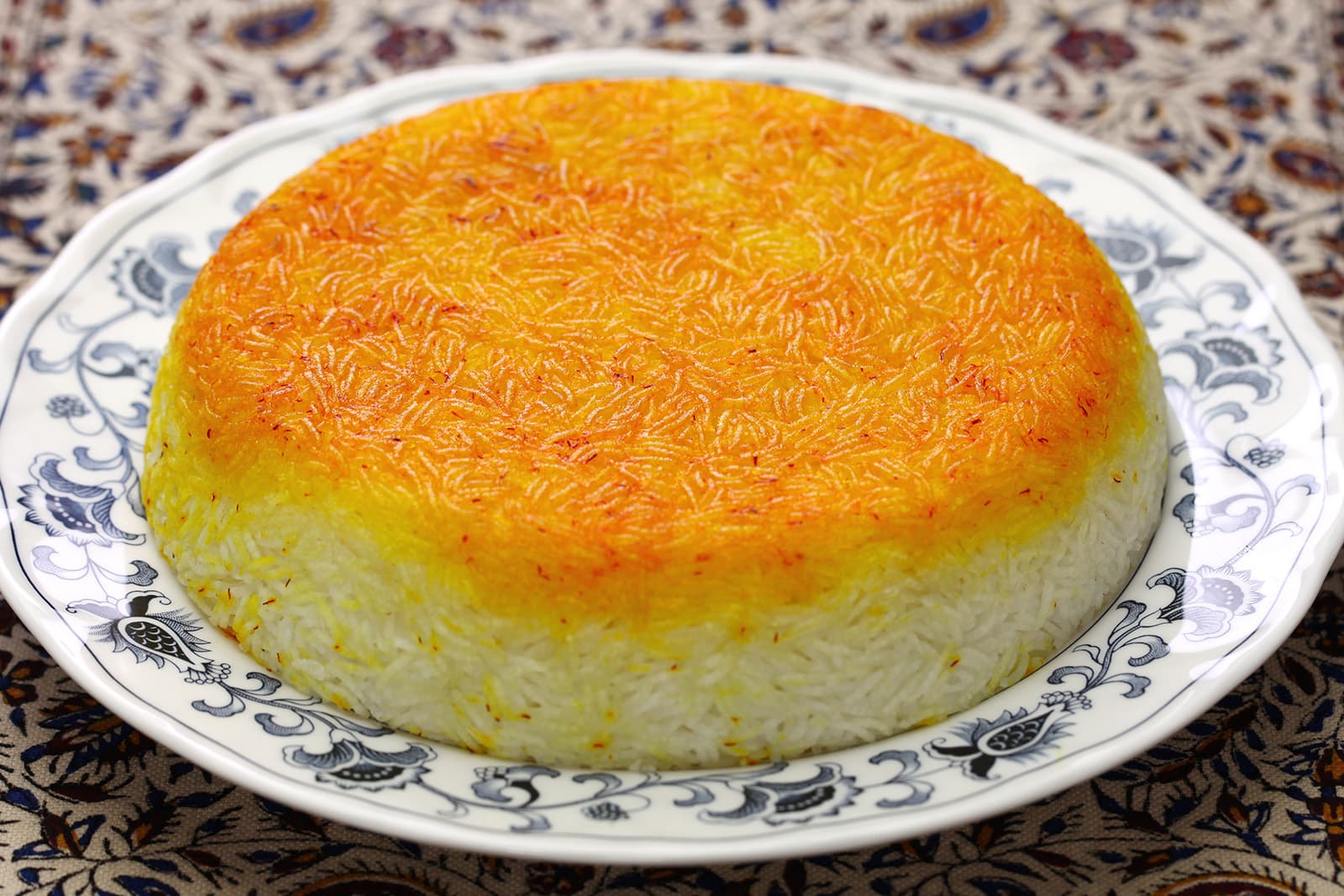
Basmati rice layered over butter bloomed with Golden Citrus Shore Blend, then cooked low and slow until the bottom becomes a golden, crackling crust. The flip reveals the payoff: shattering, citrus-infused rice that tastes warm and savory, not sharp. Tahdig is the most celebrated part of any Persian rice table, and Golden Citrus Shore Blend's turmeric, coriander, and layered citrus honor the flavors that have always defined it.
Ingredients, method, and practical notes
Equipment
Method
Place the rice in a large bowl. Rinse under cold running water, swirling gently with your hand, until the water runs mostly clear. This usually takes 4 to 5 rinses. Cover the rice with fresh cold water by about 2 inches and let it soak for 30 minutes. If using saffron, steep the threads in 2 tablespoons of hot (not boiling) water now.
👁 The rinse water starts milky white and becomes nearly clear by the last pass. After soaking, the grains look slightly swollen and opaque white rather than translucent.WhyRinsing removes excess surface starch that would make the rice sticky and prevent the grains from staying separate. Soaking hydrates the rice evenly so it cooks faster and more consistently during parboiling. Soaked basmati elongates rather than breaking when cooked.What to noticeCompare a soaked grain to an unsoaked one if you are curious. The soaked grain is visibly longer and snaps cleanly when you bite it rather than crunching.If something's offThe rinse water is still very cloudy after 5 passes.Fix: Keep rinsing. Some brands carry more surface starch than others. It does not need to be perfectly clear, but it should be mostly clear.
Fill a large pot (at least 4 quarts) with water and add 2 tablespoons of kosher salt. Bring to a rolling boil over high heat.
👁 Large, vigorous bubbles breaking the surface continuously. The water should taste distinctly salty, like the sea.WhyParboiling in heavily salted excess water, like cooking pasta, seasons the rice from the inside. This is the only point where salt can penetrate the grain. The large volume of water keeps the temperature stable when the rice goes in.Drain the soaked rice and add it to the boiling water. Stir once gently to prevent sticking. Parboil for 6 to 7 minutes, until the grains are tender on the outside but still have a firm, slightly chalky core when you bite one.
👁 The grains have swollen noticeably and look bright white. When you bite a grain, the outer layer is soft but the very center still has a tiny bit of resistance, like al dente pasta.WhyThe rice finishes cooking during the tahdig phase in the covered pot. If it is fully cooked now, it will turn mushy and the upper layer will compact instead of staying light and fluffy. Slightly underdone is correct.What to noticeTest a grain at 5 minutes, then again at 6. You want a clear difference between the soft exterior and the firm center. When that center is very small but still detectable, drain immediately.If something's offThe grains are completely soft throughout with no firm center at all.Fix: The rice parboiled too long. It will still work, but the upper layer will be softer and denser than ideal. Next time, test a grain earlier and drain sooner. Set a timer for 5 minutes and start checking.
Drain the rice immediately through a fine-mesh strainer. Rinse briefly with warm (not cold) water and shake gently to remove excess moisture. Let it drain in the strainer while you prepare the pot.
👁 The rice sits loosely in the strainer. The grains look separate and slightly translucent at the edges, no longer dripping water.WhyWarm water stops the cooking without shocking the grains, which can cause them to crack and turn gummy. Draining well prevents excess moisture from steaming the crust layer instead of letting it crisp.In a small bowl, gently mix 1 generous cup of the parboiled rice with the yogurt. This is the crust layer.
👁 The rice grains are lightly coated with yogurt. Not gloppy, just coated.WhyThe yogurt's proteins and sugars brown faster than rice alone under sustained heat. This is what produces the deep golden color and the satisfying shatter when you break through the crust. It also helps the crust release cleanly when you flip.Gently fold 1 teaspoon of Golden Citrus Shore Blend into the remaining rice in the strainer, using a fork or your fingers to distribute it without crushing the grains.
👁 The rice takes on a faint golden tint with visible specks of the blend distributed throughout.WhyThis lighter seasoning in the upper rice creates a deliberate contrast with the intensely bloomed crust below. When you taste the two layers side by side, the difference in how the same blend expresses under different heat conditions is immediately clear.Wipe the pot dry. Set it over medium heat and add the butter. Let the butter melt completely and foam.
👁 The butter is fully melted, bubbling gently across the entire bottom of the pot. Active foam but not browning.WhyThe butter needs to be hot enough to bloom the spices on contact but not so hot that it browns before the crust layer goes in. Medium heat gives you a wide working window.If something's offThe butter starts turning golden brown before you add the blend.Fix: The pot retained too much heat from boiling. Remove from heat for 30 seconds, then return to medium and add the blend quickly.
Add 2 teaspoons of Golden Citrus Shore Blend to the foaming butter. Stir constantly for 20 to 30 seconds.
👁 The butter shifts from pale yellow to warm gold. The aroma changes from raw and dusty to warm, toasted, and faintly citrusy.Bloom PhaseWhyThis is the moment the blend's flavor binds to fat and becomes the foundation of the crust. The turmeric and coriander open first, turning the butter golden. The citric acid and dried citrus peel begin activating. Everything that cooks on top of this bloomed butter will carry these compounds through the entire crust layer.What to noticeThe shift in aroma is the bloom completing. Raw spice smells dusty and sharp. Bloomed spice smells warm and round. That transition happens fast, within 20 seconds. The kitchen should smell like a dish is already underway.If something's offThe spices turn dark brown and the butter smells acrid rather than warm.Fix: The heat was too high and the spices scorched. Wipe the pot, start again with fresh butter over lower heat. The bloom should sizzle gently, not pop or smoke.
Immediately spread the yogurt-rice mixture evenly over the bloomed butter, pressing gently with the back of a spoon into a flat, even layer that covers the entire bottom of the pot.
👁 A flat, even layer of yogurt-coated rice covering the bottom of the pot completely. No gaps, no thick spots.Bloom PhaseWhyThis layer sits directly on the bloomed butter and will become the tahdig. Even thickness means even browning. Gaps create thin spots that burn while thick spots stay pale. Pressing gently ensures full contact with the hot fat without compacting the rice too much.What to noticeYou should hear a gentle sizzle as the rice meets the hot butter. That is the crust starting to form immediately.Mound the remaining seasoned rice loosely on top, shaping it into a gentle dome. Do not press or compress. Using the handle of a wooden spoon, poke 5 to 6 holes straight down through the rice to the crust layer. If using saffron water, drizzle it over the top of the dome now.
👁 A loose, dome-shaped mound of golden-flecked rice with visible holes. If saffron was added, orange-gold streaks run down the surface.WhyThe dome shape and the steam holes allow heat and moisture to circulate evenly. The upper rice steams while the bottom crisps. Without the holes, steam gets trapped and can make the upper layers gummy or cause the crust to steam instead of crisp. Keeping the upper layer loose is important because compacted rice traps moisture.Wrap the pot lid tightly in a clean, dry kitchen towel, tying the corners on top so they do not hang down near the flame. Place the wrapped lid firmly on the pot.
👁 The towel-wrapped lid sits snug against the rim with no gaps. No towel edges hanging near the burner.WhyThe towel absorbs condensation that would otherwise drip back onto the rice and make the upper layer soggy. This is a standard Persian rice technique. A tight seal traps the steam needed to finish cooking the upper rice while keeping the crust dry.Cook on medium heat for 5 to 8 minutes until you hear a steady, gentle sizzle from the bottom of the pot. Then reduce heat to the lowest setting your stove allows. Cook undisturbed for 30 to 35 minutes. Do not lift the lid.
👁 You cannot see inside, but you can listen. A quiet, steady sizzle means the crust is forming. If you smell warm, toasted, buttery citrus at around 20 minutes, the crust is developing well.Cook-In PhaseWhyThe initial medium heat gets the crust sizzling and starts the browning. Dropping to low prevents burning and lets the crust develop slowly and evenly over 30 to 35 minutes. This is where the blend does its most important transformative work. The citric acid that opened during the bloom is now deepening as the dried citrus peel and amchur slowly release their compounds into the butter over sustained, gentle heat. By the time the crust is ready, the blend's citrus has shifted from bright and forward to warm, savory, and deeply integrated.What to noticeListen through the lid. A gentle, steady sizzle throughout the cook means the temperature is right. If the sizzle becomes loud or aggressive, the heat is too high. If you smell anything approaching burnt rather than toasted, act immediately.If something's offA burning smell before 25 minutes, or loud, aggressive sizzling.Fix: The heat is too high. Move the pot to a cold burner immediately and reduce the flame, then return. If using an electric stove, lift the pot off the burner for 2 minutes. A heat diffuser between the pot and flame is helpful if your stove does not have a reliable low setting.
Remove the pot from heat. Let it rest with the lid on for 5 full minutes.
Rest PhaseWhyThe rest allows the crust to firm slightly and contract from the sides of the pot, which makes the flip dramatically easier. It also lets residual heat finish cooking any remaining moisture in the upper rice. Skipping this step is the most common reason for a tahdig that sticks.Remove the lid. Run a thin spatula gently around the edges of the rice, pressing against the pot wall to loosen the crust. Place a large flat plate or platter (wider than the pot) upside down on top of the pot. Hold the plate firmly against the rim with one hand and grip the pot handle with the other. In one confident, swift motion, flip the pot and plate together. Set the plate down and lift the pot straight up.
👁 A golden, intact dome of rice with a crisp, deeply colored crust on top. The crust should look burnished gold to deep amber. Cracks and imperfections are normal and part of the presentation.WhyThe flip is the reveal. Confidence matters more than technique. A hesitant, slow flip is more likely to break the crust than a quick, decisive one. The 5-minute rest and the yogurt in the crust both help release.What to noticeListen for the soft thud of the rice landing on the plate. If pieces of crust stayed in the pot, do not worry. Scrape them off with a spatula and arrange them on top. An imperfect tahdig still tastes extraordinary.If something's offThe rice does not release and stays stuck in the pot.Fix: Return the pot to medium heat for 2 to 3 minutes. This re-crisps the bottom and helps it release. Try the flip again. If portions still stick, scrape them free and place them crust-side up on the rice. The flavor is identical. Next time, use slightly more butter or try a nonstick pot.
Tear the fresh dill directly over the tahdig with your fingers. Scatter the toasted pistachios over the top. Serve immediately, making sure each person gets a piece of the crust alongside the fluffy rice.
👁 Golden crust topped with bright green dill and pale green pistachios. The colors are part of the dish.Finish PhaseWhyTearing the dill releases more aromatic oils than cutting. The pistachios provide the crunch that contrasts with both the shattering crust and the tender rice. Serving each person both layers is essential because the contrast between them is the point of this recipe.What to noticeThe first thing that reaches you should be the dill's bright, fresh scent against the warm, toasted citrus from the crust. Then the first bite: the crust shatters and the warm, savory citrus that has been building for 35 minutes fills your mouth. Compare it to a forkful of the upper rice, where the same blend tastes lighter and more delicate. That difference is time and heat at work.
What This Recipe Teaches
How time and sustained heat transform the same blend from a bright, forward seasoning into a warm, deeply integrated flavor, and how you can taste that transformation by comparing two layers of rice cooked in the same pot.
How the Blend Behaves Here
Golden Citrus Shore Blend activates in two distinct ways in this recipe. In the crust layer, the blend blooms directly in hot butter, then spends 35 minutes under sustained low heat. The citric acid opens first during the bloom, then the dried citrus peel and amchur slowly deepen as heat continues. By the time the pot flips, the crust carries a warm, savory citrus that feels cooked into the rice rather than applied to it. In the upper layer, the blend was only gently folded in and steamed. The citrus there is lighter, more delicate, closer to the raw blend's character. The same blend, the same pot, and the difference is entirely time and heat.
What to Notice
Aromatic entry: Fresh dill and warm, toasted butter rising from the golden crust the moment it is revealed.
Mid-palate: The crust shatters and warm, savory citrus fills the bite. The butter has carried the bloom compounds through every grain. The upper rice is tender and lighter, providing a gentler background of the same citrus family. Pistachios snap between your teeth.
Lingering finish: A clean, warm fade. The citrus lingers as savory warmth, not brightness. The butter sustains the finish without heaviness. The last impression is golden and composed.
The Two-Layer Taste Test
How time and heat transform the same blend into two different flavor expressions.
How: When serving, deliberately plate a piece of crust next to a forkful of the fluffy upper rice for each person. Taste the upper rice first, then the crust. Encourage everyone at the table to do the same.
Compare: The upper rice carries a delicate, light citrus warmth, close to what the blend tastes like when you smell it in the jar. The crust carries a deeper, more caramelized citrus that is savory and warm rather than bright. The difference is 35 minutes of sustained heat in direct contact with butter. This is what Time and Heat Phases means in practice.
Symptom: The crust is pale and soft rather than golden and crisp
Cause: The heat was too low during the initial medium-heat phase, so the crust never started browning. Or the yogurt was omitted, removing the proteins and sugars that accelerate browning.
Fix: Make sure you hear a clear sizzle within the first 5 minutes on medium heat before reducing to low. The yogurt is structural, not optional. If the crust came out pale, you can rescue it: carefully slide the rice back into the pot, increase heat to medium, and cook for another 5 to 8 minutes until you hear active sizzling.
Symptom: The crust is burnt and bitter rather than golden
Cause: The low heat setting was too high for your stove, or the cook time exceeded 35 minutes without checking. Some stoves cannot hold a true low simmer without a heat diffuser.
Fix: Use a heat diffuser between the pot and the burner. Check at 25 minutes by lifting the lid briefly and looking at the edges of the crust. If the edges are already deep brown, remove from heat immediately and proceed to the rest step.
Symptom: The upper rice is gummy and stuck together
Cause: The rice was not rinsed enough (excess starch), or it was parboiled too long (fully cooked before the tahdig phase), or the lid towel was not used and condensation dripped back into the rice.
Fix: Rinse until the water is mostly clear. Parboil until the core is still slightly firm. Always wrap the lid in a dry towel. All three matter.
Symptom: The tahdig stuck to the pot and broke apart during the flip
Cause: Not enough butter on the bottom, or the 5-minute rest was skipped, or the pot surface was not suitable. Stainless steel without enough fat is the most common culprit.
Fix: Use the full 3 tablespoons of butter. Rest for the full 5 minutes. A nonstick pot makes the flip significantly easier if you are new to tahdig. The flavor is the same. Scrape any stuck pieces free and arrange them on top. An imperfect flip with great flavor is a success.
Notes
Cultural Context
Tahdig means 'bottom of the pot' in Persian, and it is the most celebrated part of any Persian rice meal. The golden crust is served with ceremony. In many households, it is offered to the guest of honor. This is a cooking tradition with centuries of history, and Golden Citrus Shore Blend's warm turmeric, coriander, and layered citrus align naturally with the flavors that have always defined it. This recipe is not a reinvention. It is a meeting of shared flavor principles.
Pot Choice
A heavy-bottomed 3- to 4-quart pot with a tight-fitting lid is ideal. Nonstick makes the flip much easier and is recommended if this is your first tahdig. Cast iron or heavy stainless steel also work well but require the full amount of butter and the full 5-minute rest to release cleanly. Avoid thin, lightweight pots, which develop hot spots that burn the crust unevenly.
Variations
For a richer crust, replace 1 tablespoon of butter with ghee. For a plain tahdig without yogurt, increase the butter by 1 tablespoon and press the rice directly into the bloomed butter. The crust will be thinner and more delicate. You can also layer thin potato slices on the bloomed butter before adding rice for a potato tahdig, which is another traditional variation.
What to Serve Alongside
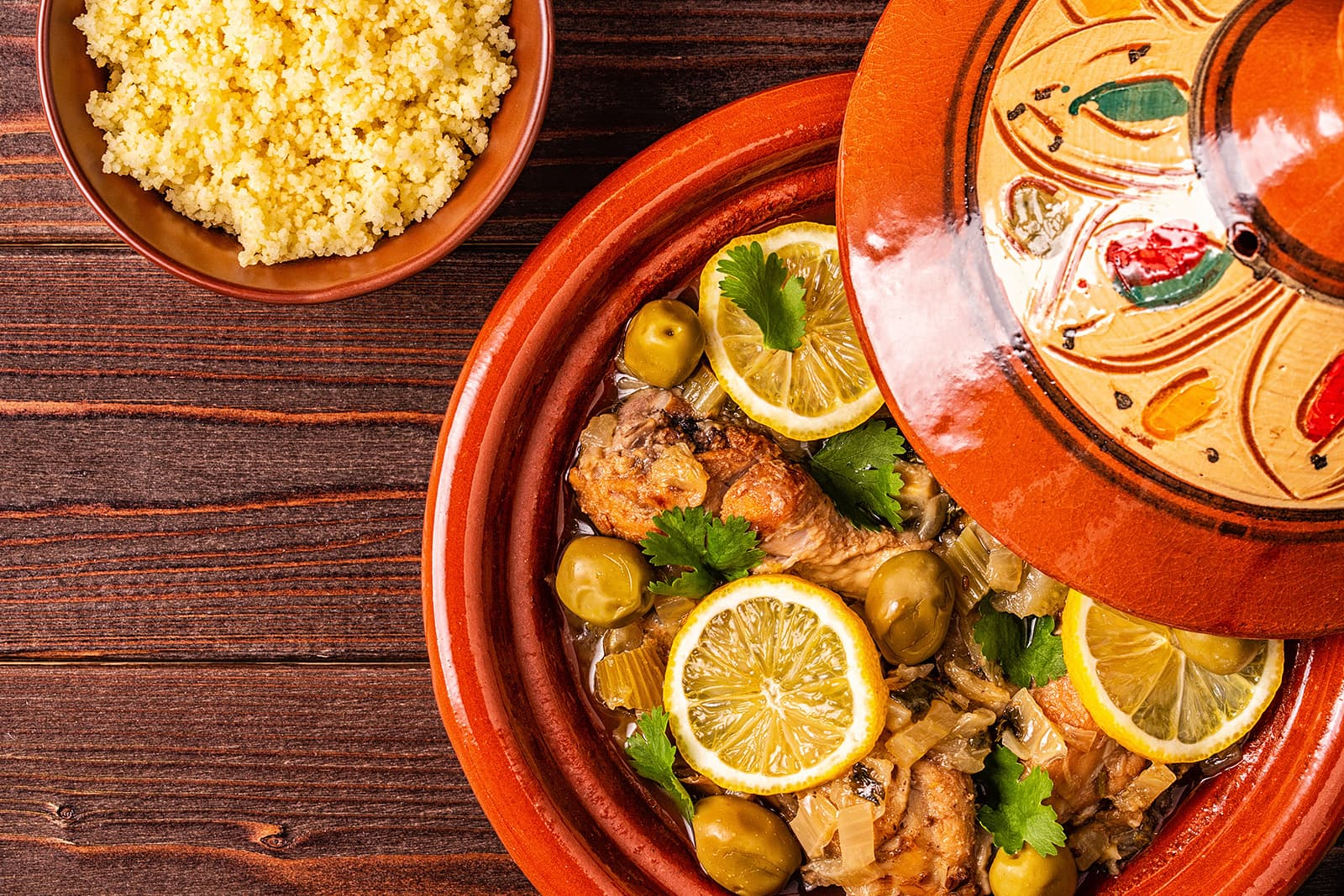
Tahdig is traditionally served alongside stews, braised meats, or grilled kebabs. It pairs beautifully with the Chicken Tagine with Preserved Lemon and Golden Citrus Shore, where the two dishes share the same blend but express it through entirely different techniques and timelines.
Advance Preparation
The rice can be soaked for up to 2 hours. The pistachios can be toasted a day ahead and stored in a sealed container. The saffron water can be steeped up to 4 hours ahead. Do not parboil the rice in advance, as it will absorb too much moisture and turn gummy.
More recipes like this
New recipes and seasonal cooking ideas, once a week. Never more.
See everything that's in the newsletter