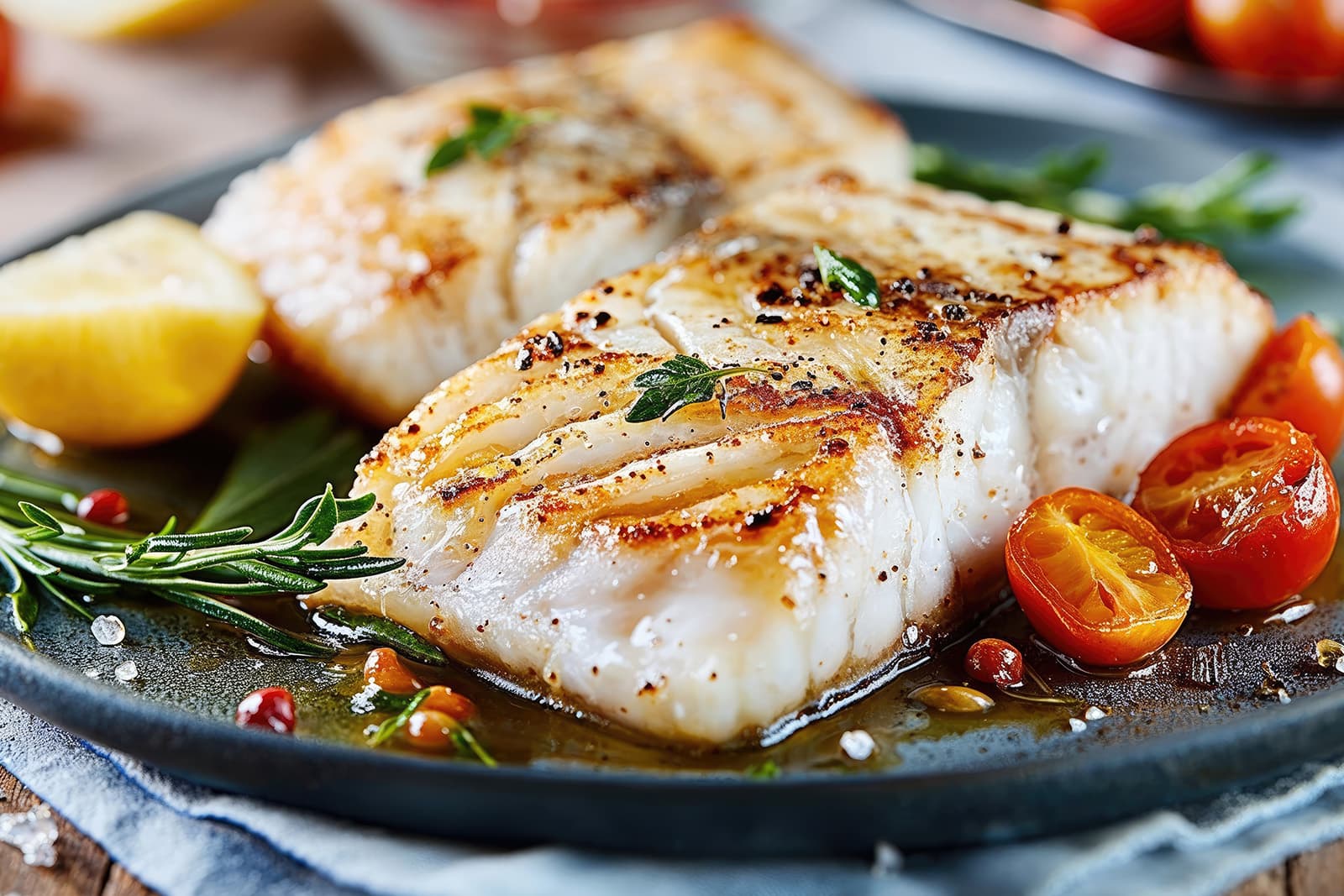
Pan-Seared Cod with Golden Citrus Shore Butter
Citrus that cooks into the fish, not on top of it.
Thick cod fillets seared in butter with Golden Citrus Shore. The citrus opens in the hot fat and basts into the fish, creating a warm, savory finish that doesn't taste like lemon squeezed on top. Fried capers add a briny snap, and torn dill lifts the aroma right before serving.
Ingredients, method, and practical notes
Equipment
Method
Remove the cod from the refrigerator 10 to 15 minutes before cooking. Fish cooks quickly, so a brief temper is enough, but cooking it ice-cold will cause the outside to overcook before the center warms through.
👁 The fillets should feel cool but not fridge-cold when you press them.WhyStarting with slightly warmed fish means the center and the outside cook at closer rates. Cold fish in a hot pan gives you a tough exterior and a raw center.Pat the cod fillets completely dry with paper towels. Press firmly on both sides and the edges until the surface feels tacky, not wet.
👁 The surface should feel slightly sticky when you run your finger across it. No visible moisture anywhere.WhySurface moisture prevents browning and causes the oil to spatter. Dry fish sears. Wet fish steams.If something's offThe paper towel soaks through on first pass and the fish still looks shiny and wet.Fix: Use fresh paper towels and press again. It often takes two or three passes. Do not skip this step.
Season the cod on both sides with the Golden Citrus Shore and a light pinch of salt. Press the seasoning gently so it sticks to the surface.
👁 An even, lightly golden coating with no bare patches and no clumps.WhyThe blend starts working the moment it touches the fish. The citric acid and dried citrus peel make contact with the surface moisture, and turmeric provides the color foundation for the sear. The blend already contains salt, so go easy with additional salt.What to noticeYou may catch a faint citrus scent as soon as the blend hits the damp fish. That is the citric acid beginning to activate.Heat a 12-inch skillet (stainless steel or cast iron) over medium-high heat for 2 minutes. Add the neutral oil. Wait until the oil shimmers and flows easily across the pan.
👁 The oil moves in thin, fast ripples across the surface. Faint wisps of heat are visible but no smoke.WhyA properly heated pan is what creates the golden crust. If the pan is not hot enough, the fish will stick and steam instead of searing.If something's offThe oil is smoking before the fish goes in.Fix: The pan is too hot. Remove it from the heat for 30 seconds and let the temperature drop before adding the fish.
Add the capers to the hot oil. They will spatter immediately. Fry for 60 to 90 seconds, shaking the pan occasionally, until the spattering fades and the capers darken slightly and open like tiny flowers.
👁 The capers look wrinkled and split open at the edges. The spattering has slowed to occasional pops. They feel crisp when pressed against the pan with a spoon.WhyThe hot oil drives out the capers' moisture, which is what makes them crisp and concentrates their briny flavor. The seasoned oil left behind starts the sear with a trace of brine that complements the citrus.What to noticeListen for the spattering to shift from aggressive popping to gentle ticking. That transition means the moisture is gone and the capers are crisping.If something's offThe capers turn very dark brown or black and smell acrid.Fix: They went too long or the oil was too hot. Remove them sooner next time. They should be lightly browned, not charred. Pull them at the first sign of deep browning.
Remove the capers with a slotted spoon to a paper towel. Do not discard the oil.
Lay the cod fillets in the pan, presentation-side down (the smoother, more attractive side). Do not move them. Let the fish cook undisturbed for 3 to 4 minutes until the underside is golden brown and the fish releases easily from the pan.
👁 The color change creeps up the sides of the fillet as it cooks. When the bottom third looks opaque and the crust releases cleanly with no sticking, it is time to flip.Bloom PhaseWhyThe Golden Citrus Shore coating meets the hot fat and begins to open. The turmeric and coriander in the blend create the golden-brown color in the crust while the citrus compounds start to activate. Undisturbed contact is what builds an even crust.What to noticeListen for a steady sizzle for the entire time. If it goes quiet, the pan temperature has dropped. The kitchen should start to smell warm and faintly citrusy.If something's offThe fish sticks and tears when you try to flip it.Fix: It was not ready. Give it another 30 to 60 seconds. Fish releases from the pan on its own once the crust has fully formed. Forcing it will tear the surface.
Flip the cod gently using a thin spatula. Reduce the heat to medium. Add the butter to the pan.
👁 The butter melts quickly and begins foaming within seconds.Cook-In PhaseWhyReducing heat to medium prevents the butter from browning too fast. The goal is golden, foamy butter, not brown butter. The butter is the vehicle that carries the blend's citrus into the fish.If something's offThe butter turns brown and smells nutty within seconds of hitting the pan.Fix: The pan is too hot. Lift it off the heat for a few seconds and add the butter away from the flame. If it has already browned, it will still taste good but the citrus character will be harder to detect underneath the toasted butter flavor.
Tilt the pan slightly toward you and use a spoon to baste the fish repeatedly with the foaming butter. Spoon the citrus-infused butter over the top of the fillets continuously for 1 to 2 minutes.
👁 The butter is golden and foamy, not brown. The top of the fish glistens with a thin, even coating of butter. The fillet looks opaque nearly all the way through, with just a thin translucent line at the very center.Cook-In PhaseWhyThis is the step where the blend's citrus system fully activates. The hot butter opens the dried citrus peel and amchur, which deepen as they cook. The sumac bridges the bright early notes with these warmer, deeper ones. Every spoonful pushes more of that citrus into the fish rather than leaving it in the pan.What to noticeSmell the butter as you baste. It should smell warm and savory with a rounded citrus quality, not sharp or lemony. That rounded character is the blend working as designed.If something's offThe butter turns dark brown and the kitchen smells like toast instead of citrus.Fix: The heat was too high during basting. Next time, drop to medium-low if the butter starts darkening. You can also add the butter in two additions: half now, half 30 seconds later, to keep the temperature controlled.
Check for doneness. The cod is ready when it is opaque throughout, flakes easily into large segments when pressed gently, and an instant-read thermometer inserted into the thickest part reads 140°F.
👁 The fish is white and opaque all the way through. When you press the top gently with a finger, it gives slightly and begins to separate into clean, moist flakes.WhyTotal cooking time is typically 5 to 7 minutes depending on thickness. Checking with both a visual test and a thermometer prevents overcooking, which dries out the fish and makes the texture chalky.If something's offThe fish looks opaque on the outside but the center is still translucent and gel-like when you press it.Fix: Continue basting for another 30 to 60 seconds. If the butter is getting too dark, add a small pat of fresh butter to cool the pan slightly while you finish cooking.
Transfer the cod to plates and let it rest for 1 full minute before finishing.
👁 The fish looks calm and composed on the plate. A thin sheen of butter settles on the surface.Rest PhaseWhyDuring this brief rest, the residual heat finishes the last degree of cooking at the center without drying the edges. More importantly, the citrus from the basting butter settles into the flesh rather than running off as liquid. This rest is what completes the integration. The citrus becomes part of the fish rather than a coating on it.What to noticeIf you tasted a flake right now and compared it to one after the full minute, the rested piece will taste more composed. The citrus and butter feel woven into the fish rather than sitting on top.Spoon any remaining pan butter over the fillets. Scatter the fried capers on top. Tear the fresh dill directly over the fish with your fingers. Serve immediately.
👁 The golden fish is topped with dark, crispy capers and bright green dill. The plate looks intentional.Finish PhaseWhyTearing the dill releases more of its fresh scent than cutting does. The capers should still be crisp when they land. Serving immediately preserves both the dill's aroma and the capers' crunch.What to noticeThe first thing that reaches you should be the dill, bright and green. Then the warm citrus butter underneath. The capers snap between your teeth and cut through the richness. That layered arrival is the architecture of this dish.
What This Recipe Teaches
How a layered citrus system behaves differently from a single acid source, and why citrus carried through fat tastes integrated rather than applied.
How the Blend Behaves Here
Golden Citrus Shore activates in stages during this recipe. When the seasoned fish hits the hot pan, the citric acid opens first, providing early brightness during the sear. During the butter baste, the dried citrus peel and amchur deepen as they cook in the fat, and the sumac bridges the bright early notes with these warmer ones. After the brief rest, the citrus has settled into the fish rather than sitting on the surface. The result tastes savory and rounded, not sharp or lemony.
What to Notice
Aromatic entry: Fresh dill and warm citrus butter rising from the plate before the first bite.
Mid-palate: Rich butter carrying steady, rounded citrus warmth through tender fish. The seasoning feels woven in, not applied. A fried caper snaps between your teeth and its brine cuts through the richness.
Lingering finish: A warm, clean citrus quality that fades slowly. Not sharp, not sour. The last impression is savory warmth with a trace of brightness that keeps the finish from feeling heavy.
Integrated Citrus vs. Surface Citrus
The difference between citrus that cooks into food and citrus that is added after cooking.
How: After plating, squeeze fresh lemon juice over one fillet but leave the other untouched. Taste both, starting with the unsqueezed piece.
Compare: The unsqueezed fillet demonstrates integrated citrus: warm, savory, part of the fish. The squeezed fillet shows surface citrus: bright, sharp, and clearly a separate element sitting on top. Both are good. The difference is the lesson. This is what Golden Citrus Shore is designed to do.
Symptom: The fish has no golden crust and looks pale and steamed
Cause: The surface was not dry enough before cooking, or the pan was not hot enough when the fish went in. Moisture on the surface creates steam instead of contact browning.
Fix: Pat the fish aggressively dry, pressing with paper towels until the surface feels tacky. Heat the pan for a full 2 minutes and wait for the oil to shimmer before adding the fish.
Symptom: The citrus tastes sharp and acidic rather than warm and rounded
Cause: The basting time was too short for the blend's citrus system to fully open. The citric acid activated but the dried citrus peel and amchur did not have enough time in the hot fat to deepen.
Fix: Baste for the full 1 to 2 minutes. Keep the butter foaming gently and keep spooning. Each pass carries more of the deeper citrus compounds into the fish. If the butter ran out or browned too quickly, add a small pat of fresh butter and continue.
Symptom: The butter turned brown and the dish tastes toasty instead of citrusy
Cause: The heat was too high during the basting step. The milk solids in the butter browned before the citrus system could express, and the toasted flavor now masks the citrus.
Fix: Reduce heat to medium or medium-low for the basting step. The butter should foam and stay golden, not turn brown. If it starts darkening, lift the pan off the heat for a few seconds.
Symptom: The capers are soft and oily instead of crisp
Cause: The capers were not dried thoroughly before frying, or they were removed from the oil too early before the moisture had fully escaped.
Fix: Pat capers very dry before adding them to the oil. Fry until the spattering subsides completely, which means the internal moisture is gone. Drain on paper towels immediately.
Notes
Other Fish
Halibut is excellent, even firmer than cod, with a slightly sweeter flavor. Use the same timing. Striped bass or sea bass have more natural fat and a buttery texture. Haddock is nearly identical to cod and substitutes directly. Mahi-mahi is firmer, add 1 minute to the initial sear. Avoid thin, delicate fish like sole or flounder, which fall apart before developing a crust. Avoid very oily fish like mackerel or bluefish, whose strong flavors compete with the blend.
Salmon Variation
Use skin-on fillets. Sear skin-side down first over medium-high heat for 4 minutes until the skin is crisp and releases easily, then flip, reduce heat to medium, add butter, and baste for 2 minutes. The fattier flesh absorbs the citrus butter more intensely. The fried capers are especially good here because their brine cuts the salmon fat.
Pan Sauce Option
After removing the fish, add 2 tablespoons of dry white wine or dry vermouth to the pan. Let it sizzle for 30 seconds, scraping up any browned bits with a wooden spoon. Swirl in 1 extra tablespoon of cold butter until glossy. Spoon this over the fish. The wine brightens the citrus notes without making them sharp. This is a different dish from the butter-only version. Compare both to understand how added acid changes the balance.
Pan Choice
Stainless steel or cast iron work best. Both retain heat well and develop a proper crust. Avoid nonstick for this recipe. It cannot reach the temperatures needed for a good sear, and the butter baste does not behave the same way on a coated surface.
What to Serve Alongside
Something simple and clean. Steamed rice, roasted vegetables, or a green salad with a light vinaigrette. The fish is rich from the butter baste, so the sides should be bright and uncomplicated.
More recipes like this
New recipes and seasonal cooking ideas, once a week. Never more.
See everything that's in the newsletter