Crispy-Skinned Fish with Warm Coriander Oil, Charred Lemon, and Scarlet Citrus Fire
Three layers of coriander, two registers of citrus, and a finish that makes the whole plate click.
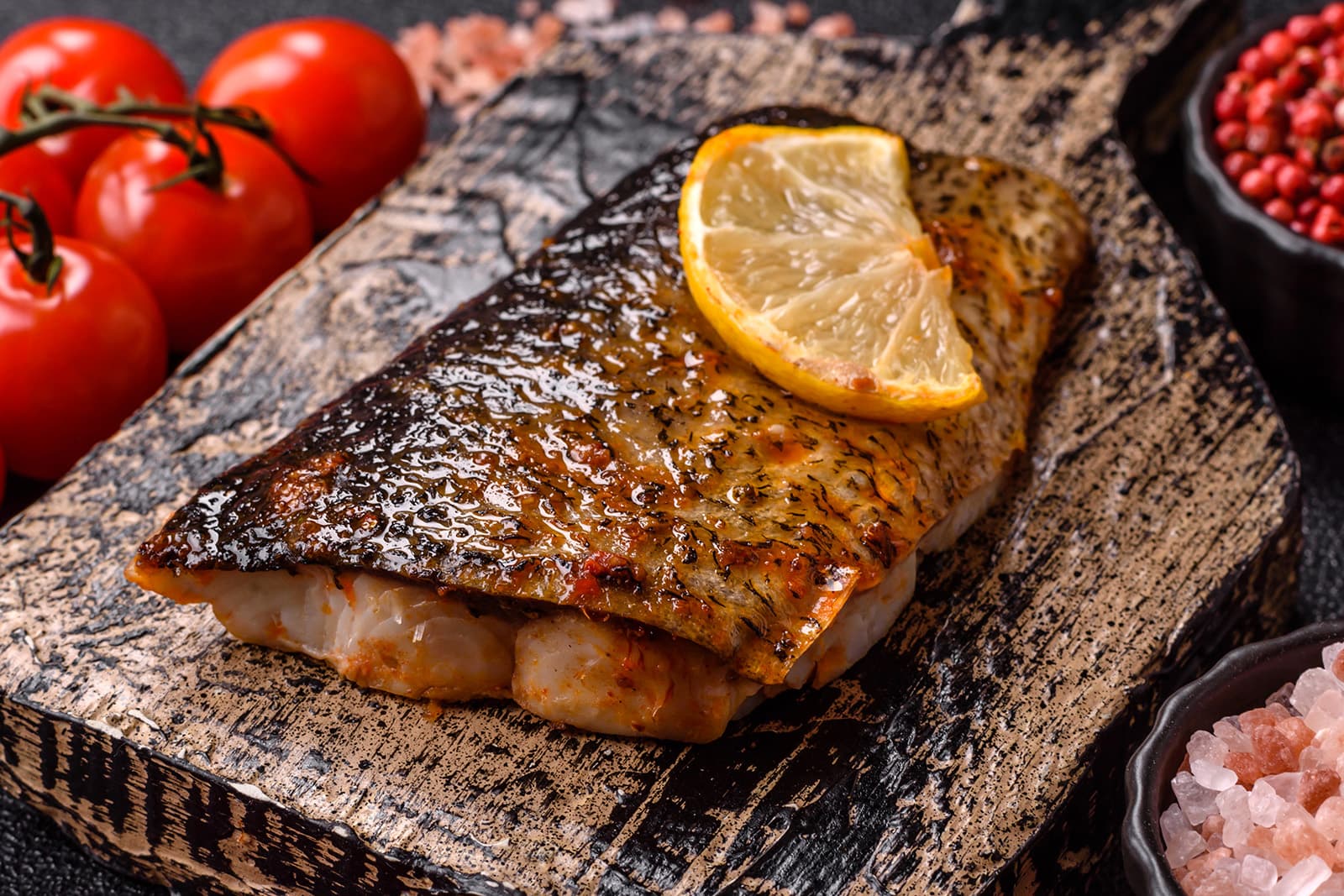
Skin-on fish fillets seasoned with ground coriander and seared crispy in a hot pan. Served over a pool of warm olive oil infused with toasted coriander seeds, with charred lemon halves alongside for squeezing. Peppery arugula wilts slightly against the warm fish. Scarlet Citrus Fire Finishing Salt lands last, and the plate shifts from good to finished.
Ingredients, method, and practical notes
Equipment
Method
Season both sides of the fish fillets with ground coriander, kosher salt, and black pepper. Press the seasoning gently into the flesh side. Set aside at room temperature for 10 minutes while you prepare the warm oil.
👁 An even dusting of coriander on both sides. The surface should feel slightly tacky after 10 minutes as the salt draws a thin sheen of moisture.WhyTempering at room temperature helps the fish cook more evenly. Cold fish into a hot pan causes the exterior to overcook before the center reaches temperature. The salt draws out a small amount of moisture that the coriander adheres to, improving browning.What to noticeAfter 10 minutes, the surface should feel slightly damp and tacky, not wet. If it is very wet, pat it dry again before searing. Moisture on the surface prevents crisping.Make the warm coriander oil. In a small saucepan, combine the extra-virgin olive oil, crushed coriander seeds, and the strip of lemon zest. Place over low heat and warm gently for 4 to 5 minutes. The oil should be warm to the touch but never simmering or smoking. Small bubbles may appear around the coriander seeds.
👁 The oil takes on a faint golden tint from the coriander. Small, lazy bubbles appear around the seeds. The kitchen smells floral and citrusy.Bloom PhaseWhyGentle heat opens the coriander seeds' aromatic oils without browning or burning them. The lemon zest releases its fragrant citrus oils into the warm fat. This creates a sauce that tastes floral and delicate, a completely different expression of coriander than the ground spice browning on the fish.What to noticeSmell the oil at 2 minutes and again at 4 minutes. The coriander aroma shifts from raw and faintly grassy to warm, floral, and slightly sweet. That transition is exactly what you want.If something's offThe coriander seeds are browning in the oil, or the oil is simmering actively.Fix: Heat is too high. Remove from burner immediately and let the oil cool slightly. The seeds should infuse, not fry. If they have already browned, the oil will taste bitter. Start over with fresh oil and seeds at a lower temperature.
Remove the warm oil from heat. Discard the lemon zest strip. Leave the crushed coriander seeds in the oil. Set aside. The oil will continue to infuse as it sits.
WhyThe zest has already given up its oils and will turn bitter if left in. The coriander seeds stay because they continue to add flavor and provide visual texture on the plate.Heat a 12-inch stainless steel or cast iron skillet over medium-high heat for 2 to 3 minutes. Add the neutral oil and let it heat until it shimmers and just begins to show wisps of smoke.
👁 The oil shimmers with visible movement across its surface. Faint wisps of smoke may appear. A drop of water flicked from a distance sizzles sharply on contact.WhyA very hot pan is essential for crispy skin. The fish must sizzle aggressively the moment it touches the surface. If the pan is not hot enough, the skin will stick and steam instead of crisping.Place the fish fillets skin-side down in the hot pan. Press each fillet gently but firmly with a spatula for the first 30 seconds to ensure full contact between the skin and the pan surface. Do not move the fish after pressing. Cook skin-side down for 4 to 5 minutes.
👁 The skin turns golden and visibly crisp at the edges. The flesh changes from translucent to opaque, rising about two-thirds of the way up the side of the fillet.Bloom PhaseWhyPressing for the first 30 seconds prevents the skin from curling away from the hot surface. Full contact means even crisping. The coriander on the skin side browns during these minutes, creating the first expression of coriander flavor: warm, toasted, and nutty.What to noticeListen for a hard, steady sizzle for the entire time. If it goes quiet, the pan temperature dropped. You should smell the coriander browning after about 2 minutes, shifting from raw and dusty to warm and fragrant.If something's offThe fish is sticking or the skin is tearing when you try to check it. The sizzle stopped and moisture is pooling around the fillets.Fix: If the fish sticks, the pan was not hot enough or the skin was not dry. Do not force it. Wait another minute. Properly crisped skin releases on its own. If moisture is pooling, the fillets were too close together or not dried thoroughly.
Add the butter to the pan. As it foams, tilt the pan and spoon the foaming butter over the flesh side of each fillet two or three times. Then flip the fish and cook flesh-side down for 1 to 2 minutes, until just cooked through. The center should be barely opaque.
👁 The butter foams golden, not brown. After basting, the flesh side looks glossy with a faint golden sheen. After flipping, the skin side faces up, golden and crisp.Cook-In PhaseWhyBasting with foaming butter carries the pan's coriander flavor onto the flesh side and adds richness. The brief flip finishes the cooking gently. Fish continues cooking for 30 to 60 seconds after leaving the pan, so pulling it slightly underdone results in a moist center at the table.What to noticeThe butter should foam, not brown. If it browns immediately, the pan is too hot. Lower the heat before basting.If something's offThe butter turns dark brown or black within seconds of hitting the pan.Fix: Remove the pan from heat, add the butter, baste quickly, and return to lower heat. The butter does not need to brown for this recipe. Gentle foam is the target.
While the fish finishes, place the lemon halves cut-side down in the same pan (or a separate hot pan if space is tight). Press them down gently and cook for 2 to 3 minutes until the cut surfaces are deeply caramelized and charred in spots.
👁 The cut surface of each lemon half is dark golden to brown with scattered black char marks. The lemon feels slightly softened when squeezed gently with tongs.WhyCharring caramelizes the lemon juice and softens the flesh, turning sharp raw citrus into something warmer, sweeter, and more complex. This gives the diner a second citrus register: roasted and deep, layered under the finishing salt's bright and sharp citrus. Two different citrus expressions in the same dish.What to noticeSmell the lemons as they char. The aroma shifts from sharp and clean to caramelized and slightly smoky. That is the sugar in the juice caramelizing.Transfer the fish to a plate and let it rest for 2 minutes. Skin side up to keep it crisp.
👁 The fish holds together and the flesh looks just opaque throughout. A small amount of liquid may pool underneath.Rest PhaseWhyResting allows the residual heat to finish the center gently. The juices redistribute so the fish stays moist when you cut into it.Assemble the plates. Spoon the warm coriander oil (with the seeds still in it) in a pool across each plate. Scatter a small handful of arugula or watercress over the oil. Place the fish skin-side up on top of the greens so the crispy skin stays exposed. Set a charred lemon half alongside.
👁 A golden pool of oil with visible coriander seeds. Dark green leaves wilting slightly where they touch the warm oil and fish. Crispy golden skin facing up. A charred lemon half on the side, dark and caramelized.WhyPlating the greens between the oil and the fish means they wilt gently from both sides, adding a peppery, slightly bitter note without going completely limp. Skin stays up so it does not steam against the plate.Finish with one-quarter teaspoon of Scarlet Citrus Fire Finishing Salt, sprinkled directly over the fish and the exposed oil from a few inches above. Serve immediately with the charred lemon for squeezing.
👁 Red-orange flakes of salt visible against the crispy golden skin. A faint citrus aroma lifts the moment the salt contacts the warm surface.Finish PhaseWhyThe finishing salt is the third and final layer. It adds a dimension that the cooked coriander and the warm oil cannot: raw, bright, unmodulated citrus and a brief heat that disappears. On the warm fish skin, the citrus aroma releases immediately. On the cooler oil, they express more slowly. The charred lemon, if squeezed, provides a roasted citrus underneath the salt's bright citrus on top. Two citrus registers in the same bite.What to noticeTake one bite without squeezing the lemon. Notice the salt's sharp, bright citrus on top of the warm coriander oil. Now squeeze the charred lemon over the next bite. The roasted citrus fills in underneath the salt's brightness, creating a warmer, more layered citrus experience. The two citrus notes do not compete. They occupy different registers.If something's offThe salt dissolved into the oil pool and lost its flaky texture.Fix: Apply most of the salt directly onto the fish skin, where it will sit on the surface. Only a small amount should land in the oil pool.
What This Recipe Teaches
How finishing occupies a distinct role in a dish's hierarchy, adding a dimension that cooking seasoning and warm sauces cannot provide, no matter how well they are made.
How the Blend Behaves Here
Scarlet Citrus Fire Finishing Salt arrives after two other coriander expressions have already established the dish's identity. On the warm fish skin, the salt's citrus aromas release immediately, creating a bright aroma and a flash of clean heat. On the cooler oil, the salt sits longer and expresses more gradually. The coriander inside the blend echoes the coriander in the cooking and the oil, but because it has not been heated, it tastes raw and slightly floral rather than warm and toasted. Same ingredient, third behavior, defined entirely by the phase it enters.
What to Notice
Aromatic entry: Warm toasted coriander and butter from the seared skin. If the oil is still warm on the plate, a gentle floral coriander and lemon zest aroma rises alongside.
Mid-palate: Clean, moist fish carried by rich coriander oil. If greens are present, a peppery bite cuts through the richness. The browned butter adds a faint nutty note in the background.
Lingering finish: A bright flash of citrus from the finishing salt, followed by brief Aleppo heat that fades cleanly. If the charred lemon was squeezed, a warmer, roasted citrus note sits underneath the salt's brightness and lingers slightly longer. The plate finishes bright and clean, not heavy.
The Two-Citrus Test
How charred lemon and Scarlet Citrus Fire Finishing Salt create two different citrus registers that layer rather than compete.
How: Plate the fish and oil as directed. Take three bites in sequence. First bite: no charred lemon, no finishing salt. Second bite: squeeze charred lemon over the fish, no finishing salt. Third bite: charred lemon and finishing salt together.
Compare: The first bite tastes warm, savory, and coriander-forward but closed at the top. The second bite adds a roasted, caramelized citrus that warms the finish. The third bite adds a second, brighter citrus layer on top of the first. The two citrus notes sit in different registers: charred lemon is warm, sweet, and deep; the finishing salt is sharp, bright, and brief. Together they create a fuller citrus experience than either provides alone.
Symptom: The fish skin is not crispy and sticks to the pan
Cause: The pan was not hot enough when the fish went in, or the skin was not thoroughly dried before cooking. Moisture on the skin surface creates steam instead of allowing direct contact with the hot metal.
Fix: Dry the skin aggressively with paper towels. Let the pan heat for a full 2 to 3 minutes before adding the oil. The fish should sizzle loudly the instant it touches the surface. If it does not, remove it, let the pan recover, and try again.
Symptom: The warm coriander oil tastes bitter or burnt
Cause: The heat was too high during the infusion and the coriander seeds browned instead of gently releasing their oils. Browned coriander in oil turns bitter quickly.
Fix: Use the lowest heat setting on your burner. The oil should be warm, not simmering. If it starts to bubble actively around the seeds, remove it from heat. If the seeds have already darkened, discard the oil and start with fresh oil and seeds.
Symptom: The dish tastes like three separate components rather than a composed plate
Cause: The finishing salt was either omitted or applied too sparingly. Without it, the cooked coriander, the warm oil, and the charred lemon are all good individually but lack the bright top note that resolves them into a single experience.
Fix: Apply the finishing salt. It is doing structural work: its bright, raw citrus ties the warm flavors together and provides the lift that the dish needs to feel finished rather than merely complete.
Symptom: The fish is dry and overcooked throughout
Cause: The fish cooked too long on the flesh side, or it was not pulled from the pan early enough to account for carryover cooking. Fish continues to cook for 30 to 60 seconds after leaving the pan.
Fix: Cook the fish predominantly on the skin side (4 to 5 minutes). The flesh side needs only 1 to 2 minutes. Pull the fish when the center is barely opaque. It will finish during the 2-minute rest.
Notes
Fish Varieties
Sea bass, snapper, and branzino all have skin that crisps well. Salmon works but changes the dish's character significantly because of its stronger fat flavor. Cod has delicate skin that tears easily and is harder to crisp. Avoid skinless fillets entirely. The crispy skin is structural.
Pan Choice
Stainless steel or cast iron both work well. Avoid nonstick for this recipe. Nonstick pans cannot reach the temperatures needed for truly crispy skin, and the skin does not develop the same contact with the surface. A fish spatula (thin, flexible metal) makes flipping easier.
Scoring the Skin
Three shallow parallel cuts through the skin, about an inch apart, prevents the fillet from curling when it hits the hot pan. Cut through the skin only, not into the flesh. If you skip this step, press the fish down firmly with a spatula for the full first minute rather than 30 seconds.
What to Serve Alongside
Warm bread to drag through the coriander oil on the plate. Or a simple grain, couscous, or roasted potato that can absorb the sauce. The oil is a flavor carrier. It should not go to waste.
More recipes like this
New recipes and seasonal cooking ideas, once a week. Never more.
See everything that's in the newsletter