Tuna Crudo with Avocado, Sesame, and Scarlet Citrus Fire
Cold, clean, and composed. The finishing salt is the entire seasoning system.
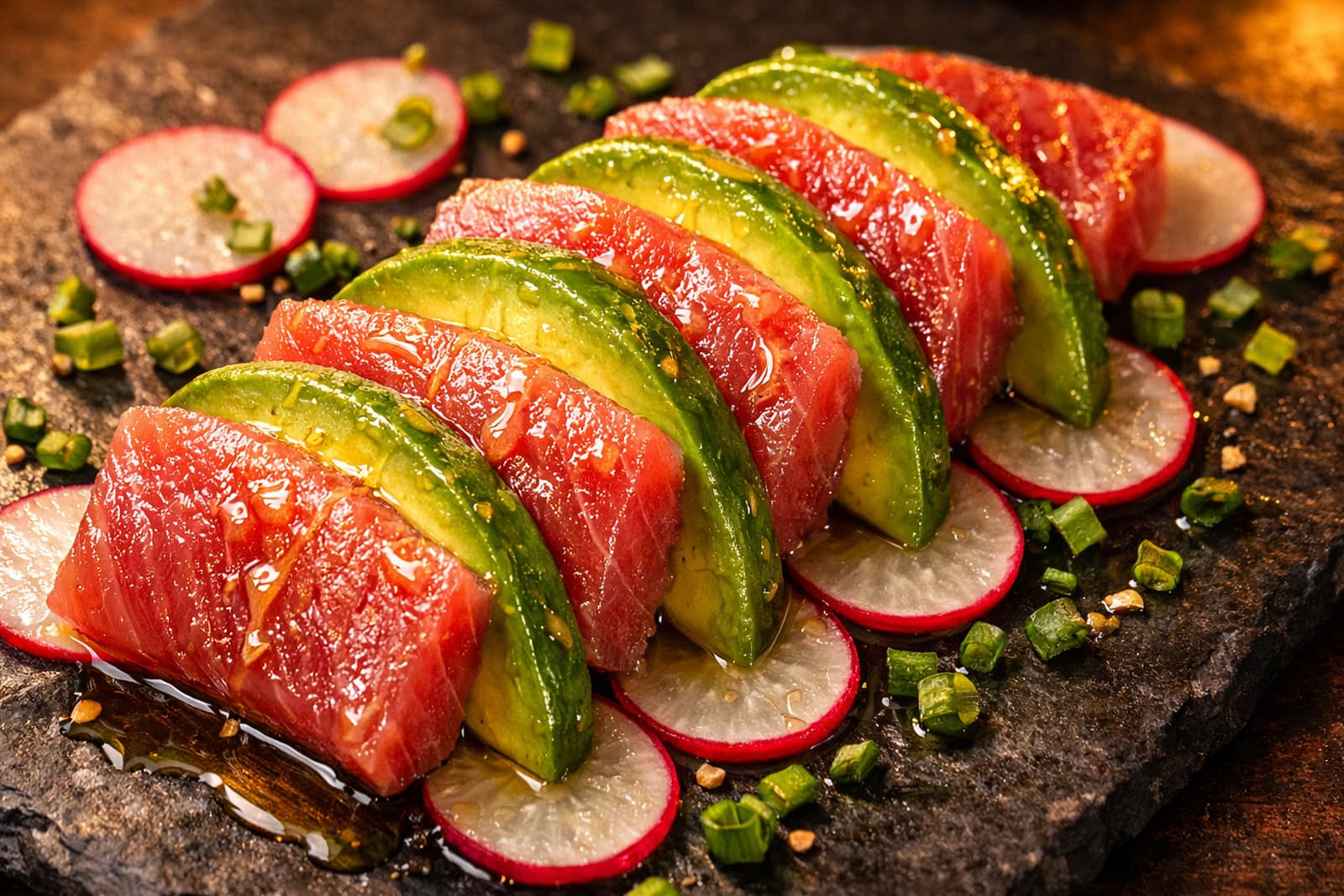
Thin slices of raw tuna arranged over ripe avocado, drizzled with toasted sesame oil, and finished with Scarlet Citrus Fire Finishing Salt. No cooking. No heat modulation. Every compound in the blend expresses at full strength, and the avocado's fat is the only thing softening the experience. This is the most exposed the blend can be.
Ingredients, method, and practical notes
Equipment
Method
Place a small dry pan over medium heat. Add the sesame seeds in a single layer. Toast for 2 to 3 minutes, shaking the pan every 30 seconds, until the seeds are lightly golden and fragrant. Transfer immediately to a small plate or bowl to cool.
👁 The seeds turn lightly golden and begin to pop occasionally. A warm, nutty aroma rises from the pan.WhyToasting deepens the sesame flavor and adds crunch. Seeds left in the hot pan continue to darken, so transfer them immediately. Burnt sesame seeds taste bitter and acrid.What to noticeThe seeds shift from white and flat-smelling to golden and fragrant. Pull them when the aroma is warm and nutty, before they darken further.If something's offDark brown or black seeds, or a sharp, burnt smell.Fix: Start over with fresh seeds at a lower temperature. Burnt sesame is bitter and will fight the finishing salt's citrus.
Chill two serving plates in the freezer for at least 10 minutes while you prepare the tuna and avocado. Cold plates keep the fish and avocado at the right temperature and slow oxidation.
👁 The plates should feel very cold to the touch when you remove them.WhyCold plates keep the tuna at a safe temperature and prevent the avocado from browning. A warm plate will take the chill off the fish and make the texture feel slack rather than clean and firm.Using a very sharp knife, slice the tuna against the grain into pieces about one-quarter inch thick. Work with clean, single strokes rather than sawing. Keep the sliced tuna refrigerated until you are ready to plate.
👁 Each slice should be clean-edged and uniformly thick. The surface should look smooth and glossy, not ragged or torn.WhyA sharp knife and single strokes preserve the tuna's texture. A dull knife or sawing motion tears the muscle fibers, making the surface rough and affecting how the sesame oil and salt interact with the fish. Clean slices feel silky in the mouth.What to noticeIf the knife is dragging or the edges look rough, the knife needs sharpening. Clean cuts make a visible difference in this dish because the fish is completely uncooked and the texture is exposed.If something's offRagged, torn edges on the slices. The tuna looks shredded rather than sliced.Fix: Sharpen or switch to a sharper knife. Wetting the blade with cold water between cuts can also help it glide through the fish cleanly.
Halve and pit the avocado. Slice each half into thin fans or cut into half-inch cubes. Work quickly once the avocado is cut. It begins to brown within minutes of exposure to air.
👁 Clean, pale green slices or cubes with no browning.WhyThe avocado needs to be freshly cut for both appearance and flavor. Browned avocado develops an off-taste that interferes with the clean flavors on this plate.If something's offBrown edges on the avocado slices before plating.Fix: If the avocado has started to brown, a light squeeze of fresh lemon or lime juice on the surface slows oxidation. But for best results, cut the avocado last, immediately before plating.
Remove the chilled plates from the freezer. Drizzle 1 teaspoon of soy sauce or tamari across the center of each plate in a thin, even layer. This is the foundation. Everything else sits on top of it.
👁 A thin, dark slick of soy across the plate surface. Not a puddle. Just enough to cover the area where the fish will be arranged.WhyThe soy sauce is the umami floor of this dish. Applied directly to the plate rather than drizzled over the top, it sits underneath the fish and avocado, creating a savory base that the finishing salt's bright citrus plays against. You will not taste soy directly, but you will feel the difference it makes. Without it, the plate is bright but hollow.What to noticeTaste a small piece of tuna dragged through the soy on its own before full assembly. Notice how the umami fills in the bottom of the flavor. The tuna tastes richer and more complete. That is the foundation the rest of the plate builds on.Arrange the tuna slices over the soy in a single layer, slightly overlapping. Tuck avocado slices or cubes between and around the tuna.
👁 Ruby-red tuna against pale green avocado, sitting on the dark soy base. The arrangement should look intentional but not fussy.WhyAlternating tuna and avocado ensures every bite can include both. The fat in the avocado carries the finishing salt's compounds, so bites with avocado will experience the salt differently than bites with tuna alone.Drizzle the toasted sesame oil evenly over the fish and avocado. Use about half a tablespoon per plate.
👁 A thin, glossy sheen over the surface. The sesame aroma should be immediately noticeable.WhyThe sesame oil is the base aroma of the plate. It provides the warm, toasted backdrop that the finishing salt's bright citrus sits on top of. It also helps the salt's compounds spread across the cold surface of the fish.What to noticeThe sesame aroma should lift the moment the oil hits the fish. If you cannot smell it clearly, the oil may be old or low quality. Good toasted sesame oil is intensely fragrant.If something's offNo aroma when the oil is drizzled. The oil smells flat or rancid.Fix: Toasted sesame oil goes stale quickly once opened. Store it in the refrigerator after opening. If the oil has no aroma or smells off, replace it.
Scatter the sliced radishes, toasted sesame seeds, and optional scallion slices evenly over the plate.
👁 Thin translucent radish circles, golden sesame seeds, and green scallion rings distributed across the red and green surface.WhyThe radishes and sesame seeds are doing textural work. Without them, every bite is smooth and soft. The radish crunch and sesame snap break that uniformity and keep the plate interesting across multiple bites.Finish with one-quarter teaspoon of Scarlet Citrus Fire Finishing Salt per plate, sprinkled from a few inches above so the flakes distribute unevenly across the surface. Serve immediately.
👁 Red-orange flakes of salt sitting visibly on the cold surface of the fish and avocado. Unlike on warm food, the salt does not release its citrus aroma instantly. It sits intact and expresses as you chew.Finish PhaseWhyThis is the moment that defines the dish. Nothing on this plate is cooked. Nothing else provides meaningful seasoning beyond the soy underneath and the sesame oil. The finishing salt is doing everything: salt, acid, heat, and citrus aroma, all at once, all at full strength, completely unmediated by heat. On cold food, the citrus and spice aromas release more slowly than on warm food. The citrus builds as you chew rather than flashing and disappearing. The Aleppo heat lingers a moment longer. The sumac's dry tartness stays in the finish. This is what the blend sounds like when nothing is softening it.What to noticeCompare the experience of this salt on cold tuna to how it behaves on warm food (like the Charred Cabbage). On warm surfaces, the citrus flashes immediately and the heat fades fast. On cold food, the same salt expresses more slowly and the finish lingers longer. The avocado fat moderates the intensity, but the overall experience is more sustained than on hot food. Same salt, different behavior, determined entirely by temperature.If something's offThe salt dissolved into the sesame oil on the surface and lost its flaky texture.Fix: Apply the salt as the very last step, immediately before serving. On cold food, the salt should sit on the surface for the diner to experience as they eat. If it dissolves, the textural element is lost.
What This Recipe Teaches
What a finishing salt's citrus system sounds like at full volume, with no heat to soften, redirect, or dissipate any of its components.
How the Blend Behaves Here
On this cold plate, every compound in Scarlet Citrus Fire Finishing Salt expresses at maximum intensity. The citric acid sparkles sharply at the front of the bite. The sumac delivers its dry, wine-like tartness without the softening that heat provides. The dried citrus peel releases its aromatic oils slowly as you chew rather than flashing immediately the way it does on warm food. The coriander reads as raw and slightly floral. The cardamom is quietly present, rounding the edges. The Aleppo chile heat builds gradually and lingers a moment longer than it does on hot surfaces. The avocado fat is the only modulating force: it carries the compounds across the palate and prevents the acid from feeling sharp. Without avocado, the same amount of salt would taste brighter and more aggressive. With it, the experience spreads and extends.
What to Notice
Aromatic entry: Toasted sesame warmth rising from the cold plate. As you bring the bite to your mouth, a faint citrus note from the finishing salt begins to lift, but more slowly than it would from warm food.
Mid-palate: Cool, silky tuna richness carried by avocado fat. The soy sauce provides a savory floor underneath. Sesame seeds crunch and echo the oil's toasted nuttiness. The finishing salt's citrus and heat spread across the palate as you chew.
Lingering finish: Aleppo chile heat fades gradually. Sumac tartness remains, dry and persistent, hanging in the finish longer than it does on warm food. The last impression is bright and clean, not rich or heavy. The plate feels light despite the fat content because the citrus keeps the finish lifted.
The Fat-as-Moderator Test
How avocado fat changes the way a finishing salt expresses on cold food, performing the same moderating role that heat plays in a cooked dish.
How: Arrange two small portions on separate areas of the plate. One with tuna slices only (no avocado). One with tuna and avocado together. Apply the same amount of Scarlet Citrus Fire Finishing Salt to both. Taste them side by side.
Compare: The tuna-only portion will taste brighter, sharper, and more immediate. The citrus hits hard and the heat is more pronounced. The tuna-and-avocado portion will feel rounder and more extended. The heat softens, the citrus spreads, and the finish lingers. The fat in the avocado is doing the same work that heat does in a cooked dish: carrying the salt's compounds across the palate and softening their impact. This is a checks and balances lesson in a no-cook context.
Symptom: The tuna tastes warm or has a soft, slack texture rather than feeling clean and firm
Cause: The fish was not cold enough when plated, or the plates were not chilled. Room-temperature tuna loses the clean, firm texture that makes crudo satisfying.
Fix: Keep the tuna refrigerated until the moment of slicing. Chill the plates for at least 10 minutes. If the kitchen is warm, work quickly and serve immediately after assembly.
Symptom: The plate tastes overwhelmingly salty or aggressively acidic
Cause: The soy sauce, sesame oil, and finishing salt together created too much sodium. The finishing salt is already providing salt, so the soy layer underneath must be thin.
Fix: Use less soy sauce. A thin slick is sufficient. The soy should be barely perceptible as soy and should read as umami richness, not saltiness. If the plate is already too salty, add more avocado to moderate.
Symptom: The avocado has browned and developed an off-taste
Cause: The avocado was cut too far in advance and oxidized. Browning changes both the appearance and the flavor.
Fix: Cut the avocado last, immediately before plating. If it has started to brown, a light squeeze of fresh lemon or lime juice slows oxidation, but the best approach is to work quickly.
Symptom: The finishing salt dissolved into the sesame oil and the flaky texture was lost
Cause: The salt was applied too early or the oil was drizzled too heavily. On a pool of oil, the salt dissolves faster than on a drier surface.
Fix: Apply the salt as the absolute last step. Aim most of it directly at the fish and avocado surfaces rather than at the oil pooled on the plate. Serve within 60 seconds of applying the salt.
Notes
Fish Alternatives
Sushi-grade salmon works well, though its stronger fat flavor changes the balance. Hamachi (yellowtail) is excellent, richer than tuna, and pairs naturally with sesame and citrus. Fluke or sea bream can be sliced thinner and arranged differently. All should be sushi-grade or previously frozen to a temperature that eliminates parasites. Ask your fishmonger.
Sourcing Sushi-Grade Fish
Sushi-grade is not a regulated term, but good fishmongers use it to indicate fish that has been handled and stored for raw consumption. Ask specifically for fish suitable for raw preparation. Previously frozen fish (frozen to at least negative 4 degrees Fahrenheit for 7 days) is standard for raw consumption and is not inferior to fresh for this preparation.
What Can Be Prepared in Advance
The sesame seeds can be toasted up to 3 days ahead and stored in a sealed container at room temperature. The radishes can be sliced up to 4 hours ahead and kept in ice water in the refrigerator (drain and pat dry before using). The tuna should be sliced and the avocado cut immediately before plating. Do not apply the finishing salt until the moment of serving.
Presentation
This dish looks best on white or light-colored plates that show off the contrast between the red tuna, pale green avocado, dark soy base, and red-orange finishing salt flakes. Cold plates are not optional. They keep the fish at the right temperature and give you a few extra minutes before the avocado begins to oxidize.
More recipes like this
New recipes and seasonal cooking ideas, once a week. Never more.
See everything that's in the newsletter