Roasted Eggplant Steaks with Black Orchard Blend
Charred and tender, grounded by cumin and coriander, lifted by a tahini sauce that ties the whole thing together.
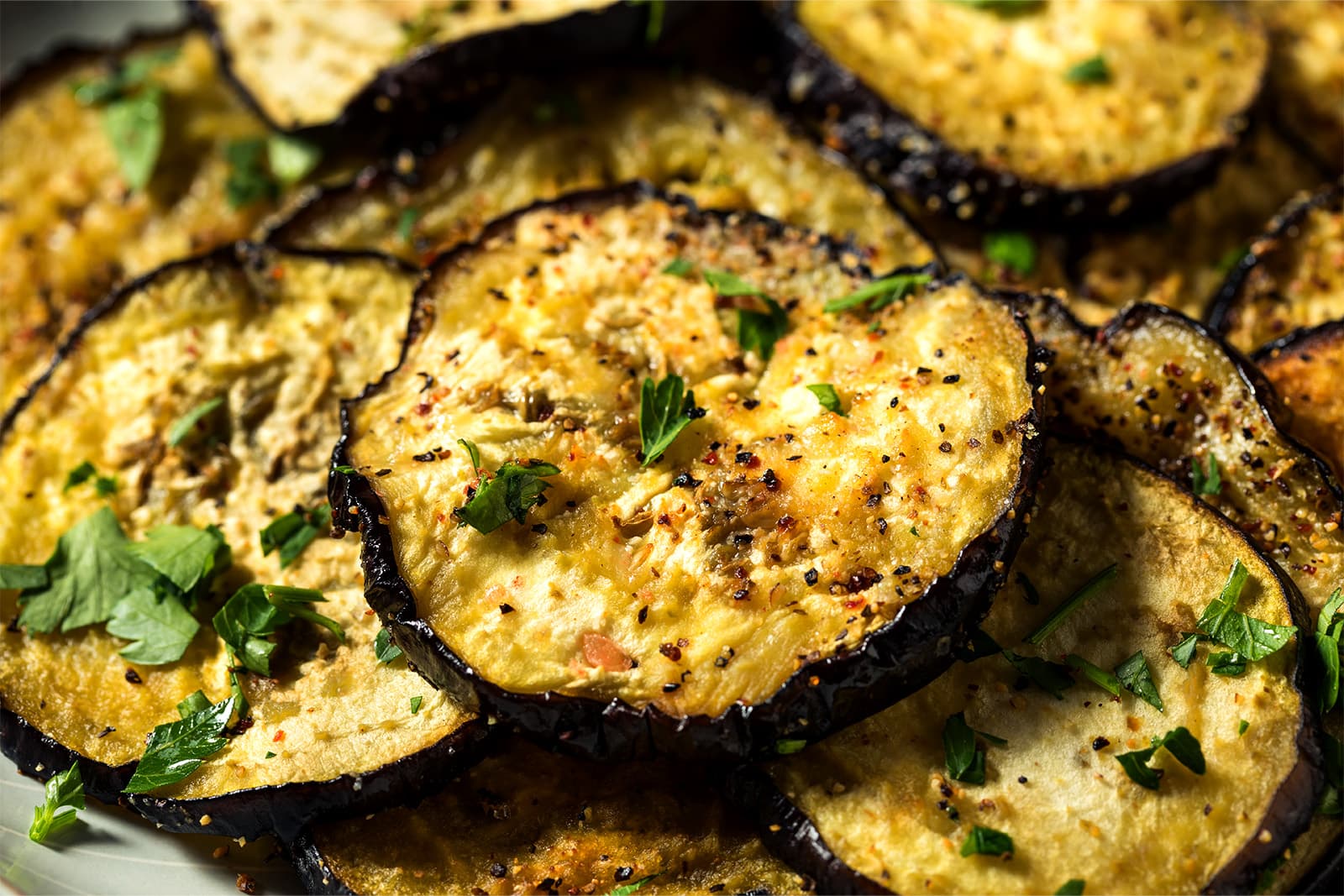
Thick eggplant rounds roasted at high heat with Black Orchard Blend until the tops char and the interiors turn silky. The blend's rosemary and thyme provide resinous, herby character, but without the grounding pair, coriander and cumin, those herbs would read as raw and harsh against the mild eggplant. The grounding agents anchor the herbs in savoriness and give the dish structural depth. A lemon-tahini sauce provides the moderating counterpoint: its acid and richness balance the assertive herb and spice crust and prevent the dish from feeling one-dimensional. This is the herb + grounding pair demonstrated on the most absorptive vegetable in the kitchen.
Ingredients, method, and practical notes
Equipment
Method
Preheat the oven to 450°F. Line a sheet pan with parchment paper.
WhyHigh heat is essential. At 450°F, the eggplant surfaces char and caramelize while the interiors steam in their own moisture and turn silky. Lower heat produces soft, pale eggplant without the charred crust where the blend expresses most intensely.In a small bowl, stir together four tablespoons of olive oil and one and a half tablespoons of Black Orchard Blend until the blend is fully suspended in the oil. This is the same bowl-bloom technique used for roasted vegetables: the warm kitchen and oil temperature are enough to begin opening the blend's aromatics.
👁 The oil is visibly colored with the blend's spices. The rosemary and thyme flecks are suspended. The mixture smells herby and warm.WhyMixing the blend into the oil before brushing onto the eggplant ensures even distribution. Eggplant absorbs oil unevenly. If you sprinkle the blend dry and then drizzle oil, some areas get heavily seasoned while others are bare. The pre-mixed oil-and-blend mixture coats every surface consistently.Arrange the eggplant rounds on the prepared sheet pan. Brush both sides generously with the spiced oil mixture. Season with three-quarters of a teaspoon of kosher salt, distributed evenly across all rounds.
👁 Both sides of each round are glistening with spiced oil. The surfaces are visibly coated with herb flecks and golden-brown spice. No dry, white patches remain.WhyBrushing both sides matters because eggplant absorbs from every surface. The bottom side, pressed against the hot pan, will develop the deepest crust. The top side will char under the oven's radiant heat. Both sides need full spice oil contact for balanced seasoning.What to noticeWatch how quickly the eggplant absorbs the first brushing. The oil disappears into the flesh almost immediately. If you have thick rounds, you may need to brush a second time. This absorption is why eggplant is ideal for this demonstration: it hides nothing. Every flavor that goes in comes out.If something's offAfter brushing, large areas of the eggplant are still dry and pale.Fix: Not enough oil. Eggplant is extremely absorbent. Add another tablespoon of plain olive oil and rebrush the dry spots. Under-oiled eggplant roasts dry and tastes dusty.
Roast for 25 to 30 minutes without flipping until the tops are deeply charred in spots and the eggplant yields completely when pressed gently with a spatula. The centers should be silky and the edges should be dark brown to black.
👁 The top surfaces have dark brown to black char spots. The herb flecks from the blend are visible and darkened. The eggplant rounds have slumped slightly and collapsed inward, indicating the interior has softened completely. A spatula pressed gently into the center meets no resistance.Cook-In PhaseWhyThe 25 to 30 minutes of sustained high heat are where the herb + grounding pair does its most important work. Rosemary and thyme's resinous compounds darken and concentrate on the charred surfaces. Without coriander and cumin grounding them, this char would taste piney and harsh. With the grounding pair present, the char tastes savory and deep. The coriander's broad warmth spreads through the eggplant's flesh as the oil-borne compounds redistribute under heat. The cumin anchors everything in earthy savoriness. By the time the eggplant is done, the herbs and the grounding agents have fused into a single, cohesive crust character that neither could produce alone.What to noticeSmell the oven at 15 minutes and again at 25 minutes. At 15 minutes, the rosemary is forward and identifiable. At 25 minutes, the rosemary has settled into something deeper and less piney, more savory and structural. That shift is the grounding pair doing its work: the coriander and cumin have caught up to the rosemary and pulled it into cohesion. If the rosemary still smells sharp and distinct at 25 minutes, the roast may need a few more minutes.If something's offAfter 30 minutes, the eggplant is still firm and the surfaces are pale with no charring.Fix: The oven temperature was too low. Increase to 475°F for the last 5 to 8 minutes. Eggplant needs aggressive heat to char on the surface while steaming internally. If your oven runs cool, preheat to 475°F and use convection if available.
While the eggplant roasts, make the tahini sauce. In a small bowl, whisk together the tahini, lemon juice, grated garlic, a quarter teaspoon of salt, and two tablespoons of cold water. The sauce should be smooth and pourable, about the consistency of heavy cream. Add more water one teaspoon at a time if it is too thick.
👁 A smooth, pale sauce that flows in a steady stream from a spoon. No lumps. Not as thick as hummus, not as thin as milk.WhyThe tahini sauce is the moderating element in the checks and balances structure. Its acid (lemon) cuts through the rich, oiled eggplant. Its fat (sesame) provides a cooling, nutty richness that moderates the assertive herb crust. Its bitterness (raw tahini's natural character) bridges the herby surface to the sweet, silky interior. Without this sauce, the dish is assertive herb crust on absorbent vegetable with nothing to moderate or connect the two.If something's offThe tahini seizes into a thick, grainy paste when the lemon juice is added.Fix: This happens when cold liquid hits thick tahini. Add the water first, whisk until smooth, then add the lemon juice. The water loosens the tahini before the acid can cause it to seize.
Transfer the roasted eggplant steaks to a serving platter or individual plates. Drizzle generously with the tahini sauce. Scatter with pomegranate seeds and fresh herbs if using.
👁 Dark, charred eggplant rounds with pale tahini sauce pooling around them. Bright red pomegranate seeds and green herbs on top. The contrast between the dark crust and the bright garnishes is dramatic.Finish PhaseWhyThe assembly brings every element of the checks and balances structure together. The assertive herb crust from the blend meets the moderating tahini sauce. The acid from the lemon cuts through the oil-rich eggplant. The pomegranate seeds add tart, juicy crunch that disrupts the soft, silky texture. The fresh herbs add raw, volatile brightness that contrasts with the cooked, integrated herbs in the blend. Every component moderates or contrasts with another.What to noticeTake a bite of just the charred eggplant without tahini. It tastes herby, savory, and intense. The rosemary is present and assertive. Now add the tahini. The same eggplant tastes rounder, cooler, and more composed. The tahini does not remove the herb character. It grounds it and gives it a richer context. That is the moderating element completing the assertive element's work.
What This Recipe Teaches
How the herb + grounding pair works: resinous herbs (rosemary, thyme) need a savory anchor (coriander, cumin) to read as vibrant rather than raw. And how an assertive herb crust needs a moderating sauce (tahini with acid) to feel complete rather than one-dimensional.
How the Blend Behaves Here
Black Orchard Blend demonstrates two checks and balances principles on eggplant. First, the internal pair: rosemary and thyme are assertive, resinous herbs that would taste piney and harsh on their own against mild eggplant. Coriander and cumin ground them in warm savoriness so the herbs read as structural depth rather than sharp resin. The eggplant absorbs everything and hides nothing, making this pair's relationship especially clear. Second, the external balance: the assertive herb-and-spice crust is moderated by the tahini sauce's acid, fat, and bitterness. Without the sauce, the dish is all forward assertion. With the sauce, the assertion is caught, rounded, and completed.
What to Notice
Aromatic entry: Charred rosemary and toasted cumin from the dark surfaces. A nutty, lemony lift from the tahini sauce. The aroma is savory and inviting with layers of herb and char.
Mid-palate: Silky, oil-rich eggplant flesh with deep savory warmth from coriander and cumin. The rosemary and thyme have integrated into the charred crust and provide structural depth rather than piney sharpness. Tahini adds cooling nutty richness. The textures alternate between charred surface and creamy interior.
Lingering finish: Lemon lifts the tahini and cleans the oily richness. A dark, quiet tartness from the black lime and sumac in the blend emerges as the bite finishes, more subtle than on lamb or duck but present. Pomegranate seeds, if used, add a burst of bright acid that echoes the lemon from a different direction.
The Missing Moderator Test
What the eggplant tastes like when the assertive herb crust has no moderating counterpart.
How: Roast the eggplant as written. Serve half the pieces with the tahini sauce, lemon, and garnishes as directed. Serve the other half with nothing: no sauce, no acid, no garnish. Eat two to three pieces of each side by side.
Compare: The first bite of the unmoderated eggplant is good: herby, savory, charred. By the third bite, the rosemary and cumin begin to accumulate without relief. The palate does not reset. The moderated version stays engaging across every bite because the tahini's acid and richness cut through and round the herb crust each time. The assertive element is not bad. It is incomplete without its moderator.
Symptom: The eggplant tastes piney and harsh, with the rosemary dominating everything
Cause: The eggplant was undercooked. At 15 minutes, the rosemary is still sharp and the coriander has not had time to ground it. The grounding pair needs the full 25 to 30 minutes of roasting to catch up to the herbs.
Fix: Roast for the full 25 to 30 minutes until the surfaces are deeply charred and the interior is completely soft. The grounding pair integrates over time. Check the aroma: if the rosemary is still piney and distinct rather than settled and warm, the eggplant needs more time.
Symptom: The eggplant is dry and chewy rather than silky inside
Cause: Not enough oil, or the eggplant rounds were too thin. Eggplant needs generous oil to roast properly. Its sponge-like flesh absorbs fat and uses it to create internal steam that softens the interior.
Fix: Use the full four tablespoons of oil and brush both sides thoroughly. Cut rounds at least 1 inch thick. Thinner slices lose their moisture to evaporation before the interior can soften.
Symptom: The tahini sauce is thick and pasty rather than smooth and pourable
Cause: Not enough liquid or the lemon was added before the water. Tahini seizes when acid hits it directly.
Fix: Add water first and whisk until smooth. Then add lemon juice gradually. If already seized, add more water one teaspoon at a time while whisking vigorously. The sauce should flow like heavy cream.
Symptom: The dish tastes one-dimensional despite proper roasting
Cause: The tahini sauce was undersized or omitted. Without the moderating sauce, the herb crust has no counterpoint and accumulates without relief across multiple bites.
Fix: Drizzle the tahini generously. Each eggplant round should have a visible pool of sauce around it. The sauce is not a condiment. It is a structural component that completes the dish's balance.
Notes
Oil Generously
Eggplant absorbs oil like a sponge. This is not a problem. It is the mechanism by which the blend integrates into the flesh rather than sitting on the surface. Use the full four tablespoons and do not be alarmed when it disappears into the eggplant within seconds. Under-oiled eggplant tastes dry and dusty regardless of how much seasoning is on it.
Other Vegetables
Thick slices of zucchini, portobello mushroom caps, or cauliflower steaks all work with the same blend and method. Mushrooms in particular absorb aggressively and make the herb + grounding pair very audible. Reduce roasting time by 5 minutes for zucchini.
Building It Into a Meal
Serve over warm flatbread or pita with the tahini pooling underneath. Add a simple cucumber salad with lemon and mint alongside. For a composed plate, pair with [Amber Root Base Blend](https://www.emberloftspices.com/blends/amber-root) golden rice and pickled onions for a warm, grounded base that contrasts with the herb-forward eggplant.
Advance Preparation
The tahini sauce can be made a day ahead and refrigerated. It will thicken. Thin with a teaspoon of water before serving. The eggplant is best fresh from the oven but can be roasted up to 2 hours ahead and served at room temperature. The blend's flavors actually settle and compose further as the eggplant cools.
Finishing Upgrade
A pinch of [Scarlet Citrus Fire Finishing Salt](https://www.emberloftspices.com/blends/scarlet-citrus) over the plated eggplant adds bright citrus and clean heat that amplifies the lemon in the tahini and connects to the quiet dark citrus from the blend's sumac and black lime.
More recipes like this
New recipes and seasonal cooking ideas, once a week. Never more.
See everything that's in the newsletter