Seared Duck Breast with Black Orchard Blend
Scored skin, rendered fat, and a crust where you can taste the hierarchy working.
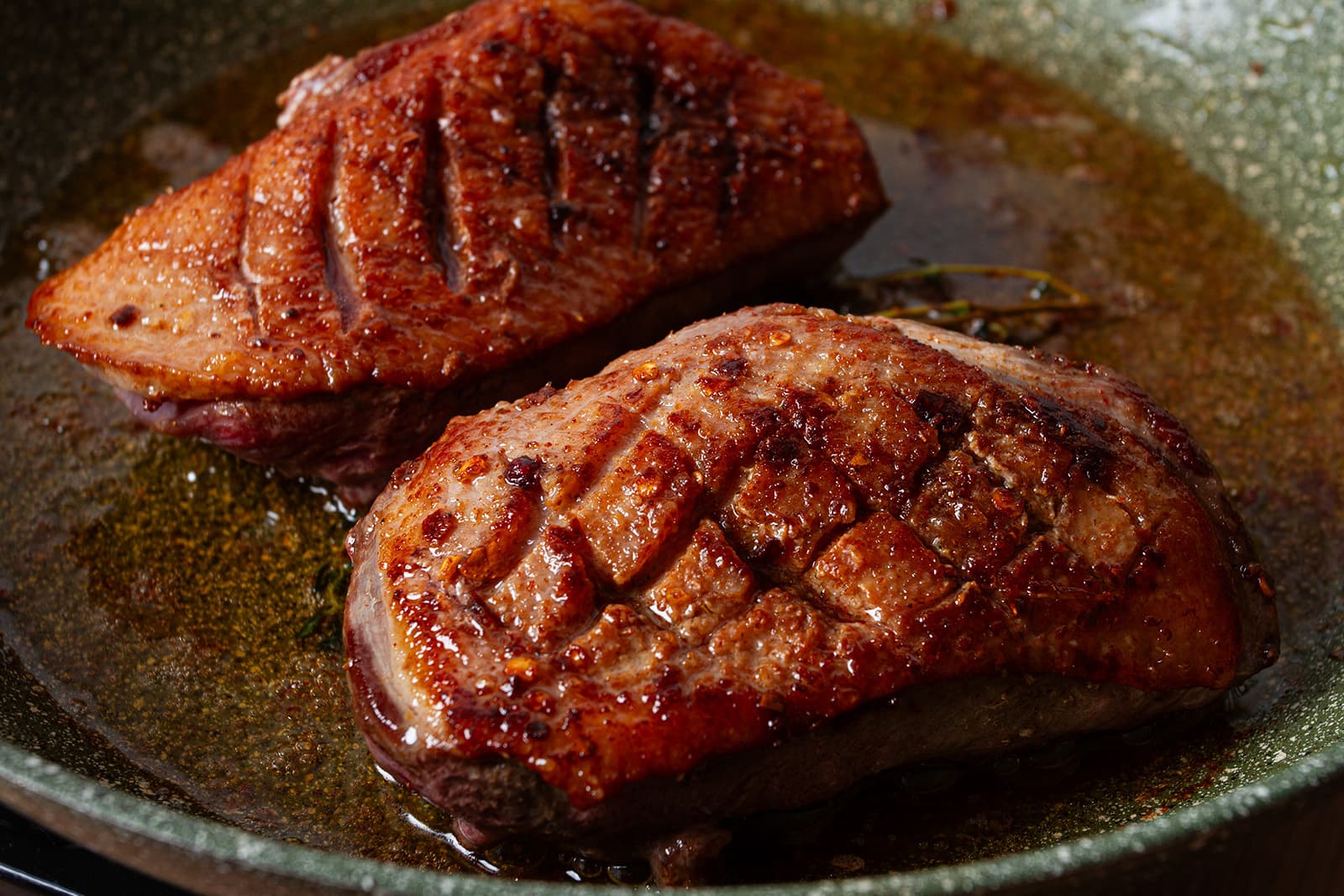
Skin-on duck breast scored in a crosshatch, rubbed with Black Orchard Blend, and seared skin-side down in a cold pan that heats slowly to render the fat before the crust forms. The blend's hierarchy is clear and audible in every bite: coriander leads with broad, warm savoriness. Cumin supports with earthy depth. Rosemary and thyme provide resinous structure. Allspice and cinnamon round quietly from below. Black lime and sumac arrive at the finish after the 5-minute rest. Duck demands a blend with its hierarchy in order, and Black Orchard Blend delivers exactly that.
Ingredients, method, and practical notes
Equipment
Method
Score the duck breast skin in a tight crosshatch pattern, spacing cuts about half an inch apart. Cut through the fat cap down to the meat but not into the meat itself. Season both sides with kosher salt. Season the meat side only with freshly cracked black pepper and Black Orchard Blend, pressing the blend firmly into the surface. Let sit at room temperature for 15 minutes.
👁 The skin side has a clean crosshatch with no blend residue. The meat side is evenly coated in a dark, herb-flecked layer. The surface feels slightly tacky from the salt drawing moisture.WhyScoring the fat cap exposes surface area for rendering. The cuts allow fat to escape and the skin to crisp rather than remaining a thick, chewy layer. Applying the blend only to the meat side is deliberate: the skin needs clean, unobstructed contact with the pan to render and crisp. Spice on the skin would burn during the long, slow render. The blend goes where it will be seared briefly and intensely, not where it will sit against metal for 12 minutes.What to noticeLook at the scored skin. The crosshatch pattern should expose the white fat layer without cutting into the pink meat below. On the meat side, the blend's components are visible: darker herb flecks from the rosemary and thyme, the warm brown of coriander and cumin.If something's offCuts on the skin side go all the way through into the meat. Pink flesh is visible through the cuts.Fix: Use a very sharp knife and lighter pressure. The goal is to open channels in the fat cap, not to cut the meat. If some cuts are too deep, the recipe will still work, but juice may escape through those cuts during cooking.
Place the duck breasts skin-side down in a cold, dry 12-inch skillet. No oil. Turn the heat to medium-low. Cook for 10 to 12 minutes without moving, adjusting heat as needed to maintain a gentle, steady sizzle. Pour off rendered fat every 3 to 4 minutes into a heatproof bowl.
👁 The skin is deep golden and evenly crispy. The fat cap has visibly thinned. The crosshatch lines have opened and the skin is flat against the pan. You should have collected 3 to 5 tablespoons of rendered fat.WhyStarting in a cold pan and heating slowly renders the fat gradually rather than searing the skin immediately. High initial heat would crisp the surface while leaving a thick layer of unrendered fat underneath. The slow approach melts the fat from the inside out. Pouring off the fat prevents the breast from frying in a pool. Each pour-off also removes moisture, helping the skin crisp. This 10 to 12 minute render is the foundation of the dish's texture.What to noticeThe sizzle should be gentle and steady, not aggressive. If the fat is popping and spattering, the heat is too high. At 5 minutes, lift a corner of the breast with tongs to check the skin color. It should be light golden. At 10 minutes, it should be deep golden and crispy to the touch. The fat cap should look noticeably thinner than when it started.If something's offThe skin is dark brown or burnt in spots at 6 to 7 minutes, or the sizzle is loud and aggressive.Fix: The heat is too high. Lower to low immediately. The render takes 10 to 12 minutes by design. Rushing it produces unevenly rendered skin with a thick, chewy fat layer underneath the crispy surface.
Flip the duck breasts to the meat side. If using fresh thyme sprigs, add them to the pan now. Increase heat to medium-high. Sear the meat side for 2 to 3 minutes until the blend has formed a dark, fragrant crust. If thyme is in the pan, tilt the pan and spoon the hot rendered fat over the skin side once or twice.
👁 The meat side has a dark brown, herb-studded crust. The blend has fused to the surface. The fresh thyme sprigs are sizzling in the fat and filling the kitchen with resinous aroma. Internal temperature reads 125 to 130°F for medium-rare.Bloom PhaseWhyThis is the bloom. The 2 to 3 minutes of direct contact between the blend and the hot pan is where Black Orchard Blend's hierarchy becomes audible. Coriander leads: its broad warmth is the dominant note in the crust. Cumin supports, adding earthy depth that anchors the coriander without competing. Rosemary and thyme fuse into the surface and add resinous structure. The blend's hierarchy is correct because coriander has the proportion to lead and every other element has the proportion to serve its role. The fresh thyme sprigs echo the dried thyme in the blend but express differently: the fresh thyme is volatile and aromatic, lifting the nose, while the dried thyme in the blend is integrated and structural.What to noticeSmell the pan. The dominant note should be warm, broad coriander backed by toasted cumin. The rosemary and thyme should feel like structure, not individual identifiable herbs. If you can identify the rosemary as a distinct, piney note rather than part of the blend's character, the rosemary is too forward. In a properly hierarchical blend, the supporting players provide context without calling attention to themselves. Black Orchard Blend is designed to produce exactly this effect.If something's offThe crust looks pale after 3 minutes and the blend does not seem to have seared into the surface.Fix: The heat was not high enough after flipping. This side needs medium-high to high heat for a brief, intense sear. The long, gentle render was for the skin. The short, hot sear is for the blend.
Transfer the duck breasts to a cutting board, skin-side up. Rest for 5 minutes without cutting.
👁 The skin stays crispy and the crust on the meat side has set. The breast feels firm but yields to gentle pressure.Rest PhaseWhyThe rest allows juices to redistribute and the black lime and sumac to surface. Duck breast is less forgiving than lamb for long rests because the thin skin can soften. Five minutes is the correct window: long enough for the dark citrus note to begin emerging, short enough that the skin remains crispy. The rest phase in this recipe is shorter than the lamb chops because the priority is preserving both the crispy skin texture and the rest-phase flavor development.What to noticeTaste a small piece of the crust immediately after removing from the pan and compare it to a piece after 5 minutes. The immediate taste is forward and herby. The rested taste has a quieter, darker, more composed quality with a faint tartness at the finish. The dark citrus is more subtle on duck than on lamb because the rest is shorter, but it is present.Slice the duck breast against the grain into half-inch slices. Fan on a warm plate skin-side up. Serve with lemon wedges.
👁 The slices show a thin layer of crispy, golden skin on top, a thin line of rendered fat, and rosy-pink meat below. The meat-side crust is dark and herb-studded. The transition from skin to fat to meat to crust is clean and dramatic.Finish PhaseWhySlicing against the grain produces tender slices that show the full cross-section: crispy skin, rendered fat, pink meat, dark crust. This visual is the hierarchy made visible. Every layer has a role and every layer is distinct.What to noticeIn a single bite that includes skin, meat, and crust, you should be able to identify the hierarchy. The coriander-led crust defines the flavor. The cumin and herbs support without competing. The crispy skin adds texture and richness. The allspice and cinnamon warm the background. The dark citrus note finishes. Each element serves its role.
What This Recipe Teaches
How a properly hierarchical blend sounds on a rich, demanding protein. Coriander leads at 25% of the blend. Every other component supports, rounds, or finishes without competing for attention.
How the Blend Behaves Here
Black Orchard Blend's hierarchy is designed for proteins like duck that are rich, fatty, and assertive in their own right. A blend without clear hierarchy would create noise against the duck's intensity. Instead, coriander leads with a broad, warm note that defines the dish. Cumin sits below, adding earthy depth that anchors the coriander. Rosemary and thyme provide resinous structure that grabs the crust and holds through the sear. Allspice and cinnamon round quietly without introducing sweetness. Black lime and sumac wait until the rest phase to contribute their dark citrus finish. Each component has a role and a proportion that reflects that role. No ingredient competes with the lead. No ingredient is absent from its function.
What to Notice
Aromatic entry: Warm, broad coriander and toasted cumin from the dark crust. If fresh thyme was used, a resinous, volatile lift on top. The aroma is serious and inviting.
Mid-palate: Rich duck fat carrying the cumin's earthy depth. Rosemary and thyme integrated into the crust as structural character. Allspice and cinnamon provide quiet warmth that rounds the fat without introducing sweetness. The experience is layered but not busy.
Lingering finish: A dark, wine-like tartness from the black lime and sumac that surfaces after the rest. It lifts the rich fat and keeps the finish clean. With lemon, the tartness is brighter and more vivid. Without it, the finish is darker and more subtle.
The Equal-Proportion Test
What happens when hierarchy is removed and all spices compete at the same proportion.
How: Make a simple test blend with equal parts coriander, cumin, rosemary, thyme, sumac, and black pepper (omitting salt). Rub one duck breast with this equal-proportion blend and another with Black Orchard Blend. Sear and rest both identically. Taste side by side.
Compare: The equal-proportion version will taste busy. No single note defines the dish. The rosemary and sumac, elevated to equal standing with coriander, will compete for attention. The flavor feels louder but less clear. The Black Orchard Blend version will taste organized: coriander defines, everything else serves. This is the difference between hierarchy and parity. The same ingredients. Different proportions. Entirely different results.
Symptom: The skin is crispy on the surface but a thick layer of unrendered fat remains underneath
Cause: The render phase was too short or the heat was too high. High heat crisps the outer surface before the fat underneath has time to melt and escape.
Fix: Start in a cold pan and use medium-low heat. The render takes 10 to 12 minutes. Be patient. Pour off accumulated fat every 3 to 4 minutes. The skin should feel thin and the crosshatch lines should be visibly open when the render is complete.
Symptom: The crust on the meat side tastes like individual spices rather than a unified flavor
Cause: The sear was too short. The blend needs 2 to 3 minutes of direct contact with high heat to fuse its components into a cohesive crust. A brief 30-second sear does not give the coriander time to lead or the herbs time to integrate.
Fix: Sear the meat side for a full 2 to 3 minutes over medium-high heat. The crust should be dark brown and fragrant before flipping. If the blend still tastes like individual spices, the heat may have been too low.
Symptom: The interior is gray and overcooked. No pink.
Cause: The total cooking time was too long or the breast was too thin. Duck breast should be served medium-rare to medium.
Fix: Pull at 125 to 130°F internal. Carryover during the 5-minute rest will bring it to 130 to 135°F (medium-rare to medium). If using thinner Pekin breasts rather than Moulard, reduce the meat-side sear to 1.5 to 2 minutes.
Symptom: The blend on the meat side burned during the skin render
Cause: The blend was applied to both sides instead of the meat side only. During the 10 to 12 minute skin render, the blend trapped against the hot pan scorched.
Fix: Apply the blend to the meat side only. The skin side gets salt only. The skin needs clean contact with the pan to render properly. The blend goes where it will be seared briefly, not where it will sit against hot metal for 10 or more minutes.
Notes
Scoring the Skin
Use the sharpest knife you have. Score in a tight crosshatch about half an inch apart. Cut through the fat cap only, not into the meat. A sharp paring knife gives more control than a chef's knife. If you are uncertain about depth, err on the side of shallow. You can always score deeper. You cannot undo a cut into the meat.
Save the Rendered Fat
The duck fat you pour off during rendering is seasoned with salt and deeply flavorful. Strain it into a jar and refrigerate for up to a month. Use it for roasting potatoes, searing vegetables, or starting a future recipe with [Amber Root Base Blend](https://www.emberloftspices.com/blends/amber-root) bloomed in duck fat instead of olive oil.
Protein Alternatives
Skin-on chicken thighs work with a similar render-then-sear approach but the skin is thinner and renders faster (6 to 8 minutes). Thick-cut lamb leg steaks are an excellent non-poultry option that give the rest phase more time to develop the dark citrus.
Finishing
A pinch of [Scarlet Citrus Fire Finishing Salt](https://www.emberloftspices.com/blends/scarlet-citrus) over the sliced duck adds a bright citrus note that amplifies the dark citrus from the rest. The two citrus expressions, one dark and savory from the blend, one bright and sharp from the salt, play against each other and keep the rich duck fat from feeling heavy.
More recipes like this
New recipes and seasonal cooking ideas, once a week. Never more.
See everything that's in the newsletter