Crimson Ember-Crusted Mushrooms
Meaty, dark, and savory, with a finish that proves the rub works without meat at all.
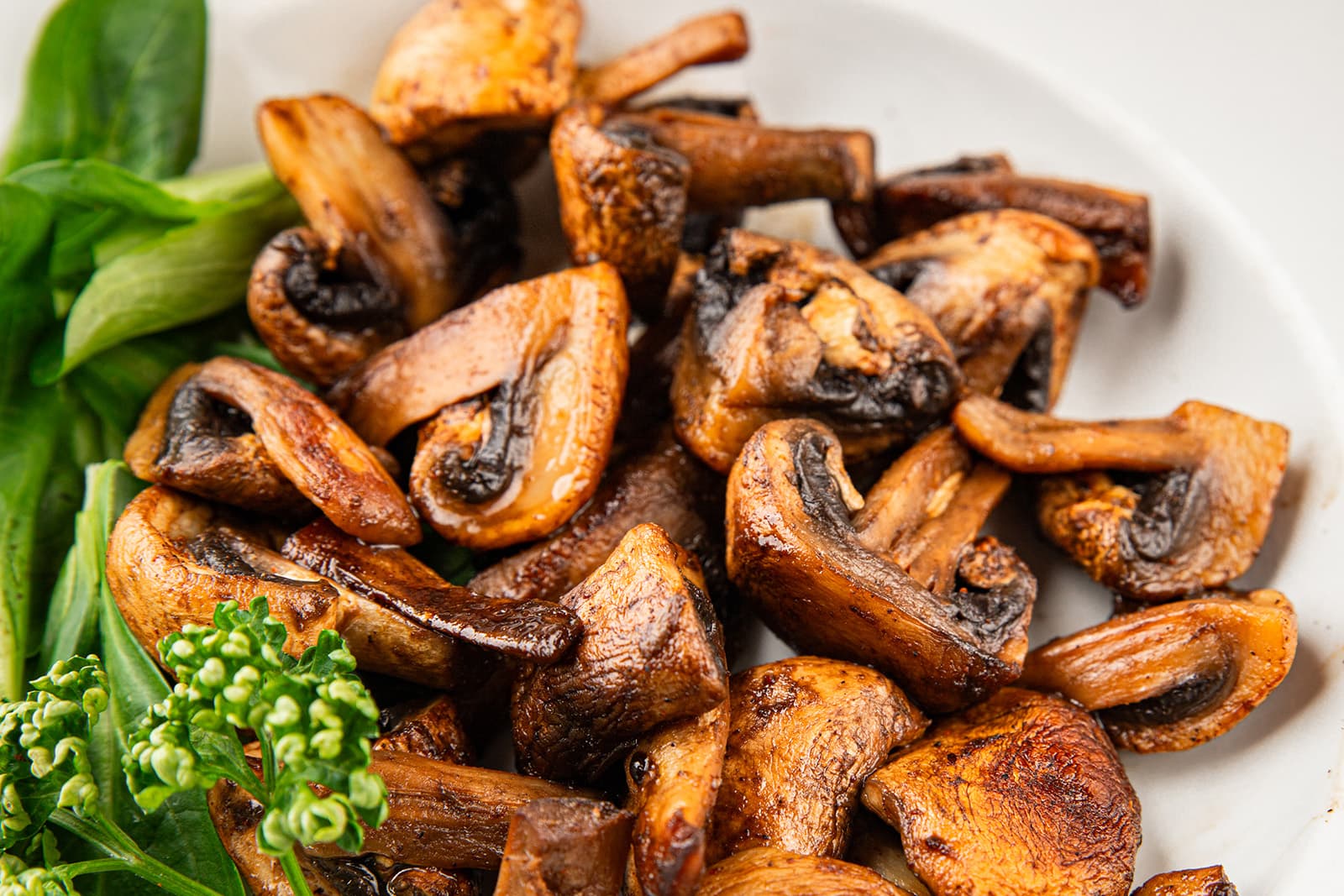
Large mushrooms seasoned with Crimson Ember and cooked hard in cast iron until deeply browned and substantial. The mushrooms release their water first, then absorb the spiced oil and form a dark crust that no meat is needed to make satisfying. A squeeze of lemon at the finish and torn fresh parsley keep the richness vivid and prevent the smoke from settling into heaviness.
Ingredients, method, and practical notes
Equipment
Method
Wipe the mushrooms clean with a damp paper towel. Do not rinse or soak them under water. Cut cremini mushrooms in half if larger than a golf ball, or leave whole if small. For portobellos, scrape out the dark gills with a spoon and slice the caps into slabs about three-quarters of an inch thick.
👁 Clean, dry mushroom pieces with exposed interior surfaces. No visible dirt, no standing water. The cut surfaces look dense and pale.WhyMushrooms are sponges. Water on the surface will steam in the pan instead of allowing browning. Wiping removes dirt without adding moisture. Thick pieces give the interior time to turn tender before the exterior overcooks and turns rubbery.What to noticeIf you squeeze a mushroom and water drips out, it absorbed too much moisture during cleaning. Use a damp towel, not a running faucet.If something's offMushrooms look wet or glossy with standing water on the surface after cleaning.Fix: Blot dry with a paper towel until the surface feels matte and dry to the touch.
In a large bowl, toss the mushrooms with the olive oil, Crimson Ember, and kosher salt until every piece is evenly coated. The rub should be visible on all surfaces.
👁 Every mushroom piece glistens with oil and is visibly coated in the dark reddish-brown rub. No dry patches, no pools of oil at the bottom of the bowl.WhyCoating before cooking ensures the rub is in position to bloom once the water phase ends and the oil re-concentrates. If you add the rub to the pan after the mushrooms are already cooking, it lands on wet surfaces and never adheres properly.If something's offThe rub has settled into a paste at the bottom of the bowl with bare mushrooms on top.Fix: Add a small drizzle more oil and toss again. The oil is the vehicle that carries the rub onto the mushroom surfaces.
Heat a 12-inch cast iron or heavy-bottomed skillet over medium-high heat for 2 minutes. The pan should be hot but not smoking.
👁 A drop of water evaporates within a second or two. The pan radiates visible heat but no smoke is rising from the surface.WhyMushrooms need strong initial heat to start releasing their water quickly. A cold pan traps the mushrooms in a slow, low-temperature steam that prevents browning entirely. However, unlike the burger and steak recipes, the pan should not be screaming hot, because the mushrooms need time to transition from wet to dry before the rub can bloom.Add the mushrooms to the pan in a single layer with space between the pieces. Do not pile or overlap them. If all pieces do not fit with space between them, cook in two batches. Let them sit undisturbed for 2 to 3 minutes.
👁 Within 60 to 90 seconds, liquid will pool around the mushrooms. This is the water release. The mushrooms look wet and the rub appears to wash off into the liquid. This is expected and temporary.Bloom PhaseWhyThis is the moment that distinguishes mushrooms from meat. On beef, the rub blooms immediately against the hot fat. On mushrooms, water comes out first and suspends the spices in liquid. The rub cannot bloom until this water cooks off. Crowding the pan traps steam and extends this wet phase, sometimes indefinitely. Space between the pieces lets steam escape so the water evaporates and the oil can re-concentrate.What to noticeWatch the liquid pool and then begin to reduce. This transition from wet to dry is the most important moment in the recipe. When you see the liquid shrink and hear the sizzle change from bubbling to crackling, the bloom is about to begin.If something's offThe pan is flooded with liquid that is not reducing. The mushrooms are swimming rather than searing.Fix: The pan is too crowded. Remove half the mushrooms, let the liquid cook off, then proceed with the first batch. Sear the second batch separately. Better to do two good batches than one steamed pile.
Once the liquid has cooked off and the sizzle changes from bubbling to crackling, continue cooking without stirring for another 2 to 3 minutes. The mushrooms are now searing in spiced oil. Check the underside: you are looking for dark golden-brown to deep mahogany color on the contact surface.
👁 The pan is dry. The oil has re-concentrated around the mushroom bases. The undersides are dark golden-brown to mahogany where the rub has bloomed and browned. The mushrooms release easily when nudged with a spatula.Bloom PhaseWhyNow the bloom happens. The water is gone, the oil is carrying the rub's compounds, and the spices finally make contact with the hot fat. This delayed bloom produces a crust that looks and tastes different from the fast sear on beef: deeper, more integrated, almost lacquered rather than charred. The cumin and paprika brown into the mushroom surface rather than sitting on top of it.What to noticeThe aroma shifts. During the wet phase, the kitchen smells mushroomy and steamy. Once the bloom begins, the cumin and warm smoke come through distinctly. That aroma change tells you the rub is finally doing its work.If something's offThe mushrooms have shrunk dramatically and feel rubbery, but are still pale on the underside.Fix: The heat was too low during the wet phase and the mushrooms steamed instead of transitioning to a sear. Increase heat to medium-high and give them another 2 minutes without moving. They can still recover color.
Turn the mushrooms and continue cooking, turning occasionally, until deeply browned on all sides. Total cooking time from when they entered the pan should be 10 to 12 minutes. The finished mushrooms should be dark, caramelized, and slightly firm at the edges with a tender, meaty center.
👁 Every surface is deep brown to dark mahogany. The edges are almost charred. The mushrooms have shrunk to about two-thirds of their raw size but look dense and substantial, not shriveled.Cook-In PhaseWhyTurning after the initial sear lets the rub brown on multiple surfaces. The mushrooms are now absorbing the spiced oil rather than releasing water, so each turn coats a new surface with bloom compounds. By the end, the rub is not just on the mushrooms but in them.What to noticeThe mushrooms feel heavier than you would expect for their size. They have absorbed the spiced oil and their own concentrated juices. This is why they taste substantial and meaty even without protein.If something's offThe mushrooms look pale and wet even after 12 minutes.Fix: The pan was overcrowded or the heat was too low throughout. There is no recovery at this point. Start a second batch with fewer pieces and higher heat.
Remove the pan from heat. Let the mushrooms rest in the pan for 2 minutes. Squeeze the lemon juice over the hot mushrooms. Scatter the torn parsley and finish with a pinch of flaky salt.
👁 The lemon juice sizzles briefly on contact with the hot mushrooms and pan. The parsley is vivid green against the dark, glossy surfaces. Flaky salt crystals are visible.Finish PhaseWhyThe 2-minute rest lets the sumac in Crimson Ember begin expressing. On mushrooms, the shift is subtler than on meat because there is no fat reservoir redistributing compounds, but a quiet tartness does emerge at the back of each bite. The lemon juice, applied to hot mushrooms, connects to that sumac tartness and amplifies it into a clean, bright finish. Without the lemon, the mushrooms taste dark and flat after several bites. With it, each bite stays vivid. The parsley provides volatile aromatic lift that cuts through the oil and smoke.What to noticeTaste a mushroom before the lemon and after. Before: dark, savory, and rich, but the finish fades quickly and feels heavy. After: the same depth, but now with a bright tail that lifts the smoke and extends the finish. That lift is the lemon and sumac working together.
What This Recipe Teaches
How the same spice rub behaves completely differently on a surface that releases water before it can accept a bloom, proving that the substrate changes the timeline and the character of the crust.
How the Blend Behaves Here
Crimson Ember cannot bloom on mushrooms the way it blooms on beef. On beef, the rub hits hot rendered fat and browns immediately. On mushrooms, water comes out first, suspending the spices in liquid and delaying the bloom entirely. Only after the water cooks off, typically 3 to 4 minutes into cooking, does the oil re-concentrate and the bloom begin. This delayed bloom produces a different crust: deeper and more integrated, almost lacquered, because the spices have time to infuse the oil before browning begins. The cumin reads as earthy warmth rather than toasted char. The paprika reads as dark depth rather than smoke. The sumac still emerges during the brief rest, but more quietly, as a subtle dry tartness that the lemon finish amplifies.
What to Notice
Aromatic entry: Warm cumin and earthy mushroom rising from the pan. The parsley adds a sharp green note on top. The aroma is savory and substantial, not smoky the way the meat recipes smell.
Mid-palate: Meaty, dense, and rich. The mushrooms taste like they absorbed the spiced oil entirely. Cumin reads as warmth, not as a distinct spice. The paprika has become dark depth rather than identifiable smoke. Each bite feels substantial and satisfying.
Lingering finish: A quiet, dry tartness from the sumac, amplified by the lemon into a clean, bright tail that lifts the richness. The flaky salt provides a final burst of seasoning that resolves the spice crust. The finish is vivid, not heavy.
The Crowded Pan Test
How pan crowding extends the wet phase and prevents the bloom from ever occurring, demonstrating that mushroom crust formation depends on the water escaping, not just the heat level.
How: Divide the mushrooms into two batches. Cook the first batch in a single layer with space between the pieces, as the recipe instructs. Cook the second batch by piling all the mushrooms into the pan at once, filling it completely. Use the same heat, the same oil, the same amount of rub.
Compare: The single-layer batch will have dark, deeply browned surfaces with a visible crust and meaty texture. The crowded batch will be pale, wet, and rubbery, with the rub washed off into the pooled liquid. Same heat, same rub, same mushrooms. The only variable is whether the water could escape.
Symptom: The mushrooms are pale, wet, and rubbery after the full cooking time. No crust formed.
Cause: The pan was overcrowded. Too many mushrooms trapped steam and prevented the water release from evaporating. The rub never made it to the bloom phase because the mushrooms were steaming in their own liquid the entire time.
Fix: Cook in two batches with space between the pieces. Let the first batch finish completely, wipe the pan, add fresh oil, and cook the second batch. A single layer with visible pan surface between the pieces is essential.
Symptom: The mushrooms are deeply browned but taste one-dimensional and heavy. The richness is monotone.
Cause: The lemon was omitted. Without acid, the spiced oil and mushroom umami compound into heaviness with no contrast or lift to break the cycle.
Fix: Squeeze lemon juice over the hot mushrooms immediately after removing from heat. You do not need much. Half a lemon is enough for a pound of mushrooms. The goal is a bright tail on each bite, not a sour coating.
Symptom: The rub tastes dusty and raw rather than warm and toasted.
Cause: The mushrooms were pulled from the pan before the bloom completed. If the water release phase took a long time due to crowding or low heat, the rub may have had only a minute or two of actual bloom time, which is not enough.
Fix: After the liquid cooks off, give the mushrooms at least 2 to 3 more minutes of undisturbed contact with the hot pan before turning. The bloom needs direct fat contact, and it needs time.
Symptom: The mushrooms are thin, shriveled, and dry rather than dense, meaty, and substantial.
Cause: The mushrooms were cut too thin. Thin slices lose their water quickly and overcook before the crust can form, turning leathery instead of tender inside with a firm, browned exterior.
Fix: Cut pieces at least three-quarters of an inch thick. Thick pieces retain enough interior moisture to stay tender while the outside develops a full crust.
Notes
Mushroom Varieties
Cremini and portobello are the most reliable here because their density holds up to the hard sear. King oyster mushrooms, sliced into thick rounds, are excellent and develop an almost scallop-like texture. Shiitake caps work but cook faster. Avoid white button mushrooms, which are too watery and too thin to develop a proper crust.
How to Serve This
On warm toast brushed with olive oil for a substantial side or light meal. Over a grain bowl with a drizzle of good olive oil and the pickled onion from the skirt steak recipe. Alongside a simply grilled steak or roasted chicken. On a bed of creamy polenta where the mushroom juices soak in. Keep the accompaniments clean. The mushrooms are carrying the flavor.
Batch Cooking
If you are cooking more than one pound of mushrooms, work in batches without exception. The single-layer rule is not a suggestion. A crowded pan produces steamed mushrooms with no crust. Between batches, wipe the pan clean, add fresh oil, and let it heat for 30 seconds before adding the next batch.
Leftovers
Refrigerate in an airtight container for up to 3 days. The flavor deepens overnight as the spices continue to settle into the mushrooms. Reheat in a hot pan for 2 minutes to restore some of the crust. Add a fresh squeeze of lemon after reheating.
More recipes like this
New recipes and seasonal cooking ideas, once a week. Never more.
See everything that's in the newsletter