Crimson Ember Burgers
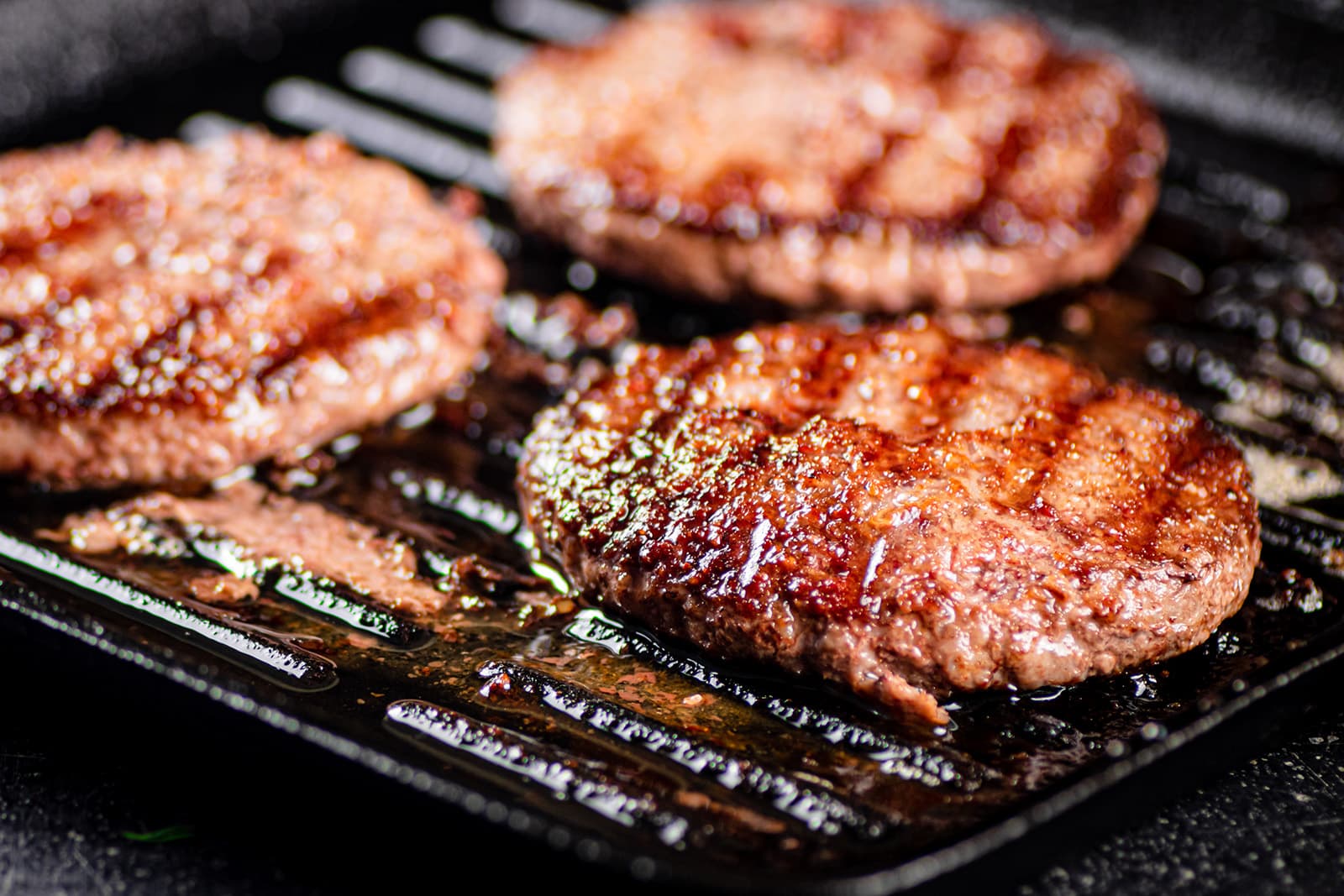
A dark, savory crust that proves the rub belongs on the surface, not mixed in.
Beef burgers seasoned on the outside with Crimson Ember and seared hard in cast iron. The rub forms a visible, deeply browned crust that you can taste in every bite. Pickled jalapeños cut through the richness, peppery arugula lifts the finish, and a toasted bun gives the whole thing structure. No sugar, no glaze, no sauce needed.
Ingredients, method, and practical notes
Equipment
Method
Divide the ground beef into four equal portions, about 4 oz each. Handle the meat as little as possible. Gently shape each portion into a patty about half an inch wider than your buns and about three-quarters of an inch thick. Press a shallow dimple into the center of each patty with your thumb.
👁 Each patty is slightly wider than the bun, evenly thick, with a visible thumbprint depression in the center. The surface looks loose and slightly rough, not smooth and compressed.WhyOverworking ground beef compacts the proteins and turns a burger dense and sausage-like. The rough, loose surface also helps the rub adhere. The dimple prevents the patty from puffing into a dome during cooking, which happens because the edges cook faster and contract, pushing the center upward.What to noticeIf the patty surface looks smooth and tight, you have overworked it. Start again with a fresh portion and use fewer passes to shape it.If something's offThe formed patty feels stiff and dense rather than soft and yielding when gently pressed.Fix: You handled the meat too much. With the next portion, cup the beef loosely in your hands and press just enough to hold the shape. Three to four gentle presses is enough. The patty should barely hold together.
Season the outside of each patty on both sides with kosher salt and Crimson Ember, pressing the rub lightly so it adheres to the surface. Do not mix the seasoning into the meat.
👁 An even, visible layer of dark reddish-brown rub coating both flat faces of each patty. The spice should look like a thin crust waiting to happen, not a dusting.WhyThis is the central lesson of this recipe. On the surface, the rub blooms directly against the hot pan: cumin and smoked paprika brown and deepen, forming a crust you can see and taste. Mixed into the interior, those same compounds disperse through the raw meat, never contact the hot surface, and vanish. Surface application creates hierarchy. Mixing creates noise.What to noticeLook at the patty after seasoning. You should see the rub clearly. If it is invisible or barely visible, you have not used enough. The rub needs to be present in sufficient quantity to form a layer, not just flavor the surface.Heat a 12-inch cast iron skillet over medium-high heat for 2 to 3 minutes. Add the neutral oil and swirl to coat the pan. When the oil shimmers and a drop of water flicked onto the surface evaporates instantly, the pan is ready.
👁 Oil shimmers across the surface. A water drop evaporates on contact with a sharp hiss. You should feel strong heat when holding your hand 4 inches above the pan.Bloom PhaseWhyThe rub needs immediate, strong contact heat to bloom. A pan that is not fully hot will slowly warm the spices rather than opening them, producing a dusty crust instead of a toasted one. Cast iron holds its temperature when cold meat hits it, which thinner pans cannot do.Place the patties in the skillet with at least one inch of space between them. Do not press them with a spatula. Cook undisturbed for 3 to 4 minutes.
👁 After 3 to 4 minutes, lift one edge with a spatula. The underside should be dark mahogany, noticeably darker than golden brown. The rub has visibly darkened and formed a continuous crust. If it looks pale or spotty, give it another minute.Bloom PhaseWhyThe rub blooms in this window. Cumin and smoked paprika are making direct contact with the hot fat rendered from the beef and the hot metal beneath it. Moving the patty breaks the crust as it forms. Pressing squeezes out the fat that is carrying the bloom compounds through the surface. Leave it alone.What to noticeListen for a steady sizzle from the moment the patty hits the pan. If the sizzle is weak or dies, the pan was not hot enough. The kitchen should smell like toasted cumin and warm smoke by the 2-minute mark.If something's offThe crust is pale and wet, or the patty is sticking severely when you try to check it.Fix: If pale: the pan was not hot enough. Let it cook another 60 to 90 seconds before flipping. If sticking: the crust has not fully formed yet. Wait. A properly seared patty releases cleanly. Forcing it tears the crust.
Flip the patties and cook for 2 to 3 minutes more for medium. If adding cheese, place it on the patty immediately after flipping and cover the pan with a lid or sheet pan for 60 seconds to melt.
👁 Both sides have a dark, continuous crust. For medium doneness, the patty yields with gentle resistance when pressed with a spatula but does not feel stiff. Juices beading on the top surface run pink, not gray.Cook-In PhaseWhyThe second side needs less time because the pan and the patty are both hotter. Overcooking dries out the fat that is carrying the bloom flavor through the crust. A medium burger keeps enough internal moisture to stay juicy, which matters because the rub's flavor is concentrated on the surface and needs the juice from each bite to spread it across the palate.What to noticeIf using cheese: American, cheddar, or gruyere all work. The cheese should melt into a soft blanket, not brown or bubble aggressively. 60 seconds covered is enough.If something's offThe patty has shrunk dramatically and feels hard when pressed. Juices run clear or gray.Fix: The burger is overdone. Next time, check at 2 minutes on the second side. Ground beef at 80/20 fat is forgiving, but medium-high heat on a thin patty moves fast. Pull when you see pink juice beading on top.
Transfer the patties to a plate. Rest for 3 minutes without covering. While the patties rest, split the buns and toast them cut-side down in the same skillet over medium heat for 45 to 60 seconds, until golden and lightly crisped.
👁 The bun faces are golden with a few darker spots where they picked up rendered fat and spice residue from the pan. The patties on the plate have relaxed slightly and a small pool of juice has collected underneath.Rest PhaseWhyThe rest matters even on a burger. Crimson Ember's sumac, which was suppressed by the high sear heat, begins expressing during these 3 minutes. The flavor shifts from sharp and smoky to warmer and more composed. Toasting the buns in the same skillet picks up the spice-infused fat left behind, adding another layer of the rub's flavor to the bread.What to noticeTaste a small piece of crust immediately after removing from the pan, then taste the edge of the patty after the full rest. The rested version is warmer and rounder, with a faint dry tartness at the back. That is the sumac settling in.If something's offThe buns are burnt or soggy. The patties are sitting in a large puddle of liquid.Fix: If the buns are burning, the pan is too hot from the sear. Reduce heat to medium before toasting. If the patties pool excess liquid, they were overcooked and lost too much moisture. Next time, pull 30 seconds earlier.
Assemble each burger: toasted bun bottom, patty with crust facing up, 4 to 6 pickled jalapeño slices, a small handful of arugula, and the bun top.
👁 The dark crust is visible beneath the bright green arugula and the pale jalapeño rings. The bun is toasted golden on the inside faces. The burger looks vivid, not monochrome.Finish PhaseWhyEvery element has a job. The pickled jalapeño provides the acid edge that prevents this from being fat plus starch plus spice with no contrast. Its vinegar brine cuts through the beef richness and its mild heat echoes the cayenne in the rub. The arugula adds peppery, raw green bite and a late aromatic lift. The toasted bun creates crunch against the soft interior. This is a burger with opposition in every bite.What to noticeTake the first bite through all the layers together. The crust hits first with dark, savory warmth. Then the jalapeño's vinegar snap cuts through. Then the arugula lifts with peppery freshness. That sequence is intentional.
What This Recipe Teaches
Why surface application of a spice rub creates a detectable, structured crust while mixing the same rub into the interior makes it vanish, demonstrating that where a blend sits determines whether it leads or disappears.
How the Blend Behaves Here
On the surface, Crimson Ember blooms directly against the hot pan. The cumin and smoked paprika make contact with rendered beef fat and hot metal simultaneously, browning into a visible crust within 3 minutes. During the 3-minute rest, sumac surfaces as a dry tartness at the back of each bite. Mixed into the raw meat, the same compounds never contact the hot surface directly. They disperse through the interior, heat slowly and unevenly, and produce a vaguely spiced patty with no identifiable crust and no detectable sumac emergence. Same blend, same quantity, completely different result based on placement.
What to Notice
Aromatic entry: Toasted cumin and warm smoked paprika rising from the dark crust the moment you pick up the burger. The toasted bun carries a faint echo of the same spices from the pan residue.
Mid-palate: Beefy richness with steady warmth from the crust. The pickled jalapeño snaps through with vinegar acid and mild, familiar heat that echoes the cayenne without competing. The arugula adds a peppery green bite that keeps the richness from settling into heaviness.
Lingering finish: A dry, warm tartness from the sumac that emerges after the smoke fades. The finish is clean and savory, not heavy. The jalapeño's vinegar and the arugula's pepperiness extend the brightness so the last impression is vivid, not muted.
The Surface vs. Mixed Test
How placement determines whether a spice blend leads or vanishes, proving that the same quantity of the same rub produces completely different results depending on where it sits.
How: Make two patties from the same batch of meat using the same amount of Crimson Ember. On the first patty, season the surface only, as the recipe instructs. On the second, mix the same quantity of rub directly into the raw meat before shaping. Cook both identically in the same pan. Taste side by side after resting.
Compare: The surface-seasoned burger will have a visible, dark crust with identifiable cumin and smoke character. The mixed-in burger will taste vaguely spiced with no crust and no distinct flavor identity. The surface version demonstrates hierarchy: the rub leads. The mixed version demonstrates hierarchy collapse: the rub disappears into the background.
Symptom: The burger tastes vaguely spiced but has no visible crust and no distinct Crimson Ember character.
Cause: The rub was mixed into the meat instead of applied to the surface, or too little was used. Dispersed through the interior, the spice compounds never make direct contact with the hot pan and never bloom.
Fix: Apply the rub to the outside of the formed patty only. Use enough that you can see a visible dark layer on both faces. The rub should look like a coating, not a light dusting.
Symptom: The crust is pale and spotty rather than a continuous dark mahogany.
Cause: The pan was not hot enough, or the patty was moved or pressed during the sear. Both prevent the rub from forming a continuous browned layer.
Fix: Preheat the cast iron for a full 2 to 3 minutes over medium-high heat. Place the patty and do not touch it for 3 to 4 minutes. A properly seared patty releases cleanly when the crust has formed.
Symptom: The burger is dense, tight, and sausage-like rather than loose and tender.
Cause: The meat was overworked during shaping, or salt was mixed into the interior before cooking. Both compact the protein structure.
Fix: Handle the beef as little as possible. Three to four gentle presses to shape. Season only the outside. The patty should barely hold together before cooking.
Symptom: The burger tastes heavy and one-note after a few bites. The richness feels monotonous.
Cause: The acid element (pickled jalapeño) was omitted or insufficient. Without acid to cut through the beef fat and spice crust, each bite compounds the richness instead of resetting the palate.
Fix: Add the pickled jalapeño. Its vinegar brine is doing essential work here, not just adding heat. If you do not enjoy jalapeños, substitute pickled red onion, cornichons, or bread-and-butter pickle slices. The acid, not the specific pickle, is what matters.
Notes
Protein Alternatives
Ground lamb at 80/20 works well and echoes the cumin. Ground turkey is too lean on its own but works at a 90/10 blend if you add a tablespoon of olive oil to the patty surface before seasoning. Avoid pre-formed frozen patties, which are too dense for the rub to adhere properly.
Grill Adaptation
These work on a hot charcoal or gas grill. Oil the grate well and cook over direct high heat, 3 to 4 minutes per side. The charcoal adds smoke that complements the smoked paprika in the rub. Resist pressing with the spatula. On a grill, that lost fat is gone forever.
Other Toppings That Work
Sautéed onions caramelized until deeply browned echo the rub's savory depth. A thin slice of sharp cheddar or gruyere melted on the patty adds richness without competing. Avoid sweet condiments like ketchup or barbecue sauce, which fight the rub's savory character. Mustard works. Mayo works. Sweetness does not.
Advance Preparation
Form the patties up to 4 hours ahead and refrigerate on a parchment-lined plate, uncovered. Season with the rub just before cooking, not while stored. Salt and spice on raw beef for hours draws too much moisture and makes the surface wet, which fights crust formation.
More recipes like this
New recipes and seasonal cooking ideas, once a week. Never more.
See everything that's in the newsletter