Midnight Smoke Roasted Root Vegetables with Yogurt
Dark, charred edges over cool yogurt, with smoke that turns caramelized sweetness into something savory.
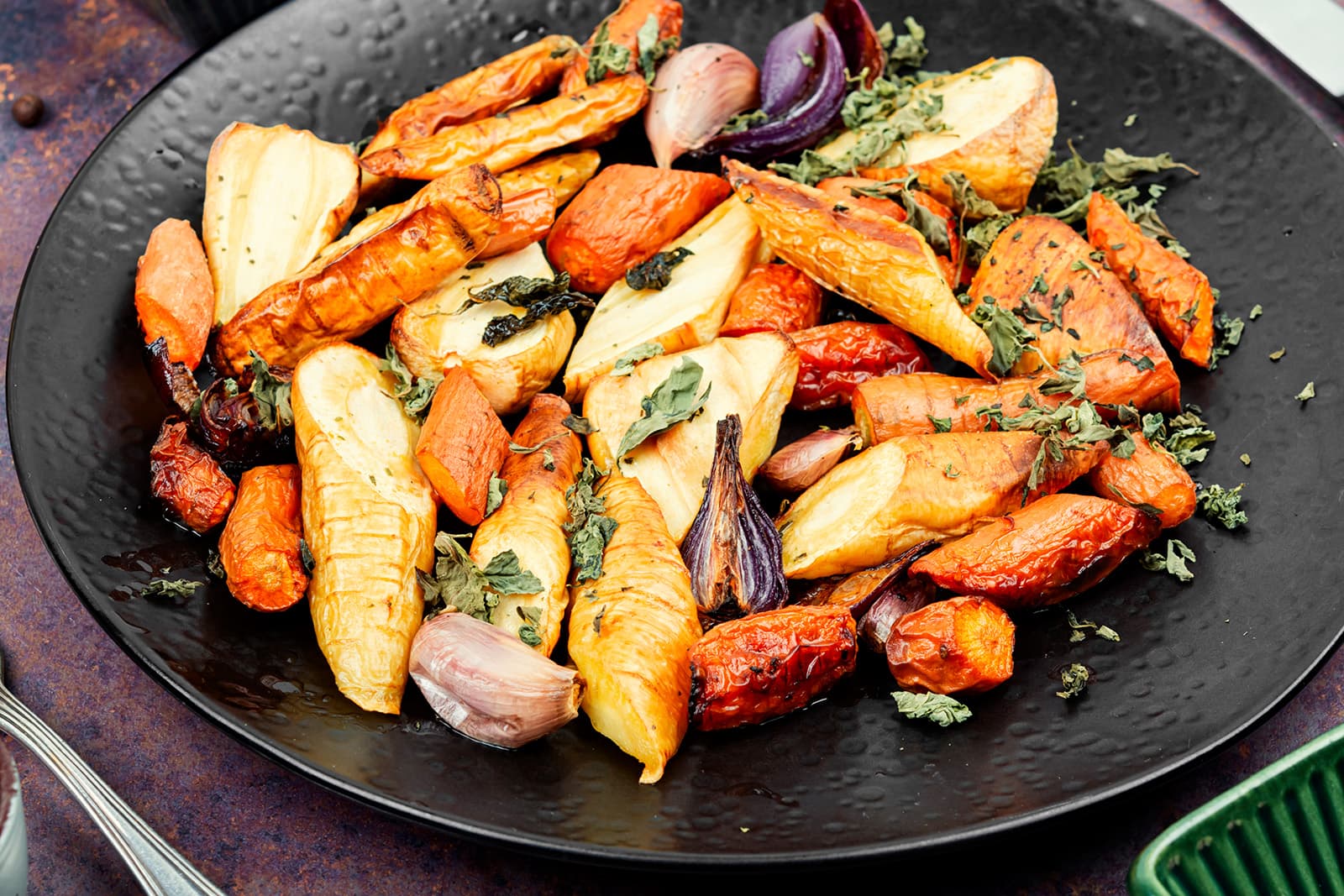
Root vegetables and halved shallots roasted at high heat with Midnight Smoke Chili Rub until the natural sugars caramelize and the smoke deepens into the charred surfaces. Served over a pool of cool, tangy yogurt with toasted walnuts and fresh cilantro. The contrast between the hot, smoky vegetables and the cold yogurt is the point.
Ingredients, method, and practical notes
Equipment
Method
Preheat the oven to 425 degrees F (220 degrees C). Line a large sheet pan with parchment paper.
WhyHigh heat is essential. The goal is caramelization and char on the vegetable surfaces, which activates the smoke + sweetness interaction this recipe is designed to demonstrate. At lower temperatures, the vegetables steam and soften before they brown, and the blend never deepens.In a large bowl, combine the cut carrots, sweet potatoes, parsnips, and halved shallots. Add the olive oil, Midnight Smoke Chili Rub, and kosher salt. Toss thoroughly until every piece is evenly coated. The oil should glisten and the blend should be visible as a dark, even coating, not clumped in spots.
👁 Every piece glistens with oil and is coated evenly in the blend. No dry patches, no clumps of spice pooling in the bowl.WhyEven coating matters because the blend meets the hot pan surface through the oil. Bare spots will taste plain. Clumps will taste harsh. The oil binds the spice to the vegetable and conducts heat to promote the browning that makes the smoke + sweetness pair work.What to noticeThe blend will darken the oil to a red-brown. This is normal. If the bowl looks dry, add another teaspoon of oil.Spread the vegetables in a single layer on the lined sheet pan. Place the shallot halves cut-side down so their flat face makes direct contact with the hot pan. Leave space between all the pieces. Do not crowd. If the pieces are touching or overlapping, use two sheet pans.
👁 Each piece has visible space around it. No overlapping. No piling.WhyCrowded vegetables steam in their own moisture rather than roasting. Steamed surfaces will not caramelize, which means the natural sugars never meet the high heat they need to activate the smoke + sweetness interaction. Space between pieces lets the moisture escape and the oven's dry heat do its work.If something's offThe vegetables are piled or touching on the pan.Fix: Split onto two pans. One crowded pan produces steamed vegetables with no char. Two pans with space produce the browning this recipe requires.
Roast for 20 minutes without touching. Do not open the oven door. Do not stir.
👁 At 20 minutes, the undersides of the vegetables should show visible browning and the edges should be starting to darken. The kitchen smells smoky and warm, with something sweet underneath.Cook-In PhaseWhyLeaving the vegetables undisturbed for 20 minutes gives the underside time to form a direct contact with the hot pan, which is where the deepest caramelization and char happen. Stirring too early prevents this contact and produces evenly soft vegetables with no dark edges.What to noticeWhen you open the oven door at 20 minutes, the first thing you notice should be a smell that is smoky and warm but also sweet. That combination is the smoke + sweetness pair developing on the roasted surfaces.If something's offAfter 20 minutes, the vegetables are pale and soft with no visible browning.Fix: The oven was not hot enough or the pan was crowded. Increase temperature to 450 degrees F and continue roasting for another 10 minutes before checking. Next time, preheat fully and use two pans if needed.
Turn the vegetables with a spatula, flipping them to expose fresh surfaces to the pan. Some pieces will have dark, caramelized undersides. This is the goal, not a problem. Return to the oven for another 20 to 25 minutes until the vegetables are tender through the center and deeply charred on at least two sides.
👁 Dark brown to black char on the edges and flat surfaces. Carrots and parsnips have visible caramelized ridges. Sweet potato pieces are soft when pierced with a knife but hold their shape. Shallot halves have a deep mahogany face where they contacted the pan. The blend has darkened into the surface rather than sitting as a visible coating.Cook-In PhaseWhyThe second roast deepens the caramelization and pushes the smoke + sweetness interaction further. The blend's smoked paprika and ancho concentrate on the charred surfaces. The natural sugars in the vegetables darken and shift from sweet to savory-sweet. This is the transformation this recipe exists to demonstrate: smoke turning caramelized sweetness into something deeper and more interesting.What to noticePick up a piece of carrot and look at the underside. The surface should be dark, almost blackened in spots, with the blend visibly fused into the caramelized layer. That fused layer is where the smoke + sweetness pair lives.If something's offThe vegetables are soft but have no char. The surfaces are golden rather than dark brown or blackened.Fix: The oven temperature was too low or the cook time was too short. Increase to 450 degrees F and continue for another 10 minutes. The char is the point. Without it, the smoke + sweetness pair does not fully develop.
While the vegetables roast, make the yogurt sauce. In a small bowl, stir together the yogurt, lemon juice, olive oil, and a pinch of salt until smooth. Set aside at room temperature.
👁 A smooth, tangy sauce with a slightly loose consistency. It should pour from a spoon rather than hold its shape.WhyThe yogurt sauce is the moderating counterpart to the smoky vegetables. Cool against hot, tangy against sweet, creamy against charred. Making it while the vegetables roast lets the lemon and salt integrate so the yogurt tastes clean and tangy rather than plain.Toast the walnuts in a small dry skillet over medium heat for 4 to 5 minutes, shaking the pan occasionally, until fragrant and lightly darkened. Transfer to a small bowl immediately.
👁 The walnuts are lightly darkened with a toasted, nutty smell. No burnt or acrid smell.WhyToasting deepens the walnuts' flavor and makes them crunchier, which strengthens their role as the textural disruption this dish needs. Raw walnuts are soft and slightly tannic. Toasted walnuts are crisp and toasty.What to noticeNuts go from toasted to burnt very quickly. Transfer them to a bowl the moment they smell fragrant. They will continue to darken slightly from residual heat.If something's offThe walnuts are blackened or smell acrid.Fix: Discard and start again. Burnt nuts taste bitter and will fight the smoke in the vegetables rather than complementing it.
Remove the vegetables from the oven and let them rest on the pan for 5 minutes.
Rest PhaseWhyA brief rest lets the caramelized surfaces set slightly and allows the internal moisture to redistribute. The vegetables will hold their shape better when plated rather than falling apart on the spoon.Spread the yogurt sauce across the bottom of a wide serving bowl or divide among individual plates, creating a pool rather than a dollop. Arrange the roasted vegetables on top of the yogurt. Scatter the toasted walnuts and chopped cilantro over everything. Drizzle with olive oil if desired. Serve with lemon wedges alongside.
👁 Dark, charred vegetables sitting on a pool of white yogurt. Bright green cilantro and toasted walnut pieces visible throughout. A drizzle of olive oil catching the light.Finish PhaseWhySpreading the yogurt rather than dolloping it ensures every bite includes the moderating element alongside the smoky vegetables. The contrast between hot vegetables and cool yogurt is the structural expression of the checks and balances principle: assertive smoke paired with its moderator.What to noticeTake one bite that includes vegetable, yogurt, and walnut together. The smoky, sweet-savory char meets the cool tang of the yogurt and the crunch of the nut. Each element does a different job. Remove any one and the bite is less interesting. That interdependence is what checks and balances means in practice.
What This Recipe Teaches
How Midnight Smoke Chili Rub's smoke system interacts with the natural sweetness of caramelized root vegetables to produce the smoke + sweetness pair, one of the primary functional relationships in the Checks and Balances framework.
How the Blend Behaves Here
On a dry, hot surface, Midnight Smoke Chili Rub behaves differently than in a braise or chili. The smoked paprika and ancho concentrate into the caramelized edges rather than dispersing through liquid. The smoke builds into a visible, tactile crust that fuses with the vegetables' caramelized sugars. That fusion is the smoke + sweetness pair in action: the smoke darkens and deepens the sweetness, and the sweetness prevents the smoke from turning harsh or acrid. At 425 degrees F for 40 to 45 minutes, the blend has enough time to undergo this transformation without the extended cook that liquid applications require.
What to Notice
Aromatic entry: Dark, toasted smoke rising from the charred edges of the vegetables. Warm and sweet rather than sharp or aggressive.
Mid-palate: Caramelized sweetness from the root vegetables meets the steady smoke from the blend. Each vegetable expresses this interaction differently: the carrots are the sweetest and most pronounced, the sweet potatoes are creamier and more mellow, the parsnips have a spicy edge, and the shallots deliver a concentrated, almost jammy sweetness where they caramelized against the pan. The yogurt, when it arrives in the bite, is cool and tangy and creates contrast without competing.
Lingering finish: A warm, savory finish where the smoke lingers quietly and the sweetness has receded. The toasted walnuts leave a slight bitter richness. A squeeze of lemon at the end resets everything.
The Smoke + Sweetness Isolation Test
What the smoke + sweetness pair produces that neither element can produce alone.
How: Roast one tray of root vegetables and shallots with Midnight Smoke Chili Rub and one tray of the same vegetables and shallots with only olive oil, salt, and black pepper. Same oven, same temperature, same time, same cut size. Taste a piece from each tray side by side while still warm.
Compare: The plain vegetables will taste caramelized and sweet, with some char on the edges. The Midnight Smoke Chili Rub vegetables will taste darker, warmer, and more complex. The sweetness is still present, but it reads as savory rather than sugary. That shift from sweet to savory-sweet is the smoke + sweetness pair at work. Neither the smoke alone nor the sweetness alone produces this result. It is the interaction between the two that creates it.
Symptom: The vegetables are soft but pale, with no visible char or darkened edges
Cause: The oven was not hot enough or the pan was crowded. Vegetables that touch or overlap trap steam against each other, which prevents the direct dry heat contact that produces caramelization. Without caramelization, the natural sugars never reach the stage where they interact with the blend's smoke compounds.
Fix: Use two sheet pans with space between every piece. Increase the oven to 450 degrees F if your oven runs cool. The char is not cosmetic. It is where the smoke + sweetness pair lives.
Symptom: The blend tastes dusty or gritty on the vegetables rather than toasted and integrated
Cause: Not enough oil was used to bind the blend to the vegetable surfaces. Dry spice sitting on a dry surface does not bloom properly even at high heat. It needs fat as a conductor.
Fix: Next time, add another teaspoon of oil during tossing. Every surface should glisten. The oil is not about richness. It is about heat conduction and spice adhesion.
Symptom: The dish tastes one-dimensionally smoky and heavy across a full serving
Cause: Not enough of the moderating elements made it onto the plate. The yogurt was dolloped rather than spread, or the lemon was skipped, or the herb was omitted. Without the full set of moderating counterparts, the smoke accumulates without relief.
Fix: Ensure every bite has access to the yogurt by spreading it as a base, not a side garnish. Squeeze lemon generously. The cilantro and walnuts are not optional. They provide the textural and aromatic relief that keeps each bite distinct.
Symptom: The vegetables taste slightly bitter or acrid rather than warm and smoky
Cause: The vegetables roasted too long or at too high a temperature. The blend's smoked paprika and ancho can push past dark and warm into bitter if the surface carbonizes beyond char into ash.
Fix: Pull the vegetables when the edges are dark brown to just blackened. If parts have gone fully black and ash-like, remove those pieces. Next time, check 5 minutes earlier and reduce temperature to 400 degrees F if your oven runs hot.
Notes
Vegetable Alternatives
Butternut squash works well in place of sweet potatoes and produces a slightly firmer result. Beets (peeled and cubed) add an earthy sweetness but will stain the yogurt dramatically. Turnips provide a sharper, more peppery note. Any combination of dense, naturally sweet root vegetables works. Avoid watery vegetables like zucchini or bell peppers, which steam rather than caramelize.
Nut Alternatives
Pumpkin seeds (pepitas) work well and keep the dish nut-free. Toast them the same way. Pistachios add color contrast but a softer crunch. Pine nuts are rich and sweet but small. All provide the textural disruption the dish needs.
Cutting for Even Roasting
Cut all root vegetables to roughly the same thickness, about 1.5 inches, so they finish at the same time. Carrots and parsnips need to be halved lengthwise at the thicker end. Sweet potatoes are denser and hold heat longer, so slightly smaller pieces keep them in sync. Shallots just need to be halved lengthwise. Their flat face goes down on the pan for maximum caramelization.
As a Side or a Main
As a side, this serves 4 generously alongside grilled meat or fish. As a vegetarian main, it serves 2 to 3. Bulk it up with cooked lentils or chickpeas stirred into the yogurt for protein. A piece of warm flatbread alongside makes it a more substantial meal.
Advance Preparation
The vegetables and shallots can be cut, tossed with the blend, and arranged on the sheet pan up to 4 hours ahead. Refrigerate uncovered. The yogurt sauce can be made a day ahead and refrigerated. Toast the walnuts and chop the cilantro just before serving.
More recipes like this
New recipes and seasonal cooking ideas, once a week. Never more.
See everything that's in the newsletter