Midnight Smoke Braised Short Ribs
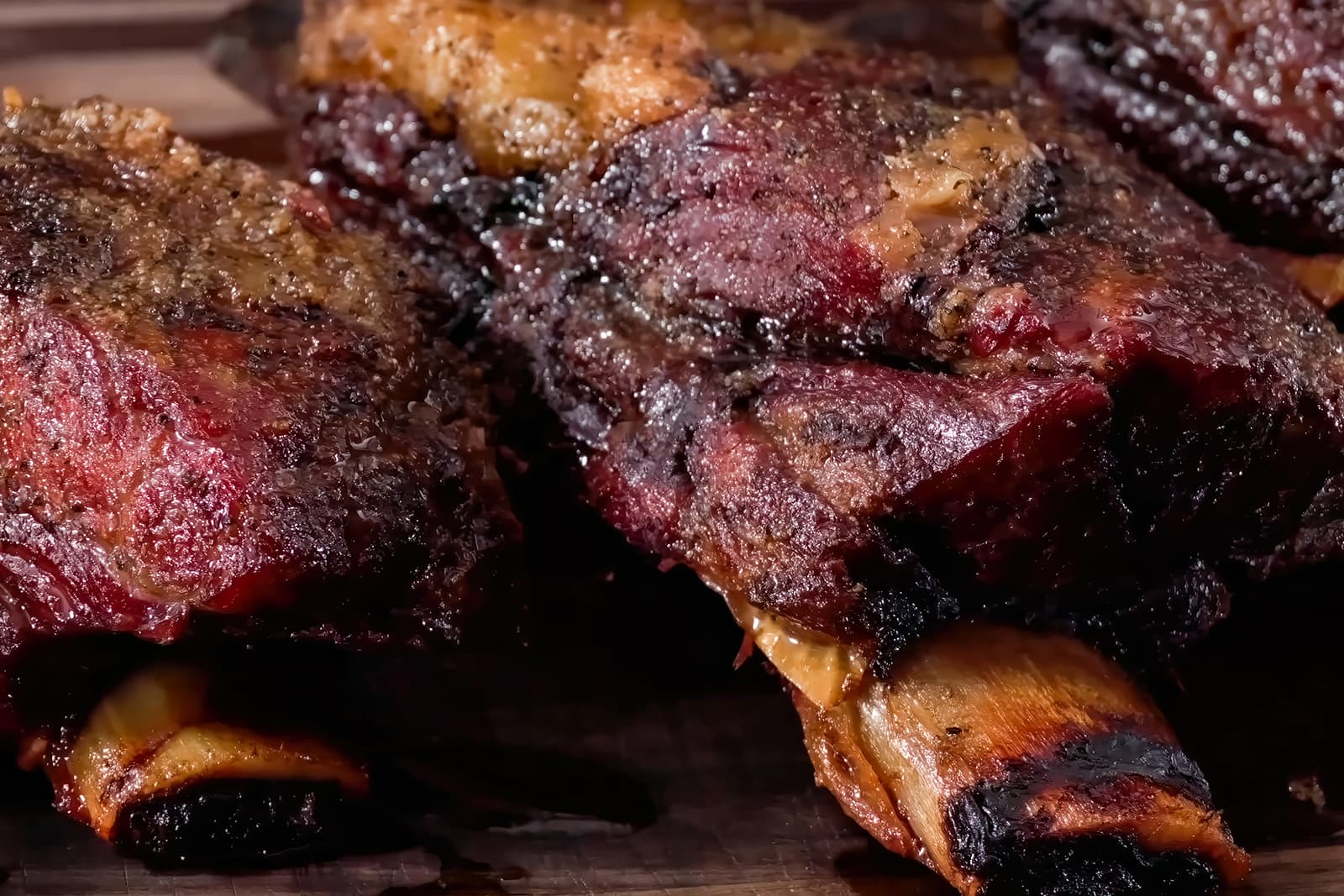
Braised low and slow until the smoke settles into the fat and the real flavor arrives twenty minutes after the oven turns off.
Bone-in short ribs braised with Midnight Smoke Chili Rub until the meat gives up without resistance. The smoke is loud when the pot goes in. After three hours and a twenty-minute rest, it has become something quieter and more composed, woven into the collagen and fat rather than sitting on top of them. A bright gremolata cuts through the richness and gives each bite a reason to come back.
Ingredients, method, and practical notes
Equipment
Method
Preheat the oven to 325 degrees F (160 degrees C). Position a rack in the lower third of the oven.
Pat the short ribs completely dry with paper towels. Keep patting until the towels come away without moisture. The surface should feel tacky, not slick. Season all sides with the kosher salt and 1.5 tablespoons of the Midnight Smoke Chili Rub, pressing the blend firmly into the surface. Reserve the remaining 1 tablespoon of blend for the base.
👁 The rub adheres in an even, dark red-brown coating with no loose clumps or dry patches.WhySplitting the blend between the meat and the base creates two different expressions of the same blend in one dish. The portion on the ribs blooms against the hot pan surface during the sear. The portion added to the aromatics blooms in rendered fat. Both paths produce different flavor compounds that merge during the braise.What to noticeAfter pressing the rub in, the surface should feel slightly gritty and tacky. If the rub is falling off, the surface was too wet. Pat dry more thoroughly and try again.If something's offThe rub is falling off or sitting in loose clumps.Fix: The surface was too wet. Pat completely dry, then rub a thin film of oil onto the meat before pressing the blend in.
Heat the neutral oil in a large Dutch oven or heavy oven-safe pot over medium-high heat until the oil shimmers and moves fluidly across the surface. If it smokes, reduce the heat slightly.
👁 Oil shimmers with faint ripples across the surface. No smoke.Brown the ribs in batches, leaving at least 2 inches between pieces. Sear each side for 3 to 4 minutes until a dark mahogany crust forms. Do not move the ribs during searing. Let them release naturally from the pot. Transfer browned ribs to a plate. Leave the rendered fat in the pot.
👁 Deep mahogany-brown crust on at least two sides. No gray or steamed surfaces. The spice rub has darkened and formed a visible crust layer.Bloom PhaseWhyThe Midnight Smoke Chili Rub on the ribs blooms against the hot surface during the sear. Smoked paprika and ancho darken and deepen rather than burn. This crust carries the blend's forward smoke character into the braise, where it will integrate over three hours.What to noticeListen for an immediate, aggressive sizzle when the first rib hits the pot. If the sizzle is quiet, the pot is not hot enough. Remove the rib and wait.If something's offThe ribs release liquid and the sizzle becomes a bubbling sound. The surface is gray rather than crusted.Fix: Too many ribs in the pot, or the pot was not hot enough. Sear in smaller batches, reheating the fat between each batch.
Reduce heat to medium. Add the chopped onion, carrot chunks, and celery to the pot. Cook for 6 to 8 minutes, stirring occasionally and scraping up the browned bits from the bottom with a wooden spoon. The onion should soften and turn translucent with faint golden edges. The carrot and celery should soften but not brown.
👁 Vegetables are softened and glistening. The fond from the bottom has been scraped into the vegetables.WhyThe carrot contributes body and quiet sweetness that rounds the smoke over three hours. The celery provides a savory backbone that keeps the sauce from becoming one-dimensionally rich. Both dissolve into the braising liquid during the long cook and are strained out, leaving their flavor behind.What to noticeIf the pot looks dry or the vegetables begin to stick and scorch, add 2 tablespoons of stock to loosen the fond. Do not let it burn.Add the smashed garlic to the pot. Cook for about 1 minute, stirring, until fragrant but not browned.
👁 The garlic is fragrant and softened slightly. No brown spots.Add the tomato paste. Cook for 2 minutes, stirring and spreading the paste across the bottom of the pot, until it darkens from bright glossy red to a matte brick red and smells roasted rather than sharp.
👁 The paste has darkened noticeably and smells warm and savory, not raw or acidic.Bloom PhaseWhyCooking tomato paste against the hot surface before adding liquid drives off moisture and converts its raw, acidic character into roasted savoriness. The paste will stick and sizzle slightly in places. That sticking builds more flavor that the liquid will lift in the next step.What to noticeThe paste will catch on the bottom in spots. Stir it free and continue. The sticking is a sign it is working.If something's offThe paste turns black and smells scorched.Fix: Heat was too high. Reduce to medium-low and move immediately to the next step. Add the wine quickly to stop the burning.
Add the remaining 1 tablespoon of Midnight Smoke Chili Rub. Stir constantly for 30 to 45 seconds until the spices sizzle gently in the fat and the aroma shifts from dusty and raw to warm and toasted.
👁 The pot smells deeply smoky and warm. The spices coat the vegetables and tomato paste in a dark, fragrant layer.Bloom PhaseWhyBlooming the blend in fat opens its smoke and chile compounds and binds them to the oil, which then carries those compounds through the entire braising liquid. Midnight Smoke Chili Rub added directly to liquid will color the sauce but the smoke will not distribute or integrate the same way.What to noticeThe aroma shifts within the first 15 to 20 seconds. Raw, dusty spice gives way to something warmer and fuller. That shift is the bloom completing.If something's offThe spices smell acrid or bitter rather than warm and toasted.Fix: Remove the pot from heat immediately and pour in the wine. The residual heat will continue the bloom without further burning.
Pour in the red wine. Stir vigorously, scraping up any remaining browned bits from the bottom. Cook for 2 minutes until the sharp alcohol smell softens and the liquid reduces slightly.
👁 The liquid is dark and fragrant. The bottom of the pot is completely clean. No raw alcohol smell remains.WhyThe browned bits on the bottom are concentrated flavor from every browning step. The wine lifts them into the liquid and adds a layer of fermented depth that the braise will carry forward.Return the ribs to the pot in a single layer, bone-side up if possible. Pour in the beef stock. The liquid should come about halfway up the ribs but not submerge them. If needed, add a small amount of water to reach the right level.
👁 Liquid reaches about halfway up the ribs. The tops of the ribs are exposed above the liquid.WhyShort ribs braise in liquid, not underwater. The exposed tops develop a deeper, more concentrated surface flavor. Fully submerged ribs produce a boiled rather than braised result.Bring to a gentle simmer on the stovetop. Cover the pot with a tight-fitting lid and transfer to the oven. Braise for 2.5 to 3 hours. Check the pot once at about 90 minutes. The liquid should still come about one-third of the way up the ribs. If it has reduced significantly, add half a cup of stock or water. If it looks watery, leave the lid slightly ajar for the remaining time.
👁 At 90 minutes: liquid still one-third up the ribs. At finish: a fork slides into the thickest part with no resistance and the meat pulls away from the bone when nudged.Cook-In PhaseWhyDuring these hours, Midnight Smoke Chili Rub's forward smoke character (smoked paprika, ancho, chipotle) integrates into the collagen and rendered fat as the meat breaks down. The sauce darkens and thickens. By the end of the braise, the smoke is no longer a surface element. It has become structural. The blend's quieter rounding elements, cinnamon and cardamom, are still suppressed by the sustained heat. They will arrive during the rest.What to noticeIf you lift the lid at 90 minutes and the pot smells deeply smoky and warm rather than raw or sharp, the blend is doing its work. The sauce should have darkened noticeably from its starting color.If something's offAfter 3 hours, the meat still has resistance when pierced with a fork.Fix: Cover and continue braising in 20-minute increments until the fork slides in without any tug. Some ribs are thicker and need the extra time.
Remove the pot from the oven. Carefully transfer the ribs to a warm serving dish or deep plate. Cover loosely to keep warm.
Strain the braising liquid through a fine-mesh strainer into a saucepan or large measuring cup, pressing on the solids to extract flavor. Discard the solids. Let the liquid settle for 2 to 3 minutes, then skim the fat from the surface with a spoon. You want some richness in the sauce but not a heavy fat cap. If the sauce seems thin, simmer it on the stovetop over medium heat for 5 to 8 minutes until it coats the back of a spoon and leaves a trail when you draw your finger through it.
👁 The sauce is dark and glossy, with enough body to coat a spoon. A finger drawn through the sauce on the back of the spoon leaves a clean trail that holds for 2 to 3 seconds.WhyStraining removes the spent vegetables and produces a clean, concentrated sauce. Skimming the excess fat keeps the sauce from feeling heavy. If you plan to make this ahead, you can skip the skimming here and refrigerate the sauce overnight. The fat solidifies on top and lifts off cleanly the next day.Stir 1 teaspoon of red wine vinegar into the sauce. Taste and adjust salt if needed.
Finish PhaseWhyOne teaspoon of vinegar does not make the sauce taste acidic. It lifts the back end and prevents three hours of richness from coating the palate. Taste the sauce before and after the vinegar. The before version is rich and slightly heavy. After the vinegar, the flavors should come into focus without any sourness. That focus without sourness is the right amount.What to noticeTaste the sauce immediately before and immediately after the vinegar. The shift should be subtle but clear: the same flavors, more defined.If something's offThe sauce tastes distinctly sour or acidic after adding the vinegar.Fix: Too much vinegar, or the sauce had reduced too far before the vinegar went in. Stir in a quarter teaspoon of brown sugar and wait one minute.
Rest the ribs, uncovered, for 20 full minutes before serving. Do not skip or shorten this step. Set a timer. This is the most important step in the recipe.
👁 After 20 minutes, the ribs look composed and settled. The sauce has thickened slightly as it cooled.Rest PhaseWhyThe rest is where Midnight Smoke Chili Rub completes its expression. During the braise, the forward smoke elements (smoked paprika, ancho, chipotle) integrated and deepened. But the blend's quieter rounding elements, cinnamon and cardamom, were suppressed by sustained heat. During these 20 minutes off heat, as the fat and collagen redistribute and the temperature drops, those rounding elements surface. The flavor at 20 minutes is noticeably more composed, warmer, and longer-finishing than the flavor immediately out of the oven. The smoke moves from forward to structural. The warmth extends rather than spikes.What to noticeIf you taste a small piece of rib immediately off the heat and compare it to a piece at 20 minutes, the difference is unmistakable. The immediate version tastes smoky and rich but slightly sharp, with a finish that drops off. The rested version has a longer, warmer finish where the smoke has settled into the background and something gentler has taken its place.While the ribs rest, make the gremolata. Combine the finely chopped parsley, lemon zest, and minced garlic in a small bowl. Toss lightly to combine.
👁 A loose, bright green mixture with visible flecks of yellow zest.Finish PhaseWhyThe gremolata is not a garnish. It is the structural brightness this dish needs. The parsley provides aromatic lift. The lemon zest delivers volatile citrus that cuts through the rich, smoky sauce. The raw garlic adds a small, sharp bite that resets the palate between bites of soft meat. Together, they provide the textural contrast (raw and crisp against braised and soft) and the freshness that prevents the dish from becoming one-dimensionally heavy.What to noticeMake the gremolata within 5 minutes of serving. The heat from the ribs will release the volatile compounds in the zest and parsley on contact, which is what you want. Made too far ahead, the parsley wilts and the zest loses its aroma.Spoon the sauce generously over the ribs. Scatter the gremolata over each serving. Serve immediately.
👁 Deep, glossy sauce pooled around tender ribs. Bright green gremolata visible against the dark sauce on every portion.Finish PhaseWhyScatter the gremolata on top rather than stirring it into the sauce. The heat from the ribs releases the volatile compounds. Submerging them in hot liquid would kill those volatiles and waste the brightness.What to noticeThe moment the gremolata lands on the warm ribs, an aroma lifts. That is the lemon zest releasing on contact.
What This Recipe Teaches
How the rest phase transforms a braising blend's character, moving Midnight Smoke Chili Rub's forward smoke into the background and bringing its quieter rounding elements to the surface.
How the Blend Behaves Here
Midnight Smoke Chili Rub is split between the ribs and the base, creating two bloom events. During the three-hour braise, the forward compounds (smoked paprika, ancho, chipotle) integrate into the collagen and rendered fat. The blend's cinnamon and cardamom contribute little during sustained heat. During the twenty-minute rest, as the temperature drops and the fat redistributes, those rounding elements surface. The smoke becomes structural rather than forward, and the warmth extends rather than spikes. The flavor at 0 minutes off heat and 20 minutes off heat are noticeably different expressions of the same blend.
What to Notice
Aromatic entry: Dark, toasted smoke and warm chile rising from the sauce before the first bite. Underneath that, the quiet richness of three hours of rendered beef fat.
Mid-palate: Deeply savory, collagen-rich meat with steady warmth from the blend. The smoke is present but structural rather than identifiable. The sauce coats without feeling heavy. The gremolata, when it arrives in a bite, delivers a sharp, bright flash of lemon and parsley that lifts everything.
Lingering finish: A long, warm finish that extends rather than drops off. The smoke has moved to the background. The cinnamon and cardamom provide a quiet warmth that lingers after each bite. The vinegar in the sauce keeps the richness from settling on the palate.
The Rest Timing Test
How rest duration affects the expression of different compounds in Midnight Smoke Chili Rub. The rest phase is not a waiting period. It is a flavor event.
How: When the ribs come out of the oven, cut a small piece of meat and taste it immediately (minute 0). Set a timer. Cut and taste another small piece at 10 minutes. Taste a third piece at 20 minutes. Use a clean fork each time. Spoon a small amount of sauce onto each piece so you are tasting the complete dish, not just the meat.
Compare: Track two things at each interval. First, how forward the smoke feels. At 0 minutes, the smoke is present and assertive. At 10 minutes, it has started to recede. At 20 minutes, it is structural, not detectable as a separate element. Second, how long the warmth lasts after you swallow. At 0 minutes, the warmth rises and drops. At 20 minutes, it extends and lingers. That extension is the cinnamon and cardamom surfacing.
Symptom: After resting, the sauce still tastes sharp and forward rather than composed
Cause: The rest was too short. The cinnamon and cardamom need the full 20 minutes to express in a braising sauce this rich. Or the braise was too vigorous (the oven ran hot), which concentrates the forward smoke faster than the rounding elements can moderate.
Fix: Continue resting for another 10 minutes. If the problem is a hot oven, reduce the temperature to 300 degrees F next time and check the pot earlier.
Symptom: The meat is tender but the sauce tastes thin and watery
Cause: The braising liquid was too high (ribs were submerged) or the lid was sealed too tightly, preventing any reduction. Short rib braises need some evaporation to concentrate flavor.
Fix: Strain the sauce and reduce it on the stovetop over medium heat for 8 to 10 minutes until it has body and coats a spoon. Next time, ensure liquid comes only halfway up the ribs at the start, and crack the lid slightly if the sauce looks too loose at the 90-minute check.
Symptom: The ribs are tough and chewy rather than fork-tender
Cause: Either the oven ran too hot (causing the meat to tighten faster than the collagen could soften) or the braising time was cut short. English-cut short ribs need the full 2.5 to 3 hours.
Fix: Return the ribs to the sauce, cover, and continue braising at 300 degrees F in 20-minute increments until a fork slides in without resistance.
Symptom: The gremolata wilts and loses its brightness within minutes of serving
Cause: It was made too far in advance or stirred into the hot sauce rather than scattered on top at the last moment.
Fix: Always make the gremolata within 5 minutes of serving. Scatter it on top of the plated ribs. The heat from the ribs releases the volatile compounds, which is what you want. Submerging them in hot liquid kills those volatiles.
Notes
Rib Selection
Look for bone-in short ribs, English cut (one bone per piece with a thick cap of meat on top). Flanken-cut ribs (thin slices across multiple bones) cook too quickly for this method and will not develop the same depth or produce the same sauce body.
Stock Choice
Unsalted or low-sodium beef stock produces the best result. Standard commercial stock is often very salty and will make the finished sauce too aggressive once reduced. Water works for a cleaner expression of the blend, but the sauce will be thinner and lighter.
Better the Next Day
This recipe improves significantly when made ahead. Cool the strained ribs and sauce separately, refrigerate overnight. The fat solidifies on top of the sauce and lifts off cleanly for a leaner result. Reheat gently, covered, in a 300-degree F oven for about 30 minutes. Make the gremolata fresh just before serving.
What to Serve Alongside
Creamy polenta, mashed potatoes, or a simple grain like farro carries the sauce well and gives the gremolata something to brighten against. A clean green salad with lemon dressing provides more contrast. Avoid heavily seasoned sides that would compete with the smoke.
More recipes like this
New recipes and seasonal cooking ideas, once a week. Never more.
See everything that's in the newsletter