
Where the Sour Went
Hours in cream, a pile of buttery potato, and it never felt heavy. At Kachka, I went looking for the sour...
Every assertive flavor needs a partner.
That's the heart of Checks & Balances, one of the four pillars of Flavor Architecture. Smoke leans on sweetness. Heat leans on fat. And richness, in what I think of as the most fundamental pair in savory cooking, leans on acid. Without it, fat doesn't just get heavy... it gets monotonous. The third bite is the first bite again, only more tiring.
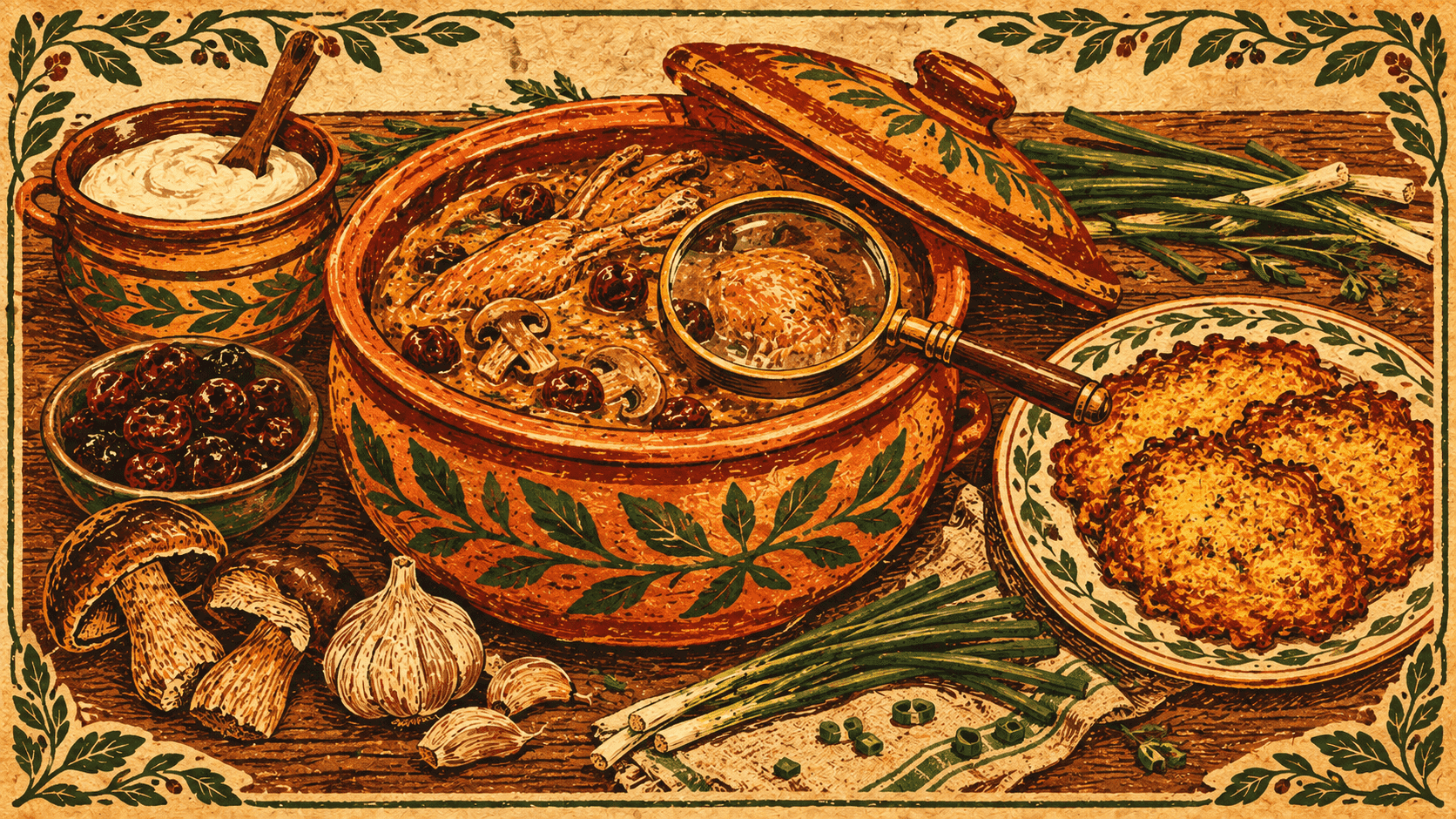
I believe that. But I wanted to watch it work somewhere the odds looked terrible. So I went to Kachka and ordered the Rabbit in a Clay Pot: rabbit hindquarter, braised for hours in smetana, a rich cultured cream, with porcini and garlic. If any dish should wear you out by the third bite, it's this one.
Even Bonnie Frumkin Morales, who runs Kachka with her husband Israel, knows how it sounds. "To the uninitiated, braising in cultured dairy just sounds wrong. But it's magic," she writes in her cookbook. This dish comes out of the Belarusian side of her family's cooking, and she has published the recipe, so I knew where to look for the partner. Tucked in with all that cream: a third of a cup of unsweetened dried sour cherries.
So I sat down with two questions. How rich is this, really? And where's the sour?
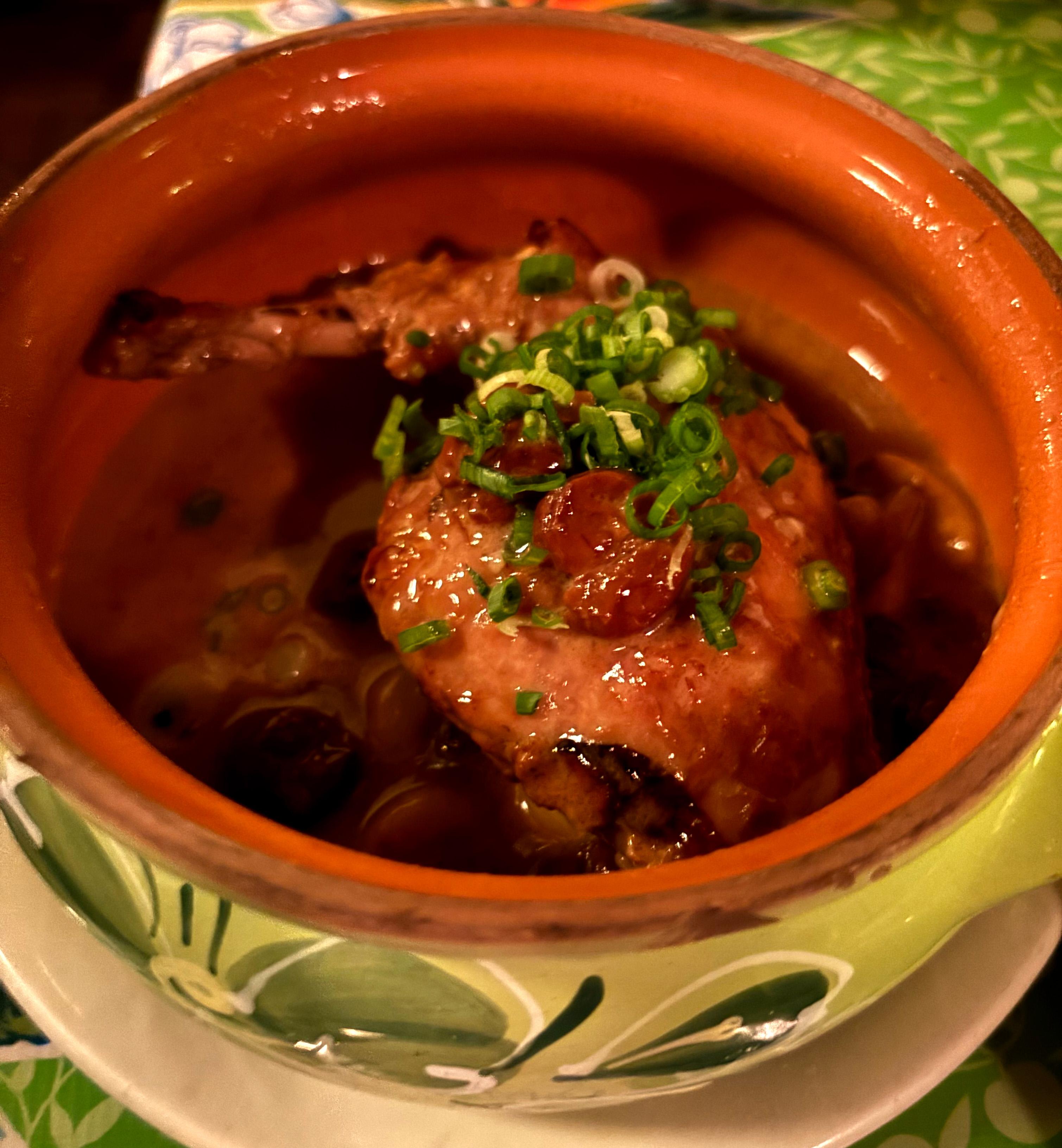
The first answer showed up before I touched a spoon. The first thing you smell when the lid comes off is a deep rich buttery scent with a sweet edge to it. The creamy sauce is thick with the porcini mushrooms and the juices from the meat. This is the assertive element at full volume, and nobody in that kitchen has turned it down.
The second answer took longer, because I really was looking for a sharp note from those cherries... a dark little pop going off like a flashbulb in all that cream.
Nope.
There's a faint sharp edge in the sauce, and that's all. The cherries have given up almost all their juice during the long braise, and they've lost their sour edge. They still have a sweetness to them, wrapped in the rich, savory goodness they've been swimming in. The whole garlic cloves had done the same, brightening and sweetening the sauce, and they were a mildly sweet accent on the fork.
So I'd come looking for the partner, and I couldn't find it.
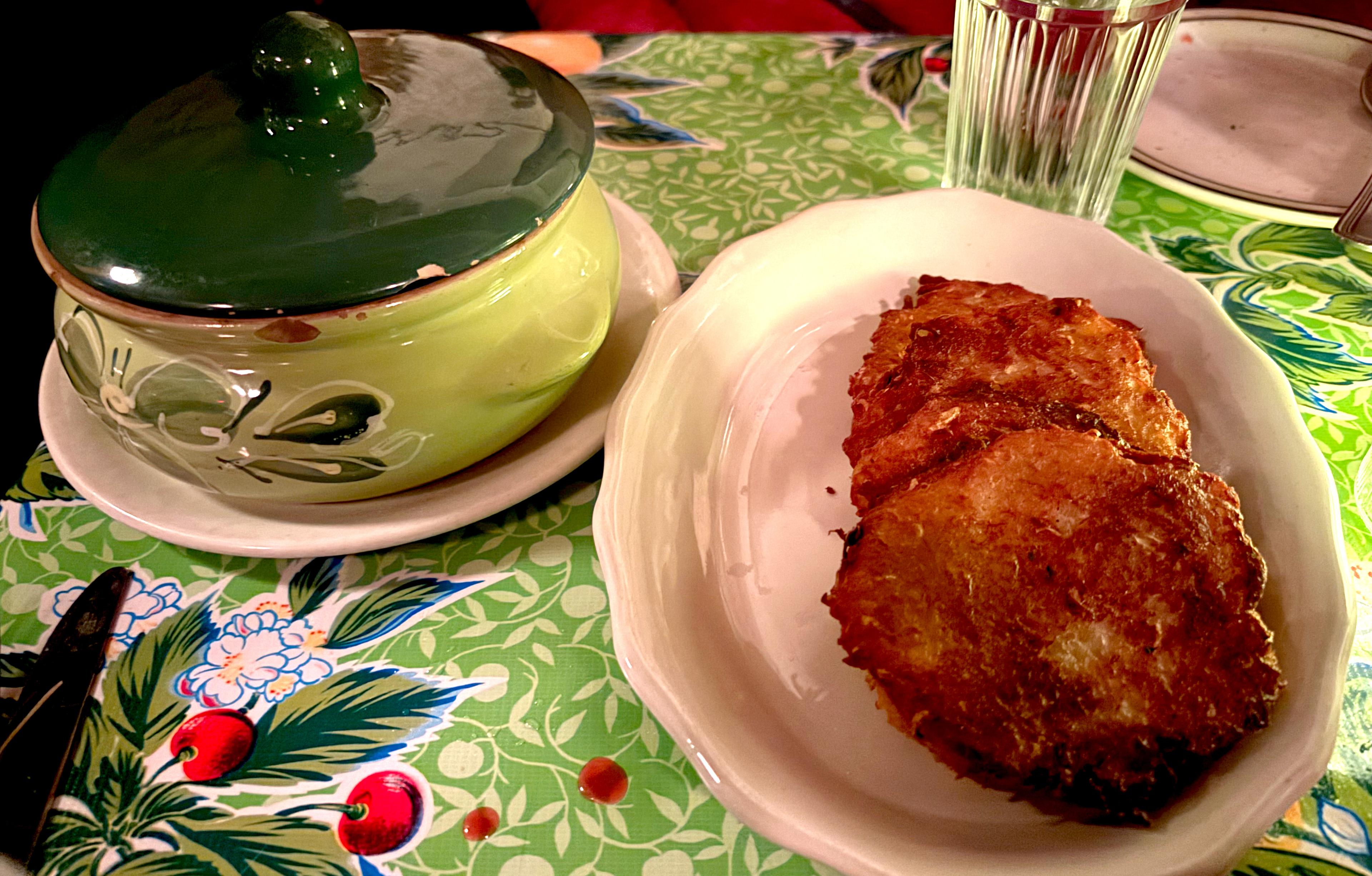
Then our waiter handed me a harder test. The draniki, Belarusian potato pancakes, come on their own plate, and they're a salty buttery crunchy treat. The waiter suggested we pull all the meat from the rabbit, mix it into the sauce, and pour the whole thing over them. And who are we to argue with the waiter? (Yes, I know. At Nong's, flooding the plate was the mistake. That sauce was a loud thing on the side. This one is already a finished team.)
The combination was luxurious... rich, succulent, slightly gamy meat wrapped in the earthy, faintly tangy sauce, with the crunchy salty draniki providing contrast and foundation. Texture, flavor, and aroma conspiring to keep your taste buds firing on all cylinders.
Think about what just happened, though. We took the richest thing on the table and added MORE richness: butter and fried potato. There was definitely a richness and a density to it, both from the flavors and the draniki, but it never felt heavy.
THAT was the answer to my second question. I couldn't find the partner because it had stopped standing apart from the thing it was balancing.
What the partner was doing
When we talk about a functional pair, it's easy to picture two voices taking turns: rich, then sharp, rich, then sharp. A squeeze of lemon works that way. You can point right at it.
But a partner's job is not to be noticed. Its job is to change how the other flavor reads. Fat + Acid at its best gives you a dish that feels full and lively at the same time, and that's about as close as I can come to describing that pot. The whole garlic cloves and the sour cherries cut through the richness of the porcini and the meat, and I never once tasted them doing it.
I couldn't separate the cream's tang from the cherries' at the table, so I asked Bonnie Morales. Both bring sour, she told me, and both bring a little sweetness too... just different kinds of each. To her, they "really just reinforce each other rather than contrast." They "fill in each other's missing parts a bit."
Which means the richest thing in the pot arrived with part of its own partner already on board. The smetana is the fat AND some of the acid, and the cherries fill in the rest. No wonder I couldn't find the sour. It was coming from two places at once, and neither one was standing apart.
Look at the proportions in the published recipe: a third of a cup of cherries against two cups of smetana. That is not an equal match, and it shouldn't be. Checks & Balances draws a line between rounding, which smooths the edges of a flavor and leaves its character alone, and flattening, which blunts the flavor itself. Too much moderator and you've lost what you came for. That pot still tastes completely, unapologetically of cream. A partner that takes over isn't moderating anymore.
And timing is part of it. In Every Seasoning Has a Clock, I put brightness at the very end, because a last-second squeeze of something sharp stays bright. These cherries go in at the start. Same general idea, sour against rich, but a very different job. They don't arrive on top of the dish. They end up all the way through it.
A few honest footnotes. Smetana is cultured, so it brings its own tang, and I can't tell you from one meal how much of that faint edge belongs to the cream and how much to the cherries. Maybe the fat arrived with part of its partner already on board, which would be a lovely thing in itself. The draniki's crunch is a different story too. Texture isn't part of this pair, though it surely helps you want another forkful. And I have no idea whether anyone at Kachka thinks in these terms. This is a very old dish that works, and I'm only telling you what I tasted underneath it.
The Question to Take Home
The next time something rich starts to wear on you, I'd skip reaching for less of it. Instead, ask three questions:
What's assertive here? Name it. Cream, butter, rendered fat, the crust on a roast.
What's its partner? For richness, that's acid: lemon, vinegar, sumac, tomato, a sour fruit.
Is there enough of it? Not a lot. Enough. A little at a time, tasting as you go, and it usually resolves sooner than you'd expect.
The correction is never to take away the rich thing. It's to give it what it's been missing.
A Test Worth Running Tonight
You can taste the whole idea in a small pot. I'd soften a big handful of sliced mushrooms and a chopped garlic clove in butter, add a third of a cup of stock, and split it among three small pans. Stir a quarter cup of heavy cream into the first. Stir a quarter cup of crème fraîche into the second. Into the third goes a quarter cup of crème fraîche and a tablespoon of chopped unsweetened dried tart cherries. Let all three simmer gently for ten minutes.
Taste them in order. The heavy cream first, twice, and notice what the second spoonful feels like. Then the crème fraîche, which brings a little of its own partner to the pan. Then the cherries, and go looking for the sour.
If you're curious, pour half the heavy cream sauce into a bowl and add lemon, a few drops at a time, tasting after each. There's a moment where the sauce comes alive, and a later moment where it stops tasting like cream at all. That first moment is rounding. The second is flattening. Once you've felt that line in a spoon, you'll start finding it everywhere.
Where the Jar Comes In
If you want this move in a long braise of your own, it's how I built Black Orchard Blend. The black lime and sumac stay quiet through the cook, and once the food rests, a dark citrus note spreads through the fat instead of cutting across it. I'd stir it into the fat right after searing short ribs, before the liquid goes in, then let the pot sit off the heat for ten or fifteen minutes with the lid cracked. (Not in Morales's pot, though. That pot isn't asking for a thing.)
Go Find Kachka for Yourself
Kachka is at 960 SE 11th Ave in Portland, open daily for lunch and dinner, and I'd book ahead. Order the Rabbit in a Clay Pot, smell it when the lid comes off, and taste the sauce on its own. Go hunting for that sour. Then take the waiter's advice, pile it all on the draniki, and keep count of how many bites you've had.
You may not find the partner... but you'll know it's there when you lose track of how many bites you've had. ;)


More from the kitchen
Seasonal recipes, cooking observations, and new ways to use your blends.