
Toasting the 3 C's
Coriander, cardamom, cumin. Three seeds, one pan, three completely different jobs... and a few seconds decide each one.
Today was a toasting day. Coriander, cardamom, and cumin, one pan at a time... the three Cs. And somewhere around the second batch I realized I wasn't doing one job three times. I was doing three different jobs.
Each seed behaved differently in the pan. Coriander took its sweet time, then started to crackle and pop. Cardamom started giving off wisps of smoke almost immediately and barely made a sound. Cumin smoked AND popped, and wanted a little longer on the heat than I expected. That's not random. Every one of those cues is the seed telling you what's happening inside it. So here's what I've learned about listening.
What heat actually does to a seed
Three things happen at once when a seed hits a hot, dry pan. Moisture leaves. The aromatic oils warm up and start escaping into the air (that's the smell filling your kitchen, and it's also flavor leaving the seed). And the natural sugars and proteins in the seed start browning, building brand new toasty, nutty, roasted flavors that weren't there before.
So toasting is always a trade. You gain roasted flavor and you spend some of the seed's original aroma to get it. The whole art is deciding how much to spend.
Here's the part that made everything click for me. Each of these seeds is built around a different signature aroma molecule, and they don't all leave at the same temperature.
| Seed | Signature aroma molecule | What it smells like | Boils at (approx.) |
|---|---|---|---|
| Cardamom | 1,8-cineole | Cool, eucalyptus, floral | 349°F |
| Coriander | Linalool | Bright citrus, lavender | 388°F |
| Cumin | Cuminaldehyde | Warm, earthy, savory | 455°F |
These molecules start drifting off well below their boiling points, but the ladder holds. Cardamom's signature leaves first and fastest. Cumin's hangs on the longest. That one table explains almost everything that happens in the pan.
Cumin: Toast to Transform
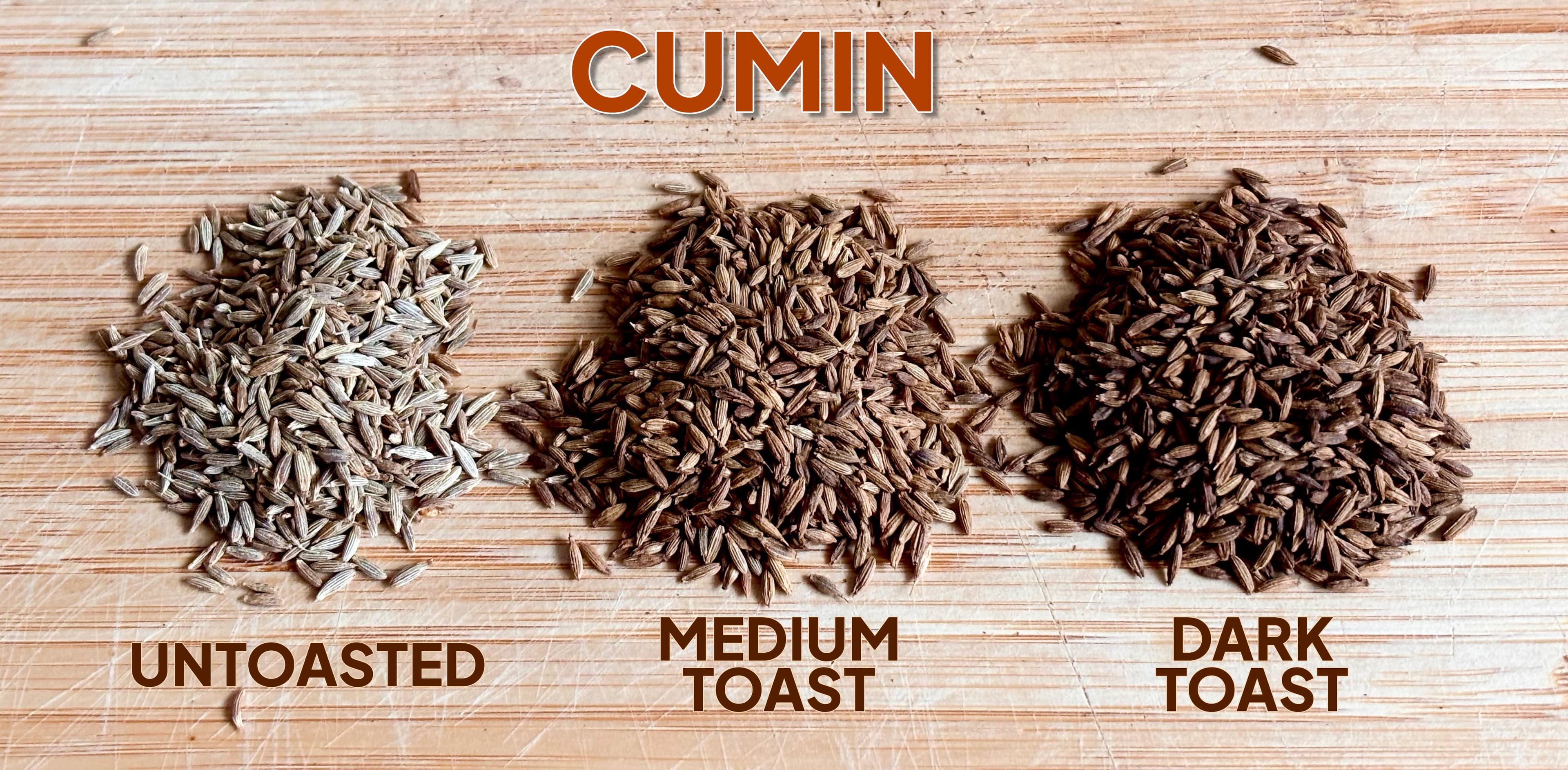
Cumin is the seed that gains the most from heat. Raw, it's sharp and a little musty. Toasted, it turns warm, nutty, and savory, with a roasted edge that reads almost like popcorn.
It can take the heat because its signature aroma sits at the top of the ladder. You can push the browning further before you lose what makes cumin taste like cumin. The seeds are long and thin with lots of surface, so you'll see smoke as oils reach the outside, and you'll hear pops as the last bit of moisture inside flashes to steam.
- What I watch for: color moving to a medium brown, steady popping, and a smell that shifts from raw and grassy to deep and toasty.
- When I stop: the moment the smell tips toward sharp or bitter. That's scorching, and it doesn't come back.
- I go darker for grill rubs, smoky blends, and anything that should taste roasted. I pull it lighter when cumin is playing a supporting role next to citrus or herbs.
Coriander: Toast to Balance
Coriander is where you make a real choice. Its magic is that bright, lemony, almost floral note (the linalool from the table), and heat chips away at it. Toasting trades some of that brightness for warmth and nuttiness.
Why is it so slow to get going? A coriander "seed" is actually a tiny dried fruit: two seed halves inside a papery husk with a little pocket of air in the middle. That husk insulates. Once the heat finally gets through, the trapped air and moisture expand and the husk cracks open... and THAT is your crackle and pop.
The slow start is a gift. It gives you a wide window to steer.
- Light toast (barely golden, first scattered pops): keeps the citrus lift. Great in brighter blends.
- Medium toast (tan, steady crackle, nutty smell): warmer and rounder. Great anchoring savory blends next to cumin.
- Bonus: toasting dries out that fibrous husk, so it grinds finer.
Cardamom: Toast to Protect
Cardamom is the delicate one. I pull the seeds out of the pods (or purchase desoricated cardamom directly) before they go anywhere near heat, and what's left is small, dense, dark, and oily. No husk to insulate them. No air pocket to pop. They heat up almost instantly, and they do it silently.
That early smoke? Mostly cardamom's signature aroma leaving the building. Remember, it sits at the bottom of the ladder. Every second in the pan costs you some of that cool, floral, eucalyptus brightness that makes cardamom cardamom.
So the goal here isn't transformation. It's a gentle wake-up.
- My nose does the work here, not my ears. The aroma blooms fast. I pull the seeds the moment it peaks, before it turns flat or dusty.
- Low heat, constant motion, and only seconds in the pan. Just enough to dry the seeds so they grind clean.
- Or skip it. In a blend where cardamom is supposed to sparkle (sweet breads, fruit, anything warm and sweet), I'd try it untoasted and freshly ground.
The cold tray trick
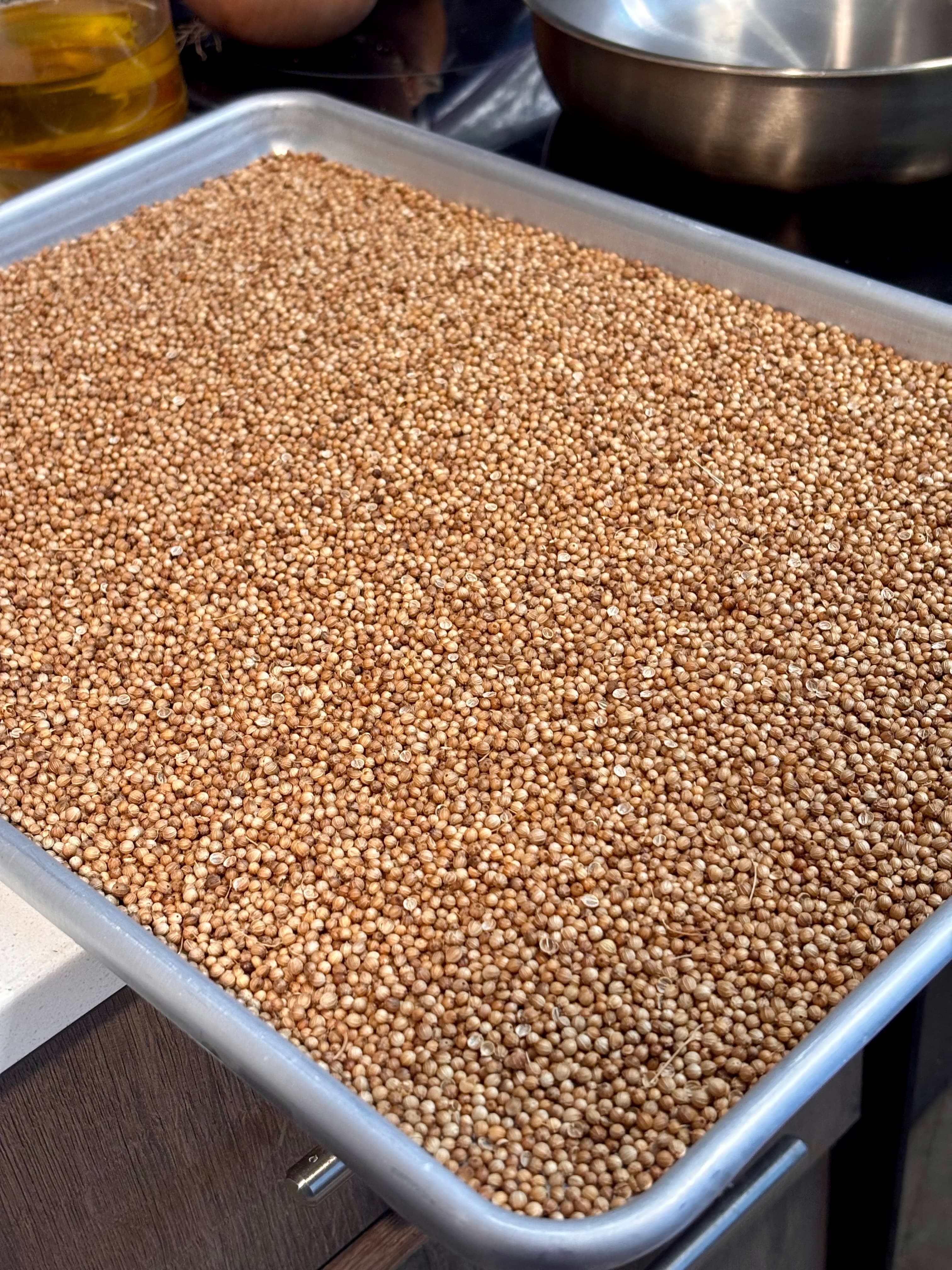
Before I turn on a burner, my cookie sheets go into the freezer. When a batch comes off the heat, it goes straight onto a frozen tray, spread thin, and back into the freezer to cool down.
Here's why that matters. Seeds keep cooking after they leave the pan. Spread them on a room-temperature plate and that leftover heat keeps working for another minute or two, which is plenty to push a perfect light coriander into medium, or a lovely cardamom into flat. A frozen tray stops the clock almost instantly.
And there's a second payoff: cold seeds go into the grinder cold. Grinding creates friction, and friction creates heat. Starting cold means more of that aroma you worked so hard to protect ends up in the jar instead of in the air.
One thing to watch: moisture. A frozen tray frosts over within seconds in a warm kitchen, and cold seeds pull water out of the air the moment they come out of the freezer (Portland in the fall, I'm looking at you).
- I'd wipe any frost off the tray right before the hot seeds go on, or they'll steam.
- When the seeds come out, I'd either grind right away in small batches and seal the jar immediately, or let them come back to room temperature in a sealed container before opening.
- Damp seeds clump in the grinder and lose shelf life. Dry and cold is the goal.
The Grinding
The moment a seed is ground, the clock starts running faster. Whole seeds keep their aromatic oils locked inside. Grinding breaks them open and multiplies the surface area many times over, so everything that was protected is suddenly exposed to air.
- Each seed gets its own pan and its own grind. Each has its own endpoint, so I combine them after.
- Short pulses beat one long spin. Bursts keep friction heat down and give a more even grind.
- Coriander gets sifted. The husk never fully breaks down, and those papery bits make a blend gritty. A fine mesh strainer catches them, and the leftovers get a second pass.
- Cardamom goes last, in small batches. It fades faster than anything else on this list once it's ground.
- Dark and airtight. Toasted and ground spices give you weeks of peak flavor, not months. For a big run, I'd toast whole seeds in bulk and grind only what's needed.
Worth the fuss?
I know how this sounds. Thirty seconds longer for one seed, thirty seconds shorter for another, a frozen cookie sheet waiting before the burner is even on... It's a lot of attention to pay to a handful of seeds, and it's fair to wonder whether anyone could ever taste the difference.
They can. The gap isn't subtle. Pull coriander early and it tastes bright and lemony. Give it another minute and it turns warm and nutty. Same seed. Same pan. Two different spices.
And nobody has to take my word for it. Here's what I'd try: toast one handful of coriander light and another handful medium. Cool both, grind both, and taste each one sprinkled over buttered toast or stirred into a spoonful of plain yogurt.
That gap has a name. In Flavor Architecture it lives in Time & Heat Phases, the idea that when and how long an ingredient meets heat decides what it becomes. Toasting is that idea at its smallest... one pan, one seed, a few seconds either way.
So here's my whole method in one line: cumin I transform, coriander I balance, cardamom I protect. Listen to the pan. Trust your nose. And go make something wonderful with it!


More from the kitchen
Seasonal recipes, cooking observations, and new ways to use your blends.