
The Tao of Radicchio: Bitterness as a Perfect Beginning
Bitterness isn't a mistake to fix. It's a beginning, waiting for something to lean on.
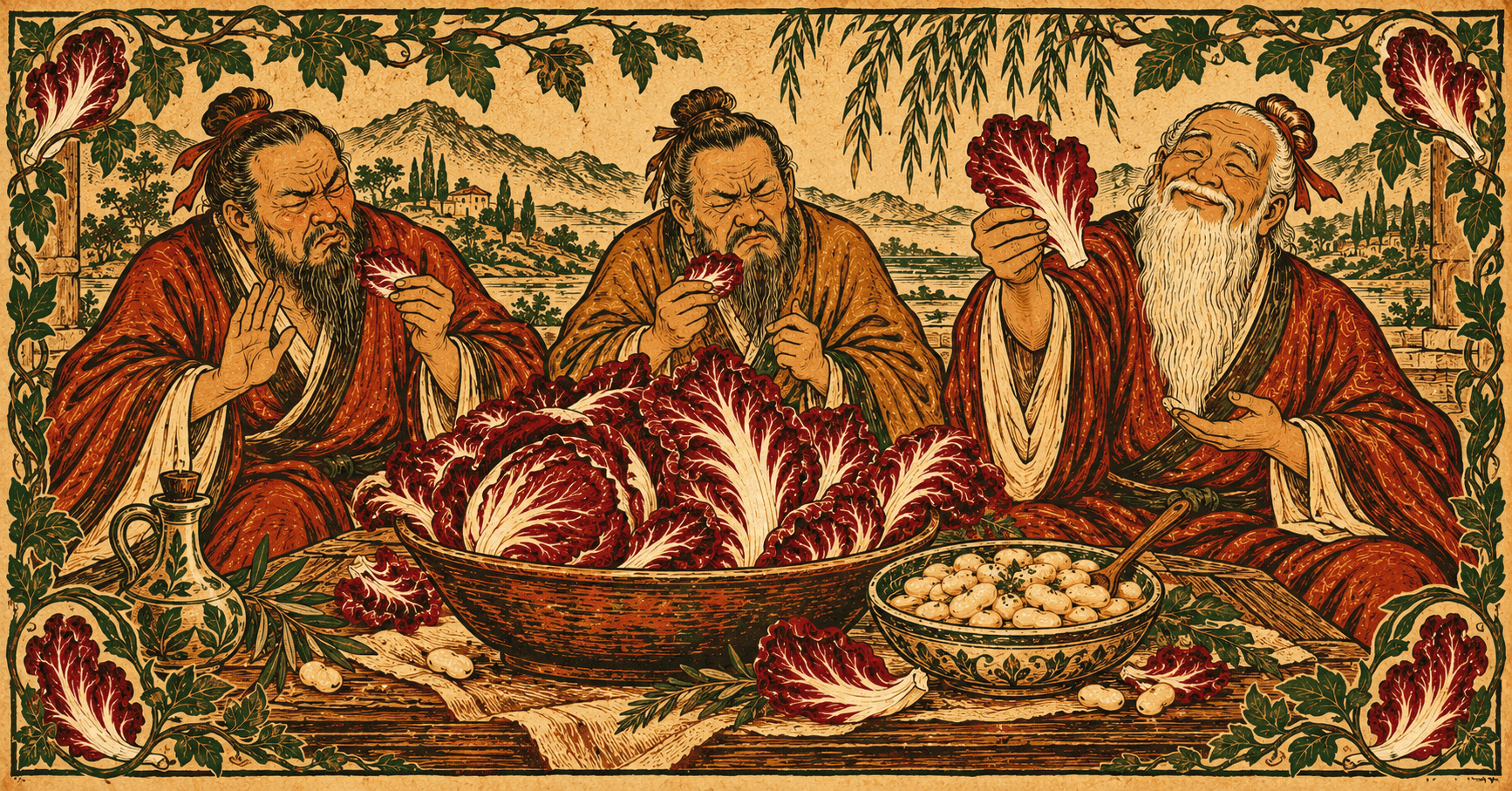
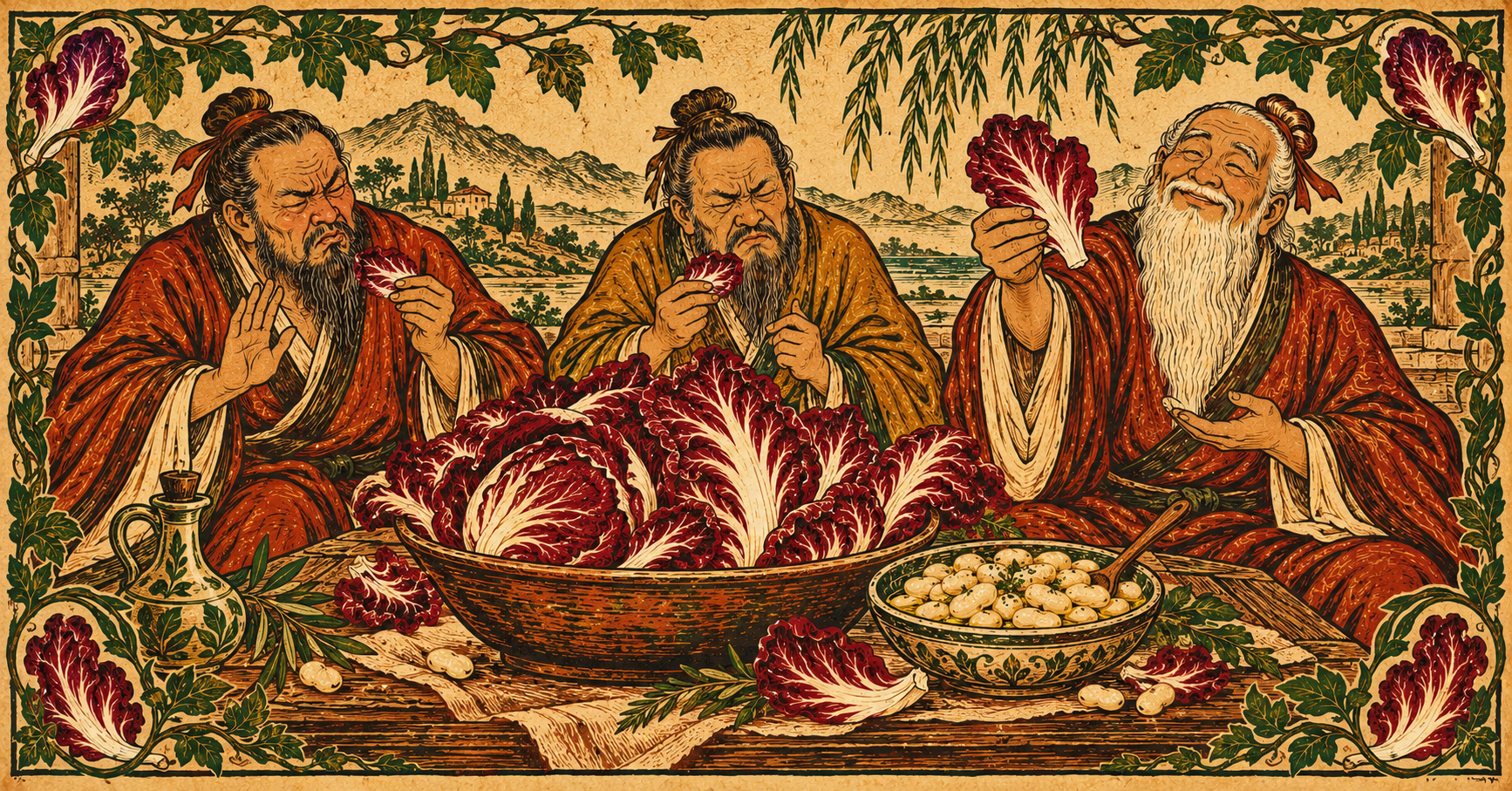
There's an iconic Chinese image called "The Vinegar Tasters". Three masters stand around a vat of vinegar, each having just dipped a finger and tasted. Tradition names them Confucius, the Buddha and Lao-tzu, the old master of the Tao. Confucius looks sour. The Buddha looks bitter. Lao-tzu is smiling.
Same vat. Same vinegar. Three faces. Two of them taste a problem. The third tastes vinegar being exactly what vinegar is… and finds that delightful.
Somewhere along the way, most of us learned to make the other two faces at bitterness. The burnt edge of the toast. The tea that sat too long. The coffee that's been on the burner since noon. Bitter means something went wrong… so we scrape it, drown it, or avoid it.
But look at what we actually crave. Coffee. Dark chocolate. A hoppy beer. The charred edge of a grilled onion. Arugula wilting on a hot pizza. Marmalade, with its curls of peel. All bitter. All beloved. We don't love them despite the bitterness. We love them because something is there to meet it.
That's the Lao-tzu move. The vinegar isn't wrong, and neither is bitterness. It's a beginning. What matters is what you build around it.
Three things bitterness does for a cook
It needs something to lean on. On its own, bitter is an edge with nothing behind it. Give it fat, salt, sweetness, or something soft and starchy, and suddenly that edge has a shape. Cream in coffee. Sugar in chocolate. Olive oil and salt on bitter greens. Salt alone quiets bitterness more than most cooks expect: taste a bitter leaf before and after a pinch, and the difference is immediate.
It changes jobs with heat. Bitter that meets heat early, in fat, settles. Greens in hot oil give up their water, their edges go dark, and the sharpness sinks into a savory floor the rest of the dish stands on. The dark edge on a toasted seed or a well-browned onion works the same way. Bitter that arrives late and raw stays bright and sharp, and does a different job entirely: it cuts through richness the way a squeeze of lemon would, without the sourness. Same ingredient. Two jobs. The only thing that changed was timing.
It keeps rich and sweet food from getting heavy. A rich plate with nothing bitter on it gets tiring by the fifth bite. A few bitter leaves beside a cheesy pasta, black coffee with dessert, a dusting of cocoa over something sweet… each one resets the palate, so the next bite tastes like the first.
Which is why this Saturday has me grinning like Lao-tzu
On Saturday, October 24, The Redd on SE Salmon fills with about forty tables of farmers, plant breeders, chefs and makers, all gathered around radicchio — that crimson-and-white leaf that tastes like it's arguing with you. It's the Culinary Breeding Network's Sagra del Radicchio e Fagioli, a radicchio-and-bean festival, and it doubles as the launch of Lane Selman and Margarett Waterbury's new book, Radicchio: A Celebration of the Beloved Italian Vegetable. Doors open to the public at 4pm. A whole room of people tasting bitterness ON PURPOSE… and, I'll bet, smiling.
Look at the festival's name. Radicchio and beans. Not radicchio with a fix. Radicchio with a partner. The bean is soft, mild, a little starchy, and it drinks up olive oil: exactly the kind of thing bitterness leans on. The book's own advice runs the same way: play bitter against something bold, like blue cheese or anchovy, or against something sweet, like persimmon or apple.
My own experience with radicchio: Clarklewis is an amazing restaurant in Portland that makes a killer radicchio salad: Oranges, shallot, shaved romano, and a sherry-orange blossom vinaigrette. I tried to recreate it and learned the critical roll of hierarchy in assembling a matrix of such bold flavors. It's so easy to have one dominate and destroy the balance, but in this case, the radicchio actually served as a strong base to build on, giving me a margin for error (which I need... A LOT!).
For the radicchio fans, one more pair of notes, from Rebekah Denn's field guide in PCC's Sound Consumer. Varieties behave differently: Castelfranco and Rosa are mild enough to enjoy raw, while Verona brings more bite and loves a braise. And most radicchio gets sweeter and gentler as the weather turns cold. The bitterness in your bowl in December isn't the bitterness in your bowl in October.
A test worth running this week
Any bitter green will do: radicchio, kale, escarole, broccoli rabe. Add a pot of warm beans dressed with good olive oil and salt. Half the greens go into a hot pan with olive oil until the edges darken and the leaves soften. The other half is sliced thin and stays raw. Both land on the same beans.
Side by side, one reads as savory and deep. The other reads as a bright edge. Neither one is wrong. They're doing different work… and now you know which job you're hiring the bitterness for.
What I reach for
When I want the beans to carry more, a pinch of Silken Garden Green Blend goes into the olive oil for about twenty seconds before the beans join it. It gives them a quiet, savory backbone — herbs and gentle warmth, no heat, no smoke, no sourness — so the greens stay the only sharp thing on the plate. (That's the whole point. One edge, clearly heard.)
On a colder night, Black Orchard Blend takes the long way. A bitter-leaning green, like Verona radicchio or escarole, braised low with the beans until everything slumps together, then left to rest before serving. The herbs and warm spice deepen during the cook, and a dark citrus note shows up after the rest, folding into the oil instead of cutting across it.
And bitterness isn't only for vegetables. Molten Earth Espresso Rub brings espresso and cocoa to a steak or lamb chop seared hard. In the heat, that bitterness darkens into the crust, and the fat of the meat gives it something to lean on. It tastes roasted and fire-kissed, not like coffee.
If you're heading to the Sagra on Saturday, I'll be the one [arriving after the Portland Saturday Market closes] with radicchio on my fork, far too many questions, and (I hope) Lao-tzu's face. And if you're not, there's bitterness in your kitchen right now... in the coffee, the greens, the dark chocolate... just waiting for something to lean on.
Bitter isn't the end of the conversation.
It's where it starts.
Credits and links:
- Sagra del Radicchio e Fagioli, Culinary Breeding Network (@culinarybreedingnetwork), at The Redd on Salmon Street (@reddonsalmon)
- Lane Selman and Margarett Waterbury (@margarett_maria), Radicchio: A Celebration of the Beloved Italian Vegetable, Timber Press (@timberpress), 2026, and OPB's interview with the authors
- Rebekah Denn (@rebekahdenn), "Radicchio takes root in the Northwest", PCC Sound Consumer
- Clarklewis restaurant (@clarklewispdx)


More from the kitchen
Seasonal recipes, cooking observations, and new ways to use your blends.