
Finding What's Missing
A breakfast experiment, an improvised sauce, and the question that changed how I look at every dish I cook.
I just had the most "Emberloft moment"… One of those moments when you realize how much you've changed how you do something you've done for years.
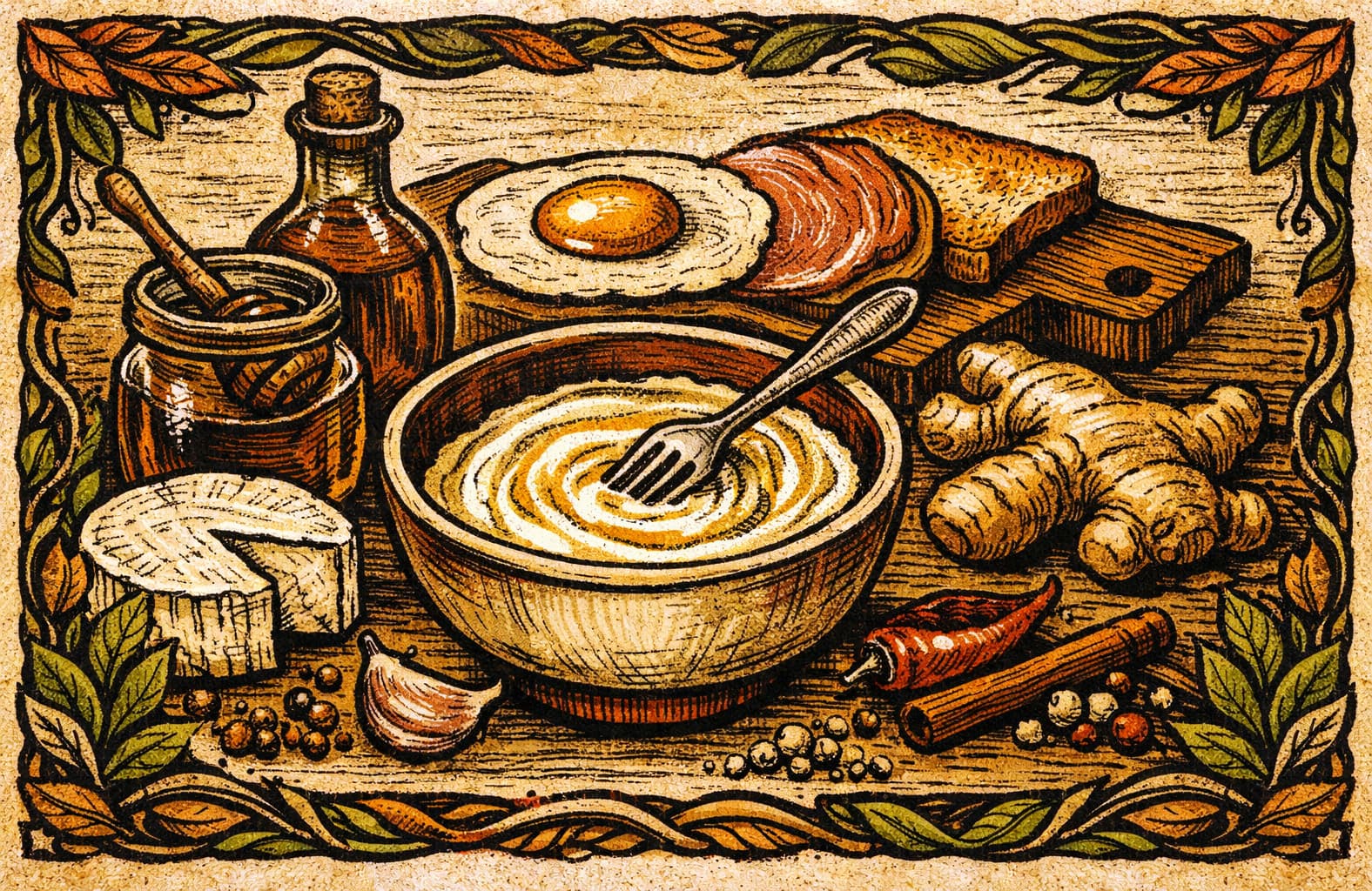
Cooking breakfast for myself, I had gathered eggs, ham, and bread. "Old me" would've grilled the ham, fried the eggs, grated some cheese, and tossed it in the air fryer. Which would have been lovely, to be honest… But my mind didn't go there.
Instead, I looked at what I actually had in front of me: salty, smoky ham, rich fatty eggs, and crunchy toast as a base. And I started thinking about what it needed. Not what flavors to add — what jobs weren't being done.
If you've ever read Samin Nosrat's Salt, Fat, Acid, Heat, you already know the foundation here. She gave home cooks a beautiful framework for understanding four essential elements. What Flavor Architecture adds is a fifth — sweet — and a shift in how you think about all of them. Instead of asking "what are these elements?" you ask "what is each one doing in this dish?" Fat carries flavor into the bite. Acid lifts and creates contrast. Salt amplifies what's already there. Sweet rounds and softens edges. Heat brings aromatics and intensity.
They're not ingredients to check off. They're jobs to be filled.
This is the starting point of one of the pillars of Flavor Architecture: Checks & Balances. It's the idea that when a dish feels off, it's almost never because something needs to come out. It's because something was never there.
Looking at my egg sandwich, I realized three of those five jobs weren't being done. So I hit the pantry and started assembling a sauce — something I could either lay on the toast as a foundation or drizzle over the top.
I had some goat cheese and yogurt in the fridge… That would serve as the base for the sauce, giving me a slight acid tang from the yogurt and a savory richness from the goat cheese.
I needed more acid, so I grabbed some white wine vinegar — although in retrospect, I'm wondering if apple cider vinegar would've done better. It would've added a rounder, slightly fruity lift to the sauce. (If you try this, let me know how it turns out.)
For the heat, I initially reached for ground mustard seed — because ham and mustard are like peanut butter and jelly — but then I saw the ground ginger. That not only adds a little warmth but a touch of sweetness and some aromatic depth.
I reinforced that sweetness with a dollop of honey and then added a dark edge to it with a little hoisin sauce (just a drop).
I mixed, tasted, and tweaked until it delivered on all fronts. And here's the thing I was most afraid of: that the ham and egg would be overwhelmed by the sauce. But it did exactly what it was supposed to do… tied everything together instead of competing with it. Every bite had something going on, and nothing fought for attention.
There's a lot more to Flavor Architecture and Checks & Balances than this one idea. But this single lens — asking "what jobs aren't being done" — has given me the ability to be creative without guessing. I can open the pantry and build something with confidence, knowing I'm working within a framework that keeps me out of real trouble (which, trust me, without guard rails happens to me a lot).
Here's the final sauce recipe if you want to try it yourself…
- 2 tablespoons soft goat cheese (about 1 oz)
- 1 tablespoon plain whole-milk yogurt
- ½ teaspoon white wine vinegar
- 1 teaspoon honey
- ¼ teaspoon ground ginger
- ½ teaspoon hoisin sauce
Mash the goat cheese and yogurt together with a fork until smooth and spreadable. Stir in the vinegar first, then the honey, ginger, and hoisin. Taste it — you should get tang up front, a gentle warmth in the middle, and a savory sweetness that lingers without turning sugary. If the acid feels shy, add another drop or two of vinegar. If the sweetness feels forward, back it off with a tiny pinch of salt.
Spread it on the toast before you build the sandwich, or spoon it over the top after assembly. Either way, it should tie the ham and egg together rather than compete with them.


More from the kitchen
Seasonal recipes, cooking observations, and new ways to use your blends.